Balancing Tradition and Innovation as CMO of the Fortune 1 Company: Insights from William White at Walmart
In an era of unprecedented consumer volatility and technological disruption, few organizations navigate the intersection of tradition and innovation as deftly as Walmart. The world's largest retailer, a Fortune 1 company with a legacy spanning decades, faces a uniquely complex challenge: how to honor its foundational principles while embracing transformative market forces.
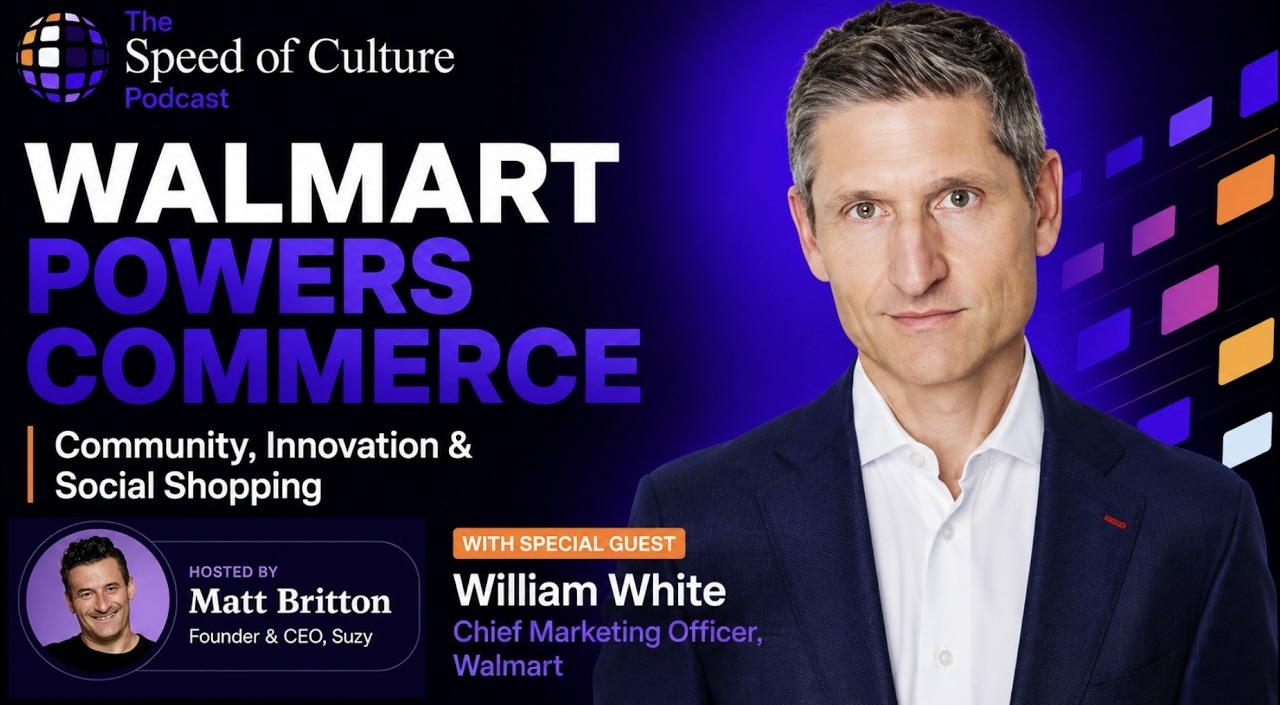
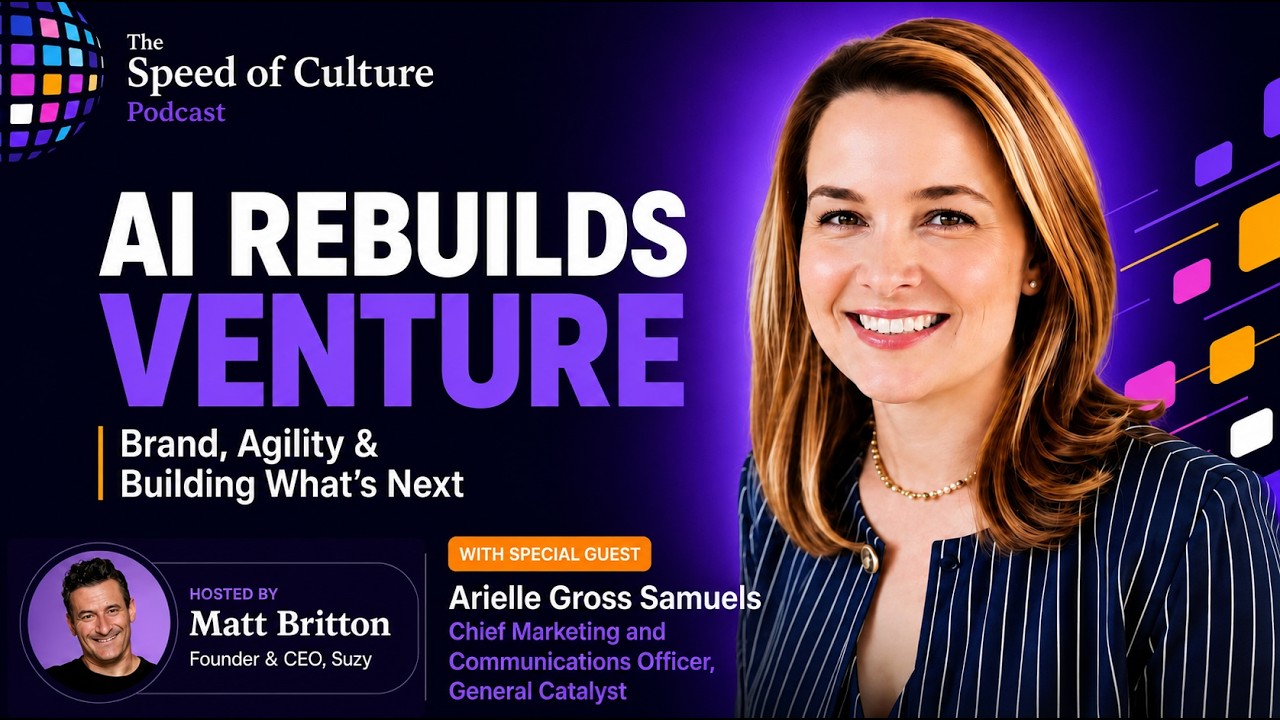
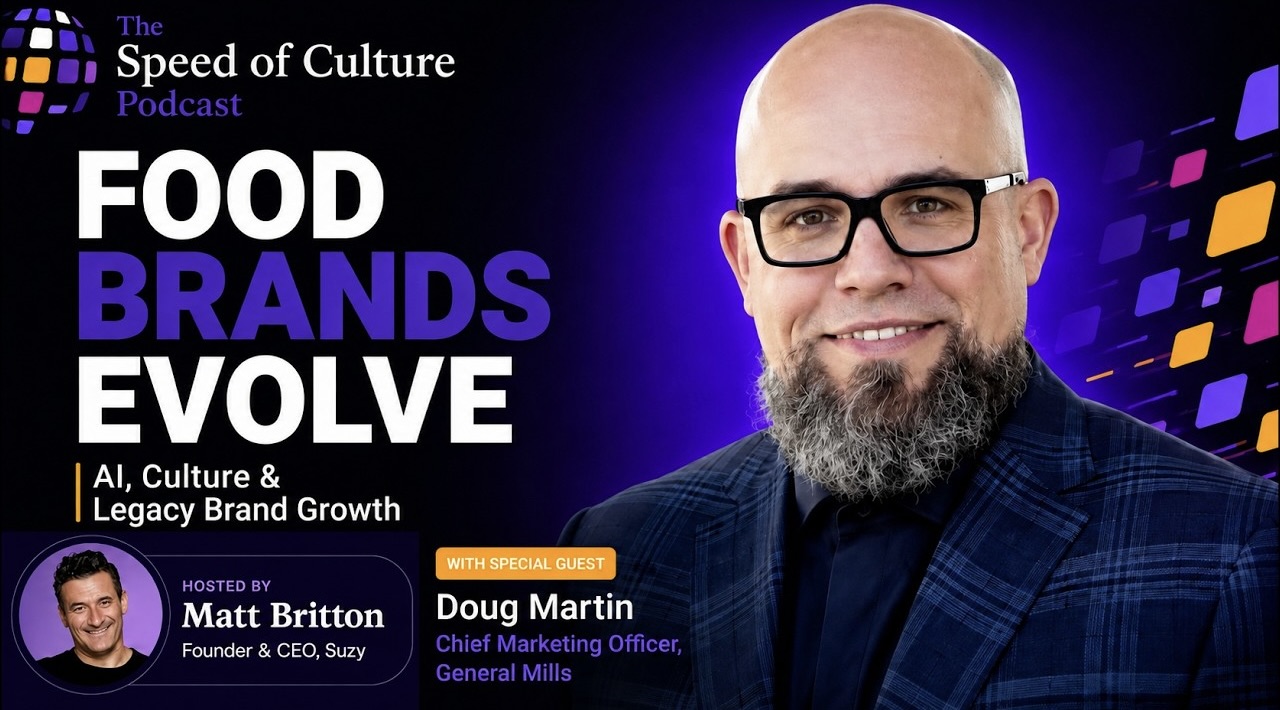
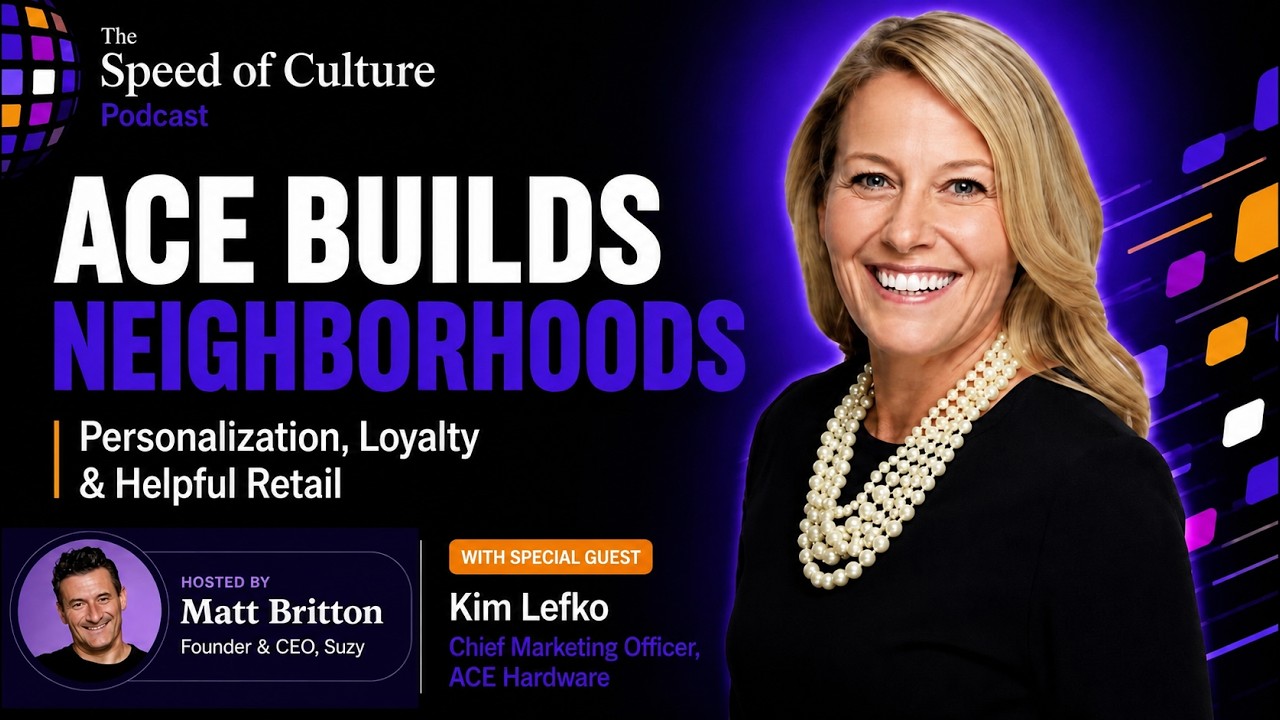
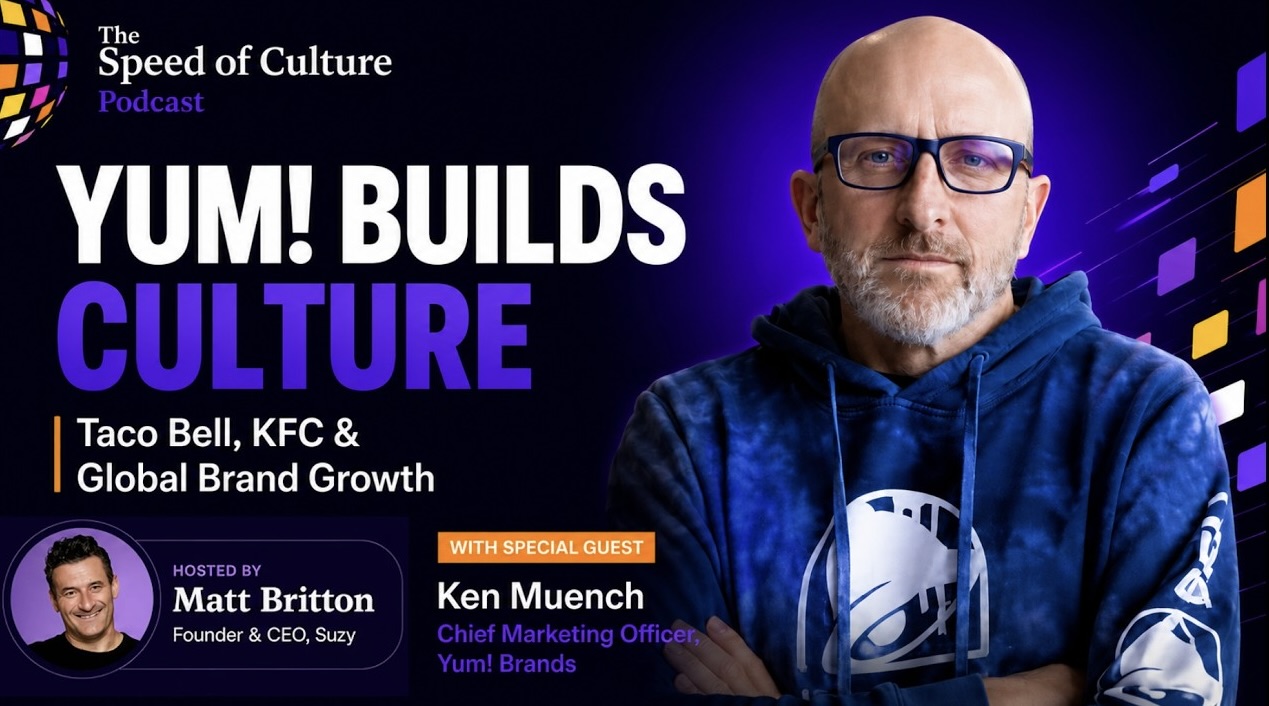
In episode 50 of The Speed of Culture podcast, Matt Britton, founder and CEO of Suzy, the AI-powered consumer intelligence platform, sits down with William White, Chief Marketing Officer at Walmart, to explore the strategic imperatives and cultural nuances that define modern retail leadership.
This conversation illuminates the critical balance between preserving organizational identity and pursuing disruptive innovation, a tension that defines executive leadership in 2023 and beyond. For CMOs, chief strategy officers, and organizational leaders, the dialogue provides actionable frameworks for navigating transformation while maintaining market relevance.
The Evolution of Retail's Competitive Landscape: Why Tradition Alone Isn't Enough
Walmart's dominance in retail stems from a time-tested operational model: everyday low prices, massive scale, supply chain excellence, and deep community roots. These foundational strengths represent the institutional knowledge that has made Walmart indispensable to millions of consumers across North America and globally.
Yet the retail environment of 2023 looks fundamentally different than even five years prior. The traditional retail playbook, focused primarily on inventory management, in-store experience optimization, and pricing strategy, no longer captures the full picture of modern consumer behavior.
Today's shoppers move fluidly between channels: researching products on mobile devices while standing in aisles, comparing prices instantaneously, reading reviews from global communities, and expecting seamless integration across digital and physical touchpoints. This omnichannel reality has redefined what it means to be customer-centric.
For a CMO at a Fortune 1 company, maintaining competitive advantage requires more than incremental improvements. It demands fundamental rethinking of how the brand engages consumers, captures data, and delivers value across an interconnected retail ecosystem, without abandoning the loyal base that built the enterprise.
The question becomes not “tradition or innovation,” but “how do we evolve our foundational strengths to meet contemporary market demands?”
Retail Media and Data-Driven Marketing: The New Frontier of Omnichannel Strategy
One of the most significant innovations reshaping retail CMO priorities is the rise of retail media networks. Walmart Connect represents a paradigm shift in how retailers monetize consumer data while enhancing the shopping experience.
Unlike traditional media companies that reach consumers through content, retail media networks reach consumers at the moment of maximum commercial significance, when they are actively shopping. This creates unprecedented targeting precision and attribution opportunities that benefit brands, retailers, and consumers simultaneously.
For Walmart, the strategic importance of retail media extends beyond incremental ad revenue. It represents a fundamental shift in competitive positioning, embedding data science and consumer intelligence directly into the retail experience.
The omnichannel integration that enables retail media also democratizes market access. Smaller brands can reach Walmart's 140+ million weekly customers with unprecedented precision, modernizing long-standing values around accessibility and consumer value.
Walmart+, the retailer’s membership program, adds another dimension. Membership models create recurring engagement, reduce price sensitivity among high-value consumers, and generate proprietary consumption data that strengthens long-term strategy.
Consumer Intelligence as Competitive Differentiator
At the foundation of effective omnichannel retail strategy lies a capability that was not central to retail CMOs a decade ago: consumer intelligence. Modern retail leaders must understand not just what consumers buy, but how they research, compare, decide, and evaluate purchases across channels.
First-party data integration consolidates information from e-commerce platforms, mobile apps, loyalty programs, and in-store transactions into unified profiles. Treated as strategic intellectual property, this data enables granular precision in understanding preferences and lifetime value.
Behavioral and attitudinal research captures the “why” behind consumer actions. Why do certain segments research online but purchase in-store? How does sustainability influence category choice? What role do peer reviews play in decision-making?
Platforms like Suzy empower CMOs to test messaging hypotheses, identify emerging trends, and validate strategic assumptions with real consumer feedback before committing significant resources.
Organizational Culture and Change Management
Walmart employs over two million people globally. Leading innovation at that scale requires more than vision, it demands disciplined change management, coalition building, and cultural alignment.
Traditional retail metrics such as inventory turns and cost control must now coexist with omnichannel metrics like mobile engagement, cross-channel attribution, and lifetime value. This represents a profound shift from channel optimization to orchestration.
Effective CMOs redesign incentive structures, build new talent capabilities, and create psychological safety for experimentation. They demonstrate tangible results that validate new approaches without undermining foundational strengths.
The Retail Media Revolution: A Case Study in Strategic Innovation
Five years ago, retail media networks were nascent concepts. Today, they are among the fastest-growing advertising channels, projected to become the second-largest advertising platform globally by 2025.
For brand partners, retail media offers unmatched targeting precision and attribution. For retailers, it creates new revenue streams without inventory investment. For Walmart, estimates suggest retail media revenue could exceed $2+ billion annually, with margins higher than traditional retail.
The strategic imperative is balance. Aggressive monetization risks degrading consumer experience. Sophisticated execution ensures sponsored products align with genuine consumer interests while preserving clarity and trust.
Emerging Challenges: Price Sensitivity, Private Label, and Competitive Dynamics
Economic uncertainty, inflation, Amazon’s expansion, and the rise of direct-to-consumer brands all intensify competition. In this environment, Walmart’s everyday low price positioning remains critical.
Private label strategy offers margin benefits and competitive differentiation. Yet overemphasis can strain supplier relationships or dilute consumer choice. The optimal approach curates private label to extend value without eroding trust.
Strategic Imperatives for Retail CMOs
- Make the business case for innovation with precision: Connect initiatives directly to revenue growth, margin expansion, acquisition, and lifetime value improvements.
- Treat consumer insight as a strategic asset: Elevate research investment as a core decision-making capability across functions.
- Design organizational models that enable stability and change: Centralized strategy with distributed execution preserves consistency and local relevance.
- Build narratives that connect tradition with innovation: Align transformation initiatives with enduring mission and values.
- Measure what matters: Balance brand health, omnichannel metrics, financial contribution, and talent capability building.
Key Takeaways: Strategic Principles for Retail CMO Leadership
- Frame tradition and innovation as complementary. Integrated strategies leverage historical strengths while deploying contemporary capabilities.
- Build sophisticated consumer intelligence capabilities. Insight investment elevates enterprise-wide decision-making.
- Develop clear business cases for innovation investments. Tie initiatives to tangible financial outcomes.
- Design structures that enable both stability and change. Balance centralized oversight with localized flexibility.
- Measure comprehensive impact. Go beyond short-term revenue to include brand, culture, and capability building.
Frequently Asked Questions
How does retail media differ from traditional retail advertising?
Traditional retail advertising reaches consumers after store selection. Retail media networks reach shoppers during active evaluation, leveraging first-party data for high-intent targeting and measurable purchase impact.
What is Walmart Connect and why does it matter strategically?
Walmart Connect is Walmart’s retail media network, giving brands access to its 140+ million weekly consumers. It creates a high-margin revenue stream while embedding consumer intelligence deeper into Walmart’s competitive positioning.
How do omnichannel retail strategies balance inventory optimization?
They leverage unified inventory visibility, demand forecasting, and flexible fulfillment models. Advanced analytics allocate inventory across distribution centers, stores, and direct-to-consumer channels to maximize revenue and minimize stockouts.
Why is consumer intelligence critical for Fortune 1 retailers?
Large retailers manage extraordinary complexity across categories, SKUs, markets, and demographics. Consumer intelligence platforms reduce that complexity into actionable segmentation and strategic clarity.
Looking Ahead: Strategic Resources and Continued Learning
For deeper exploration of AI-driven consumer strategy, explore Generation AI. For additional insights from leading CMOs, visit the Speed of Culture podcast.
Organizations seeking a forward-looking perspective on retail innovation, AI, and consumer behavior can learn more about Matt Britton’s work as an AI keynote speaker or inquire about availability via the Speaker HQ page or contact form.

%20(400%20x%20100%20px)%20(300%20x%2050%20px)%20(150%20x%2050%20px).avif)