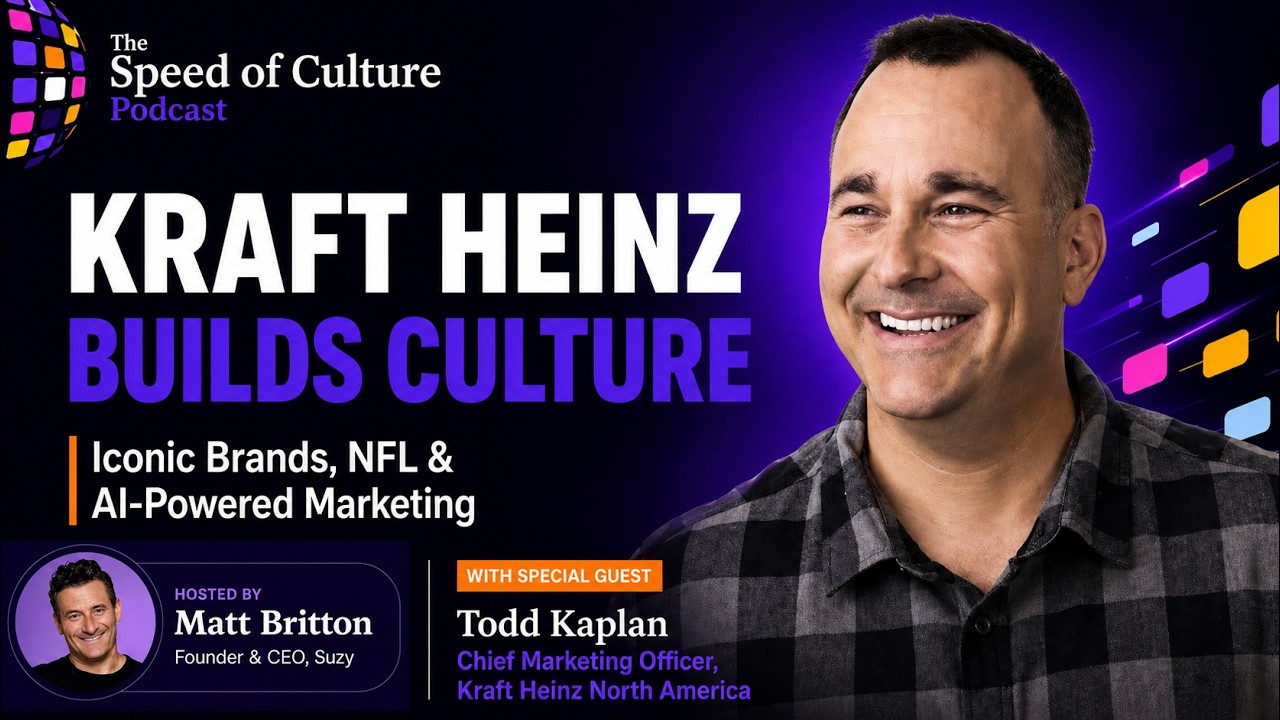
How Todd Kaplan Revolutionized Pepsi's Marketing Strategy Through Culture-First Brand Building
In a competitive beverage industry where trends shift faster than consumer preferences, one executive has managed to keep Pepsi at the center of cultural conversations. Todd Kaplan, Chief Marketing Officer of Pepsi at PepsiCo, joined Matt Britton, founder and CEO of Suzy, the AI-powered consumer intelligence platform, on a groundbreaking episode of the Speed of Culture podcast to discuss how data-driven insights, cultural relevance, and fearless creativity are reshaping modern brand engagement.
The conversation, recorded on March 28, 2023, provides unprecedented insight into how legacy brands like Pepsi navigate the complexities of contemporary marketing. Rather than chasing fleeting trends, Kaplan's philosophy centers on understanding consumer behavior at its core, identifying where audiences congregate, what motivates their purchasing decisions, and how brands can become integral to cultural moments rather than peripheral spectators.
Under Kaplan's leadership since 2018, Pepsi achieved 15 consecutive quarters of positive sales growth, revitalized iconic cultural platforms like the Super Bowl Halftime Show, and executed the brand's most ambitious rebranding effort in 14 years. This episode explores the strategic frameworks, marketing innovations, and consumer-centric methodologies that transformed Pepsi from a declining competitor into a cultural powerhouse.
The Foundation: Consumer Insights Before Brand Strategy
The cornerstone of Todd Kaplan's marketing philosophy diverges from traditional brand-first approaches. Rather than starting with what a brand wants to communicate, Pepsi begins with a fundamental question: "What are consumers actually thinking, feeling, and doing?"
Everything we do at Pepsi starts with a cultural and consumer insight, and then where those connect with our product and brand truths.
This insight-driven methodology represents a significant departure from legacy marketing that often prioritizes product features and benefits over genuine consumer understanding.
The process begins with rigorous consumer research and data analysis, the exact expertise that Matt Britton's Suzy platform facilitates through AI-powered consumer intelligence. By examining consumer behavior across digital platforms, social media, retail environments, and cultural spaces, Pepsi identifies macro-trends and micro-moments that signal emerging opportunities.
This approach yielded measurable success. After years of stagnation, Kaplan's insight-first strategy led to the brand's first positive sales growth in more than a decade, followed by sustained growth momentum that demonstrated the validity of culture-centered decision-making.
Chasing Consumers, Not Trends
We don't chase trends. We chase consumers.
This philosophy addresses a fundamental mistake many brands make when attempting to appear relevant. The difference is subtle but profound.
Chasing trends means reacting to surface-level phenomena, viral moments, social media challenges, or momentary cultural fads. This approach is reactionary, expensive, and often results in cringe-worthy brand participation that damages credibility with target audiences.
Chasing consumers means understanding the deeper motivations driving their behavior. When Gen Z gravitates toward TikTok, a trend-focused brand asks "How can we create TikTok content?" while a consumer-focused brand asks "Why are young consumers preferring short-form video? What psychological needs does this fulfill? How can our brand be genuinely valuable within this context?"
Pepsi's application of this principle proved transformative. Rather than launching one-off campaigns responding to trending topics, the brand invested in sustained cultural engagement strategies. This included strategic music and entertainment partnerships, digital-first content initiatives, and retail experiences that met consumers where they actually congregated rather than where marketing budgets dictated visibility.
The distinction also shaped Pepsi's product innovation strategy. The introduction of Nitro Pepsi, a nitrogen-infused cola product, exemplified consumer-led innovation. Rather than creating a product in isolation and then marketing its features, Pepsi identified consumer desires for premium beverage experiences and innovation-driven quality, then developed products aligned with those insights.
Cultural Relevance and the Super Bowl Halftime Show Platform
For over a decade, Pepsi's association with the Super Bowl Halftime Show represented one of modern advertising's most successful cultural investments. Under Kaplan's stewardship, the brand elevated the platform to unprecedented heights, hosting legendary performances from artists including Beyoncé (2016), Shakira and Jennifer Lopez (2020), and The Weeknd (2021).
Kaplan's strategic vision transformed the halftime show from a mere sponsorship into a cultural institution. The investment was about positioning Pepsi as the brand that brings the world's biggest cultural moments to life, far more than about logo visibility.
During this period, Pepsi deployed sophisticated, multi-platform engagement strategies. The brand offered in-app exclusive content, interactive experiences, and second-screen viewing opportunities that extended the halftime show experience beyond the 12-minute performance into an entire ecosystem of cultural conversation.
This strategy generated billions in earned media value. When Beyoncé performed, cultural critics, music journalists, and social media discussions amplified Pepsi's brand association organically. The halftime show became a cultural touchstone that every American discussed regardless of football enthusiasm, and Pepsi was inseparable from that moment.
Kaplan explained that this platform served a dual purpose: it demonstrated Pepsi's commitment to culture-making rather than culture-following, while simultaneously providing a framework for understanding consumer behavior during one of the year's most culturally significant moments.
The 125th Anniversary Rebranding Initiative
In 2023, Pepsi executed its first complete visual rebrand in 14 years, a bold initiative directly informed by Kaplan's consumer-insight philosophy. Rather than designing a logo that external creative directors deemed aesthetically optimal, Pepsi's design process began with consumer preference research.
The research revealed a surprising insight: consumers preferred Pepsi's visual identity from the 1970s and 1980s. Rather than dismissing this preference as nostalgia-driven kitsch, Kaplan recognized it as valuable consumer intelligence. The new logo incorporated design elements from those eras, particularly the circular globe and striped wave motif, while modernizing the typography and color application.
The rebrand wasn't a cosmetic refresh. It represented a strategic decision to mark a new era for Pepsi following the brand's 125-year history. The anniversary provided the perfect cultural moment to introduce the new identity while simultaneously celebrating the brand's heritage and establishing momentum for future growth.
The project required unprecedented internal collaboration. Kaplan coordinated across PepsiCo's design team, brand management, consumer research, manufacturing operations, and retail strategy departments. Multiple teams had to align on the timeline, ensuring that the visual identity rollout synchronized with supply chain modifications, retail partner communications, and marketing campaign launches.
The 125th anniversary campaign itself exemplified Kaplan's culture-first approach. Rather than a single Super Bowl advertisement or prominent media buy, Pepsi orchestrated a 125-day-long campaign that created daily moments of cultural relevance. This extended approach maintained consumer interest, generated sustained earned media, and allowed the brand to connect with consumers through multiple touchpoints aligned with their seasonal behaviors and cultural interests.
Building Creativity That Creates Earned Media
A cornerstone of Pepsi's marketing effectiveness under Kaplan involves designing creative content specifically engineered to generate organic, earned media. The brand doesn't rely solely on paid advertising distribution. Instead, Pepsi creates ideas so compelling, culturally relevant, or unexpected that consumers voluntarily share them across social platforms.
Kaplan described this approach as "dropping ideas like a bomb to see them ripple through culture." The strategy requires courage, it means sometimes withholding paid media support in favor of allowing organic conversation to build momentum. This approach contradicts conventional wisdom that equates media spend with visibility, but data consistently validates the strategy's effectiveness.
This methodology produced tangible results. A single well-designed creative concept could generate millions of impressions, millions of social media shares, and extensive media coverage, all achieved through a fraction of what traditional paid media campaigns would require.
The approach also generated superior engagement quality. Consumers who discover a brand concept organically and choose to share it develop stronger brand affinity than consumers exposed to paid advertisements. This voluntary amplification creates a virtuous cycle where organic reach begets additional organic reach.
Digital-first content strategy amplified these results. Pepsi invested in platform-native content. TikTok videos designed for TikTok's culture rather than repurposed television commercials, Instagram Stories optimized for that platform's unique engagement patterns, and YouTube content aligned with how consumers actually consume longer-form video.
Consumer-Centric Strategy in the Context of Retail Moments
While digital engagement and cultural visibility represent crucial components of Pepsi's strategy, Kaplan emphasized that the "moment of choice", the instant a consumer stands in front of a retail shelf deciding between competing options, remains central to brand success.
All the cultural relevance and earned media in the world translates to negligible impact if point-of-sale environments fail to convert consumer interest into purchases. Pepsi's retail strategy coordinates promotional pricing, display placement, visual merchandising, and in-store communications to capitalize on the cultural momentum generated through upstream marketing.
This retail focus represents a sophisticated evolution of marketing's relationship to commerce. In an era when some marketers treat retail as a sales channel disconnected from brand building, Kaplan understands that the retail moment is itself a crucial brand-building opportunity.
The coordination required between Pepsi's marketing team, sales teams managing retailer relationships, and operations teams managing product distribution is substantial. Kaplan's role extends beyond creative inspiration to encompassing the entire marketing-to-commerce ecosystem.
The Role of Data and AI-Powered Consumer Intelligence
Throughout the podcast conversation, Matt Britton's platform Suzy, an AI-powered consumer intelligence tool, provided a thematic thread connecting to Pepsi's data-driven approach. Kaplan emphasized that modern marketing requires continuous consumer insight generation.
Traditional consumer research conducted quarterly or annually cannot keep pace with contemporary consumer behavior's rate of change. Emerging cultural moments, new platform adoption, shifts in consumer preferences, and evolving demographic trends require continuous monitoring and real-time insight generation.
AI-powered platforms enable brands to:
- Monitor emerging conversations across digital platforms in real-time
- Identify micro-trends before they become mainstream phenomena
- Segment consumers based on actual behavior rather than traditional demographic categories
- Test creative concepts with target audiences before major campaigns launch
- Understand geographic and demographic variation in consumer preferences
- Connect consumer sentiment to retail performance data
For Pepsi, these capabilities facilitate the consumer-chasing philosophy. Rather than using research to validate predetermined strategic decisions, Pepsi uses continuous consumer intelligence to guide strategic evolution, ensuring the brand remains genuinely responsive to consumer needs rather than operating from stale insights.
Generational Marketing and the Gen Z Opportunity
While not exclusively focused on Gen Z, Kaplan's strategy acknowledges that younger demographics represent the future of consumption and brand preference development. The methodology applies particularly effectively to younger consumers who grew up with digital platforms, fragmented media consumption, and skepticism toward traditional advertising.
Gen Z consumers demonstrate heightened sensitivity to perceived inauthenticity. This generation recognizes when brands are attempting to appear relevant through forced cultural references or surface-level trend participation. Pepsi's consumer-first approach generates significantly higher credibility among younger demographics because it emerges from genuine consumer understanding rather than manufactured attempts at coolness.
The brand's partnerships with musicians, content creators, and cultural influencers reflect consumer insight rather than celebrity chase. When Pepsi partners with a particular artist, the decision emerges from evidence that target consumers already align with that artist's culture, aesthetic, and values, not from generic assumptions about what younger consumers universally find appealing.
This distinction explains Pepsi's success in cultural spaces where many competing brands struggle. Consumers recognize Pepsi as genuinely embedded within culture rather than performing cultural interest.
The Intersection of Brand Building and Performance Marketing
Kaplan's perspective bridges a long-standing divide between brand-building marketing and performance marketing. Conventional marketing wisdom treated these as opposing approaches requiring different budgets, teams, and strategic frameworks.
Kaplan demonstrates that they're deeply interconnected. The cultural visibility and earned media generated through brand-building activities like the Super Bowl Halftime Show create momentum that improves performance marketing efficiency. Conversely, retail insights from point-of-sale data inform the creative direction of brand-building campaigns.
This integrated approach requires different organizational structures and measurement frameworks than traditionally siloed marketing departments. Teams must collaborate continuously, share consumer insights across functional areas, and align on strategic priorities that serve both brand-building and performance objectives.
The result is a more efficient overall marketing operation where resources compound rather than compete. Brand-building activities don't cannibalize performance budgets because they're designed strategically to generate the consumer interest that performance channels then convert into sales.
Key Takeaways for Modern Marketing Leaders
- Start with Consumer Insight, Not Brand Assumption: The most effective marketing begins by genuinely understanding consumer behavior, psychology, and preferences before forcing brand narratives onto those insights.
- Differentiate Between Trend-Chasing and Consumer-Following: Identify the deeper motivations driving consumer behavior rather than reacting to surface-level trends.
- Design Creative for Organic Amplification: Develop creative concepts compelling enough that consumers voluntarily share them, generating superior engagement and brand affinity.
- Connect Brand-Building to Commerce: Ensure that cultural relevance and marketing visibility translate into improved retail performance at the moment of choice.
- Invest in Continuous Consumer Intelligence: Real-time, AI-powered research enables brands to remain responsive rather than reactive.
- Respect Authenticity and Avoid Forced Relevance: Particularly with younger demographics, consumers immediately recognize and reject inauthentic cultural participation.
- Integrate Brand-Building and Performance Marketing: Align them strategically so that brand-building activities generate momentum that improves performance channel efficiency.
Frequently Asked Questions
How does Pepsi identify which cultural moments or platforms to invest in?
Pepsi uses continuous consumer intelligence to understand where target audiences spend time, what they're discussing, and what cultural moments hold genuine significance for them. Rather than making investment decisions based on media coverage or industry speculation, data about actual consumer behavior drives platform and moment selection.
What makes Pepsi's approach to the Super Bowl Halftime Show different from typical sponsorships?
Rather than treating the sponsorship as a logo placement opportunity, Pepsi transformed the platform into a cultural institution where the brand became synonymous with bringing significant cultural moments to life. The investment extended beyond the 12-minute performance into a broader ecosystem of cultural conversation and engagement, generating billions in earned media value.
How should brands approach generational marketing without appearing inauthentic to younger consumers?
Authenticity emerges from genuine consumer understanding rather than surface-level cultural references. Brands should invest in continuous consumer research to understand what younger demographics actually value and where they spend time, developing partnerships that organically align with consumer interests.
How does continuous consumer intelligence differ from traditional market research?
Traditional market research typically occurs quarterly or annually, providing periodic snapshots of consumer sentiment. Continuous consumer intelligence uses AI-powered platforms to monitor conversations and behaviors in real-time, enabling brands to identify emerging trends, test hypotheses, and adjust strategy before cultural moments fully develop.
Looking Ahead: The Future of Consumer-Centric Marketing
As Todd Kaplan's work at Pepsi demonstrates, the future of brand building belongs to organizations that prioritize consumer understanding above all else. This philosophy directly aligns with the broader evolution of marketing technology and consumer intelligence platforms.
Brands seeking to compete effectively in contemporary markets should consider:
- Investing in continuous consumer intelligence capabilities through platforms like Suzy that provide real-time insights rather than periodic research
- Exploring the impact of culture-first brand building through frameworks that prioritize cultural relevance and earned media
- Developing integrated marketing approaches that align brand-building and performance marketing strategies
- Understanding their organization's readiness for consumer-centric transformation, including required changes to team structure and measurement frameworks
For marketing leaders interested in deepening their expertise in consumer insights, Gen Z engagement, and AI-driven marketing, Matt Britton's Generation AI provides comprehensive frameworks and case studies. Additionally, leaders considering keynote speakers who can guide transformation discussions should explore Matt Britton's AI keynote speaker services or visit Speaker HQ.
Discover additional perspectives on consumer engagement and cultural marketing by visiting Speed of Culture to explore other episodes featuring innovative CMOs and marketing leaders reshaping their industries through data-driven, culture-centered approaches.
This article is based on Episode 42 of the Speed of Culture Podcast featuring Todd Kaplan, Chief Marketing Officer of Pepsi, and Matt Britton, founder and CEO of Suzy. Recorded March 28, 2023.
Sources Referenced
%20(400%20x%20100%20px)%20(300%20x%2050%20px)%20(150%20x%2050%20px).avif)