How Hello Sunshine Builds Stories That Resonate: DTC Media Strategy Insights from Maureen Polo
In the evolving landscape of media consumption, the companies that thrive are those that understand a fundamental truth: audiences want more than content. They want stories that reflect their lives, values, and aspirations. This principle lies at the heart of Hello Sunshine's strategy, Reese Witherspoon's media empire that has grown to reach 60 million women across multiple platforms and revenue streams.
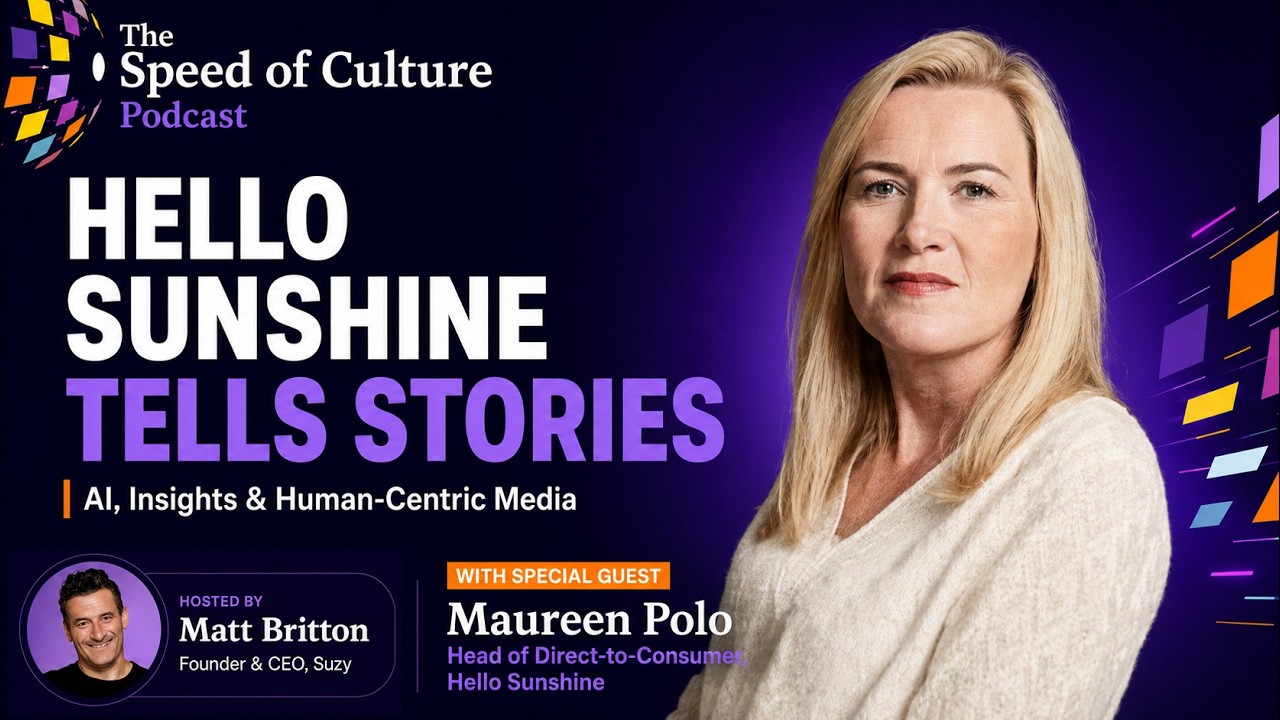
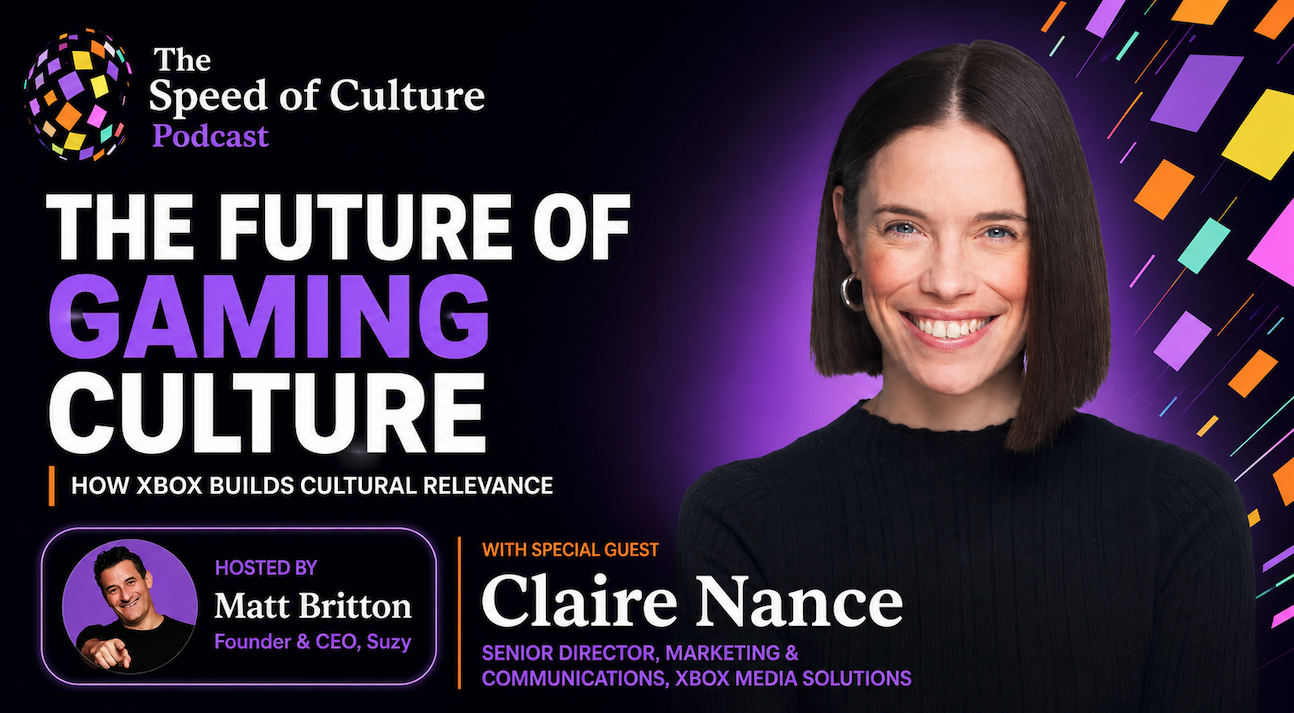
On Episode 109 of the Speed of Culture Podcast, host Matt Britton, founder and CEO of Suzy, the AI-powered consumer intelligence platform, sat down with Maureen Polo, Head of Direct-to-Consumer at Hello Sunshine, to explore the mechanics behind one of media's most successful direct-to-consumer operations. The conversation centered on a critical insight that separates industry leaders from the rest: leveraging technology to enhance human-centric storytelling rather than replacing it.
Maureen Polo's trajectory to leading Hello Sunshine's DTC efforts is itself a testament to the importance of understanding audiences. Previously, she led marketing strategy and solutions for WarnerMedia's entertainment portfolio, including HBO Max, TBS, truTV, Adult Swim, and Cartoon Network, a background that gave her deep insights into how to reach, engage, and retain media audiences at scale.
When she joined Hello Sunshine in 2022 as Head of Direct-to-Consumer, she brought this expertise to bear on a company that was already punching above its weight in the crowded media landscape. Since then, she has overseen all social, editorial, marketing, communications, and DTC brand initiatives, positioning Hello Sunshine as a masterclass in modern media strategy.
The timing of this conversation couldn't be more relevant. The direct-to-consumer media landscape of 2024 is fundamentally different from even five years ago. Traditional paid advertising channels have become saturated and increasingly expensive, and audience fragmentation has made broad-based campaigns less effective.
In this environment, brands that have built strong identities through differentiation and storytelling are the ones succeeding. Hello Sunshine's approach to this challenge offers a blueprint for how media companies (and by extension, any brand-focused organization) can thrive in an era where consumer expectations have never been higher and attention spans never shorter.
This blog post explores the key takeaways from the Episode 109 conversation, diving deep into how Hello Sunshine leverages technology to amplify human storytelling, the strategic imperatives of the modern DTC media landscape, and the specific initiatives that have made Reese Witherspoon's media company a benchmark for success.
For executives, marketers, and creative leaders seeking to understand where media is heading and how to position their organizations for growth, this episode offers invaluable insights grounded in real-world success.
Technology as a Storytelling Enabler: Beyond the Hype
One of the most misunderstood aspects of modern media strategy is the role of technology. Many organizations fall into one of two traps: they either dismiss technology as a distraction from "real" creativity, or they embrace it as a panacea that can replace human judgment and intuition. Maureen Polo's approach to this challenge is far more sophisticated.
For Hello Sunshine, technology serves a clear purpose: it amplifies and personalizes the human stories that sit at the core of the company's mission. This philosophy has shaped every major initiative the company has launched.
When Hello Sunshine created Solar, its in-house social agency, the goal was to help brands tell more inclusive, representative stories that reach underrepresented audiences in modern media, without automating storytelling. Technology provided the infrastructure, the targeting capabilities, and the analytics, but humans remained at the center of the creative process.
This approach becomes even more apparent when examining Reese's Book Club, Hello Sunshine's flagship DTC property that has selected 116 books since its 2017 launch. The book club uses technology (an app, a podcast, email newsletters, and social media platforms) to facilitate community engagement.
But the real magic happens in the human moments: Reese's personal selections, her voice-overs on book pages, her direct engagement with the community through comments and feedback. The technology simply creates more opportunities for these human connections to occur at scale.
The implications of this philosophy are significant. As artificial intelligence continues to permeate marketing and media, the companies that will win are those that use AI and automation as tools to enhance human creativity, not replace it.
Matt Britton's work at Suzy, the AI-powered consumer intelligence platform, reflects this same principle: the platform uses machine learning and advanced analytics to surface insights that humans then interpret, validate, and act upon. Technology is the accelerator, not the destination.
For Hello Sunshine specifically, this means that while the company employs sophisticated analytics to understand which stories resonate with different audience segments, the fundamental process of identifying and developing those stories remains a deeply human endeavor.
Maureen Polo and her team use data to inform creative decisions, not to make them automatically. This distinction has profound implications for how the company invests in talent, structures its creative processes, and builds its long-term strategy.
The DTC Media Revolution: Building Direct Relationships with Audiences
The rise of direct-to-consumer media represents one of the most significant shifts in the entertainment industry in recent decades. Historically, media companies relied on intermediaries (broadcast networks, cable providers, film studios with theatrical distribution chains) to reach audiences.
These intermediaries controlled the relationship with consumers and the data that came from those relationships. Direct-to-consumer media inverts this model.
Companies like Hello Sunshine build direct relationships with audiences, collecting first-party data, creating multiple touchpoints for engagement, and building communities around shared values and interests rather than just passive consumption.
Hello Sunshine operates across a remarkable range of DTC touchpoints. Reese's Book Club commands an engaged community of members who receive monthly book recommendations and access to exclusive content. The Bright Side, a podcast that launched under the Hello Sunshine umbrella, creates another direct relationship with audiences through audio content.
Sunnie, a Gen Z-focused platform, recognizes that Hello Sunshine's data showed Gen Z as its fastest-growing digital audience segment, and builds a dedicated property to serve this demographic. Shine Away, an in-person event now in its third year, creates offline experiences that strengthen the bonds between the brand and its community.
What makes this portfolio approach particularly sophisticated is that each property operates within the overall Hello Sunshine ecosystem while maintaining its own distinct identity and serving specific audience segments.
The strategic advantages of this DTC approach are substantial:
- Hello Sunshine owns the customer relationship. Rather than relying on algorithms controlled by Facebook, Instagram, or YouTube, the company has direct access to audience data and the ability to reach customers through owned channels.
- The company can move quickly. When Reese's Book Club identifies a story that connects with the community, Hello Sunshine can explore film and television adaptation opportunities before traditional studios even become aware of the property.
- The company builds genuine community. Audiences transform from passive consumers into active participants who feel invested in the brand's mission and values.
For other media companies, and increasingly for non-media brands seeking to build engaged audiences, this model offers a roadmap. The DTC media landscape in 2024 rewards companies that can create multiple touchpoints for engagement, invest in community-building, and use data to personalize experiences without losing the authenticity and human touch that audiences increasingly crave.
Stories That Resonate: Understanding and Serving the Female Audience
At the core of Hello Sunshine's strategy is a specific audience focus: women. This isn't a niche strategy, women represent roughly half the population and a significant portion of media consumption and purchasing power. But it is a deliberate focus that informs every creative decision, every data analysis, and every strategic initiative.
Hello Sunshine's mission statement is clear: amplify female voices. This commitment goes far beyond simply casting more women in leading roles.
It extends to whose stories get told, which themes get explored, how audiences see themselves reflected in media, and which underrepresented voices get platforms in modern media.
The data supports this focus. Hello Sunshine's audience includes 60 million women across its properties. Deeper audience research reveals important nuances: 52% of Hello Sunshine's base audience includes mothers and caretakers of Gen Z girls, representing a demographic with distinct media preferences, purchasing behaviors, and values.
Gen Z itself represents the company's fastest-growing digital audience segment, suggesting that Hello Sunshine's commitment to diverse storytelling resonates across generations.
Maureen Polo's work has focused significantly on deepening this audience understanding and translating it into content and marketing strategy. The creation of Solar, the in-house social agency, emerged from recognizing that brands themselves were hungry for guidance on how to tell more inclusive and representative stories.
Hello Sunshine took its own expertise and created a service line around it, a move that generates additional revenue while also extending the company's influence over the media ecosystem.
The book club is selecting stories about women's experiences, struggles, and triumphs that help readers see themselves reflected in literature. Sunnie is a platform designed specifically around the experiences, challenges, and aspirations of Gen Z girls.
The Bright Side podcast is a space where conversations center on positive and inspiring stories that tend to be underrepresented in traditional media.
Rather than trying to appeal to everyone and ending up with bland, inoffensive content, Hello Sunshine speaks specifically to particular audiences, acknowledges their unique perspectives, and centers their stories and values.
Data-Driven Creativity: Using Consumer Intelligence to Inform Content Strategy
The intersection of data analytics and creative decision-making has long been fraught with tension. Hello Sunshine's approach offers a more nuanced perspective.
Maureen Polo and her team use consumer intelligence to identify which themes, stories, and storytelling approaches resonate with their audiences, but they don't allow data to dictate creative choices. Instead, they use data as one input into a human-led creative process.
Reese's Book Club selections aren't generated by an algorithm analyzing bestseller lists and reader demographics. Rather, Reese and her team identify books they believe will resonate, then use data to understand performance, engagement depth, and which audience segments respond most strongly.
This approach aligns closely with the philosophy behind Suzy. Rather than replacing human decision-makers, AI-powered platforms provide executives with real-time insights into consumer behavior, preferences, and sentiment.
A CMO using Suzy might discover that a particular demographic is significantly more interested in sustainability practices than conventional wisdom would suggest. That insight informs creative strategy, messaging, and product development, but the human remains in the decision-making loop.
Hello Sunshine monitors how different audience segments engage with book selections, which content performs best on Sunnie, which themes show up repeatedly in discussions, and where sentiment is shifting.
One particularly sophisticated aspect of this approach is its R&D function. Reese's Book Club essentially serves as a focus group of millions of women, providing real-time insight about which stories have staying power and which themes connect with audiences.
Hello Sunshine uses these signals to inform its film and television development strategy, identifying properties with built-in audience demand before committing significant production resources. This dramatically reduces investment risk and increases the likelihood of commercial success.
The key lesson is clear: data and creativity aren't opposing forces but complementary tools. Data can't tell you what story to tell, but it can reveal what audiences care about, what messages resonate, and how to reach the people most likely to engage.
Building Community in an Atomized Media Landscape
Perhaps the most underestimated aspect of Hello Sunshine's success is its ability to build genuine community. In an increasingly atomized media landscape, creating spaces where people feel connected to each other and to a brand is exceedingly valuable.
Reese's Book Club demonstrates this principle in action. Members are reading the same book, discussing it, sharing thoughts through the app, and participating in giveaways and exclusive events.
The book club's hashtags (#ReesesBookClub, #ReadWithReese) serve as social seals of approval that signal cultural importance and belonging. The consistent monthly cadence creates ritual and anticipation.
Shine Away, the in-person event now in its third year, adds another dimension. In a digital-first world, convening audiences in physical space creates deeper relationships and lasting memories.
Sunnie tailors its community-building approach to Gen Z preferences. It functions as an interactive ecosystem across Instagram, TikTok, YouTube, Pinterest, a website, a virtual zine, and in-person events.
The value of community extends beyond engagement metrics. Communities drive word-of-mouth marketing, improve retention, increase lifetime value, and create network effects where the value of a property increases as more people join.
When audiences feel like they're part of something bigger than themselves, they're less likely to churn to competing platforms. Hello Sunshine embraces consistent investment, authentic engagement, and active feedback loops to sustain that loyalty.
Looking Forward: The Evolution of DTC Media and the Importance of Human Connection
The conversation between Matt Britton and Maureen Polo on Episode 109 of the Speed of Culture Podcast offers a window into the future of media.
First, the companies that will win in the DTC media landscape are those that combine sophisticated data analytics and technology infrastructure with deeply human creative work. Technology enables scale and personalization, but human storytelling creates meaning and emotional resonance.
Second, understanding your specific audience, not audiences in general, is essential. Hello Sunshine's focus on women, mothers, and Gen Z girls informs every strategic decision.
Third, community building remains undervalued relative to audience growth metrics. Direct relationships and engaged communities are increasingly valuable assets.
Finally, integrating creative work and consumer intelligence represents a frontier for competitive advantage. Organizations that use data to understand audiences while preserving authenticity will outperform those that treat data and creativity as opposing forces.
As the media landscape continues to evolve, the principles that guide Hello Sunshine's success will only become more important. Audiences will continue to seek stories that reflect their values, experiences, and aspirations.
Successful media companies will provide those stories in personalized and engaging ways, creating communities of people who feel seen, heard, and valued.
Key Takeaways
- Technology amplifies rather than replaces human storytelling. Hello Sunshine uses data, automation, and digital tools to enable better creative work and deeper audience connections, not to automate the creative process itself.
- Direct-to-consumer media builds more valuable audience relationships than intermediary-dependent models. First-party data, owned channels, and direct engagement transform audiences into active community members.
- Specific audience focus creates competitive advantage. Hello Sunshine's focus on women, mothers, and Gen Z girls allows the company to create deeply resonant content.
- Community is an undervalued strategic asset. In an atomized media landscape, the ability to convene audiences generates significant competitive and financial advantages.
- Consumer intelligence informed by data, human creativity enabled by technology. The most effective DTC strategies use analytics to understand audience needs while preserving authenticity and emotional power.
Frequently Asked Questions
What is Hello Sunshine and what does Maureen Polo do?
Hello Sunshine is Reese Witherspoon's media company founded in 2016 that creates content across film, television, books, and digital platforms with a focus on amplifying female voices. Maureen Polo serves as Head of Direct-to-Consumer at Hello Sunshine, overseeing all social, editorial, marketing, communications, and DTC brand initiatives.
Before joining Hello Sunshine, she led marketing strategy for WarnerMedia's entertainment portfolio including HBO Max, TBS, and Cartoon Network.
How does Hello Sunshine use technology in its content strategy?
Hello Sunshine uses technology as an enabler rather than a replacement for human creativity. The company employs data analytics to understand which themes and stories resonate with different audience segments, while keeping creative decisions human-led.
Platforms like the Reese's Book Club app, podcasts, and social media provide infrastructure for community engagement, with human judgment remaining central to content selection and development.
What makes Hello Sunshine's direct-to-consumer approach different from traditional media companies?
Traditional media companies rely on intermediaries like broadcast networks or streaming platforms to reach audiences. Hello Sunshine builds direct relationships through properties like Reese's Book Club, Sunnie, The Bright Side podcast, and Shine Away events.
This allows the company to own first-party data, move quickly on new opportunities, and build genuine communities invested in the brand's mission.
How does Hello Sunshine identify which stories to develop into film and television?
Reese's Book Club serves as both a community engagement property and a market research engine. By monitoring engagement levels, audience enthusiasm, and recurring themes, Hello Sunshine identifies stories with built-in demand.
This approach allows the company to reduce development risk and prioritize properties with proven audience appeal before committing significant production resources.
Looking Ahead
The conversation between Matt Britton and Maureen Polo on Episode 109 illuminates critical principles for modern media strategy and audience engagement.
For more insights on consumer behavior, AI's role in marketing, and the future of brand engagement, explore these resources:

%20(400%20x%20100%20px)%20(300%20x%2050%20px)%20(150%20x%2050%20px).avif)