February 21, 2023
People are Brands, Brands are People with Thai Randolph, CEO of Hartbeat

Thai Randolph
CEO
This is some text inside of a div block.
This is some text inside of a div block.
LISTEN ANYWHERE YOU FIND YOUR PODCASTS
%20(400%20x%20100%20px)%20(300%20x%2050%20px)%20(150%20x%2050%20px).avif)

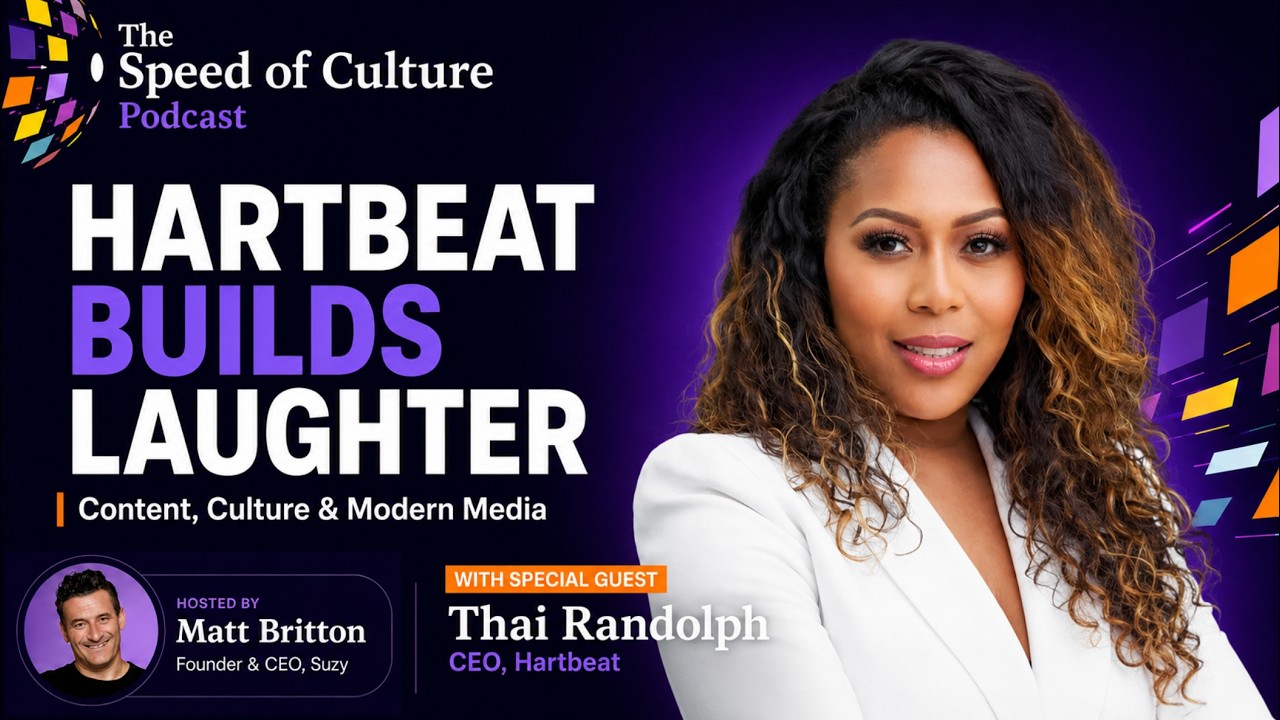
In the rapidly evolving landscape of entertainment and consumer culture, the line between celebrity and brand has become increasingly blurred. Matt Britton, founder and CEO of Suzy, the AI-powered consumer intelligence platform, sat down with Thai Randolph, CEO of Hartbeat, to explore this paradigm shift on the Speed of Culture Podcast. Their discussion reveals how forward-thinking entertainment companies are building authentic brand partnerships and navigating the complex intersection of culture, commerce, and celebrity identity.
Thai Randolph's leadership of Hartbeat, Kevin Hart's multi-platform media company, provides a compelling case study in modern entertainment strategy. Under her direction, Hartbeat has transformed from a single artist's creative outlet into a $650 million media empire, producing over 20 projects in 2022 alone and pioneering new approaches to celebrity branding.
The conversation between Britton and Randolph delves into how successful entertainment organizations are redefining what it means for people to become brands and how brands can authentically embody human values. For business leaders and marketing professionals watching consumer behavior evolve, this episode offers critical insights into the future of celebrity endorsements, entertainment partnerships, and the creator economy.
The entertainment industry has undergone a profound transformation over the past decade. Traditional models where celebrities simply endorsed products or appeared in advertisements have given way to more sophisticated, integrated approaches where celebrities build and control their own entertainment empires.
Thai Randolph's role at Hartbeat exemplifies this shift. Rather than being purely a talent management company or a production studio, Hartbeat operates as a comprehensive media platform that blurs the boundaries between content creation, brand building, and strategic partnerships.
This evolution reflects a broader transformation in how consumers engage with entertainment and brands. According to market research, celebrity-founded beauty brands alone exceeded $1 billion in sales in 2023, with growth rates of 44% annually. The success of these ventures demonstrates that audiences are increasingly seeking authenticity and direct connections with the personalities they admire.
When celebrities build their own brands rather than simply endorsing external products, they create a narrative of control, vision, and commitment that resonates deeply with audiences.
Hartbeat's multi-platform approach (encompassing comedy, film, television, digital content, and live entertainment) demonstrates how modern entertainment companies must operate across multiple channels to maintain relevance and reach diverse audience segments. The company's ability to produce over 20 projects annually, ranging from stand-up specials to feature films to digital series, showcases the operational sophistication required to compete in today's entertainment marketplace.
This level of production capacity requires not just creative talent but robust infrastructure, strategic partnerships, and an acute understanding of audience preferences across different platforms.
One of the central themes emerging from Randolph's leadership at Hartbeat is the importance of authenticity in brand partnerships. Unlike traditional endorsement deals where the relationship between celebrity and product often feels transactional, Hartbeat's approach prioritizes cultural alignment and mutual value creation.
Randolph emphasizes that successful partnerships stem from genuine belief in and connection to the brand or product being promoted. This philosophy directly challenges the old Hollywood model where A-list celebrities would attach their names to virtually any product for substantial fees.
Modern audiences, particularly younger demographics including Gen Z, have become remarkably sophisticated at detecting inauthentic partnerships. They expect the celebrities and personalities they follow to make deliberate choices about the brands they associate with.
Hartbeat's track record of selective partnerships demonstrates that this approach is not only more ethical but also more commercially effective. When a celebrity or entertainment entity promotes something they authentically believe in, the marketing message carries far greater weight and credibility.
The convergence of entertainment and commerce has created new opportunities for creativity and audience engagement. Content that blends entertainment value with brand storytelling has become increasingly effective at driving consumer behavior.
Rather than interrupting entertainment with advertising, modern brands are working with content creators to embed brand narratives directly into compelling stories. Hartbeat's production capabilities position the company to lead this trend, creating content that entertains audiences while seamlessly integrating brand partnerships that feel organic and purposeful.
Matt Britton's expertise as founder of Suzy, an AI-powered consumer intelligence platform, brings a critical lens to understanding how entertainment companies can make better strategic decisions. Consumer intelligence, the practice of gathering, analyzing, and acting on real-time data about what audiences want, think, and will do, has become essential for entertainment companies seeking to maximize the impact of their content and partnerships.
For organizations like Hartbeat, understanding consumer preferences across different demographics, platforms, and content formats is essential for optimizing content strategy and partnership decisions. Which audiences will respond most positively to specific content? How do preferences vary across geographic regions? What messaging resonates most authentically with target demographics?
These questions can only be answered through systematic analysis of consumer behavior and preferences.
The integration of consumer intelligence into entertainment strategy has significant implications for how companies approach brand partnerships. Rather than relying on intuition or historical precedent, forward-thinking entertainment organizations are using data-driven insights to identify partnership opportunities that align with their audience's values and preferences.
This approach reduces the risk of partnerships that feel inauthentic or misaligned with audience expectations, while increasing the likelihood that collaborations will resonate and drive meaningful engagement.
Creating compelling content across multiple platforms represents one of the central challenges facing modern entertainment companies. Audiences today consume content on traditional linear television, streaming platforms, social media, podcasts, and live events.
Each platform has its own technical requirements, audience expectations, and business models. Hartbeat's ability to produce content that works effectively across these diverse channels demonstrates the sophistication required to succeed in contemporary entertainment.
Different platforms require fundamentally different content strategies. A stand-up comedy special that works on Netflix may need to be adapted differently for a social media platform like TikTok or Instagram.
The production timeline for a feature film differs dramatically from the rapid-turnaround content required for social platforms. Audience expectations regarding content length, pacing, style, and tone vary significantly across platforms.
Hartbeat's multi-platform success suggests that the company has developed systematic approaches to understanding these differences and adapting content accordingly.
The fragmentation of audience attention across multiple platforms has also created new opportunities for how celebrities and entertainment companies engage with fans. Live events, digital exclusives, behind-the-scenes content, and interactive experiences allow entertainment companies to build deeper connections with their audiences.
These touchpoints provide opportunities not just for content consumption but for direct engagement, feedback, and community building. This shift from passive consumption to active participation represents a fundamental change in how entertainment companies think about their relationship with audiences.
The central thesis of Randolph and Britton's discussion. That people are brands and brands are people, challenges traditional distinctions between celebrity and commercial enterprise. In an era where personal authenticity is increasingly valued by consumers, the most successful entertainment figures and companies are those that blur the boundaries between their personal values and their commercial ventures.
Thai Randolph's leadership approach at Hartbeat reflects this philosophy. Rather than positioning Kevin Hart's entertainment company as a separate commercial entity, Hartbeat is fundamentally built around Hart's vision, values, and creative voice.
The company's success is inextricably linked to Hart's reputation, brand, and cultural relevance. This integration means that Hartbeat's strategic decisions must always account for how they align with Hart's personal brand and public perception.
For contemporary audiences, this convergence represents a shift toward seeking transparency and authenticity from the celebrities and brands they support. When a public figure or entertainment company makes decisions purely for commercial gain without regard to how those decisions align with their values or how their audience might perceive them, the backlash can be significant.
Conversely, when entertainment figures and companies demonstrate that their commercial decisions genuinely align with their values, audiences respond with increased loyalty and engagement.
This evolution has significant implications for how entertainment companies approach partnerships, content creation, and business strategy. It suggests that the most sustainable approach to brand building in entertainment is one that prioritizes authenticity, cultural alignment, and genuine value creation for audiences.
Companies that view partnerships, content, and audience relationships primarily through a commercial lens risk alienating audiences who increasingly expect entertainment figures and companies to demonstrate values and commitments that extend beyond profit maximization.
The insights emerging from Randolph and Britton's conversation offer valuable lessons for business leaders beyond the entertainment industry. As consumer culture becomes increasingly influenced by entertainment and celebrity, and as audiences become more sophisticated consumers of content and advertising, the lessons from Hartbeat's success apply broadly to brand building and audience engagement.
First, authenticity and cultural alignment matter more than ever. Whether an organization is an entertainment company, a consumer brand, or a B2B enterprise, audiences are increasingly sophisticated at detecting inauthenticity.
Successful brands are those that demonstrate genuine commitment to their values and make deliberate choices about their partnerships and positioning. This requires leadership that is willing to pass up commercial opportunities that don't align with their brand's core values.
Second, understanding your audience through data-driven consumer intelligence is essential for strategic decision-making. The companies winning in today's marketplace are those that combine creative instinct with systematic analysis of what audiences want, think, and will do.
Consumer intelligence tools and methodologies have become essential infrastructure for competitive entertainment companies and consumer brands.
Third, multi-platform engagement is no longer optional. Audiences consume content across diverse channels and expect brands to meet them where they are.
Entertainment companies and consumer brands that can create compelling experiences across platforms, from traditional media to social channels to live experiences, have significant competitive advantages. This requires not just distribution across multiple channels but genuine adaptation of content and messaging to match the unique characteristics of each platform.
Celebrity branding has shifted dramatically from transactional endorsement deals to authentic brand ownership and multi-platform entertainment empires. Celebrities increasingly build their own companies and product lines rather than simply endorsing external brands.
This shift reflects both changing consumer preferences for authenticity and the technological infrastructure that now enables celebrities to reach audiences directly through digital platforms.
Consumer intelligence provides entertainment companies with data-driven insights into what audiences want, prefer, and will engage with across different platforms, demographics, and content formats.
This information is essential for making strategic decisions about content creation, platform strategy, partnership selection, and audience engagement. Companies that combine creative instinct with systematic consumer analysis make better strategic decisions.
Successful partnerships in entertainment are built on genuine cultural alignment between the entertainment company or personality and the brand. The partnership should feel organic and authentic to the audiences being targeted rather than purely transactional.
The best partnerships create compelling content or experiences that serve entertainment value while naturally integrating brand narratives, resulting in engagement that benefits both parties.
The most successful entertainment companies recognize that long-term commercial success depends on maintaining authentic creative vision and alignment with audience values. Rather than viewing creativity and commerce as opposing forces, leading companies see them as complementary.
Strategic discipline about which partnerships and opportunities align with brand values, combined with sophisticated understanding of audience preferences, enables companies to achieve both creative and commercial success.
The conversation between Matt Britton and Thai Randolph provides a window into how entertainment and culture are evolving in the 2020s. As the lines between celebrity, brand, content, and commerce continue to blur, the companies and individuals who succeed will be those who navigate this convergence with authenticity, strategic sophistication, and genuine commitment to audience value.
For marketing professionals, business leaders, and entrepreneurs seeking to understand where consumer culture is heading, the Speed of Culture Podcast offers consistent insights into how culture, technology, and consumer behavior are intersecting. Matt Britton's work with Suzy combines real-time consumer intelligence with deep understanding of cultural trends, providing a unique lens into what audiences think and do.
To learn more about consumer culture, generational trends, and the future of entertainment and commerce, explore these resources: