Opening
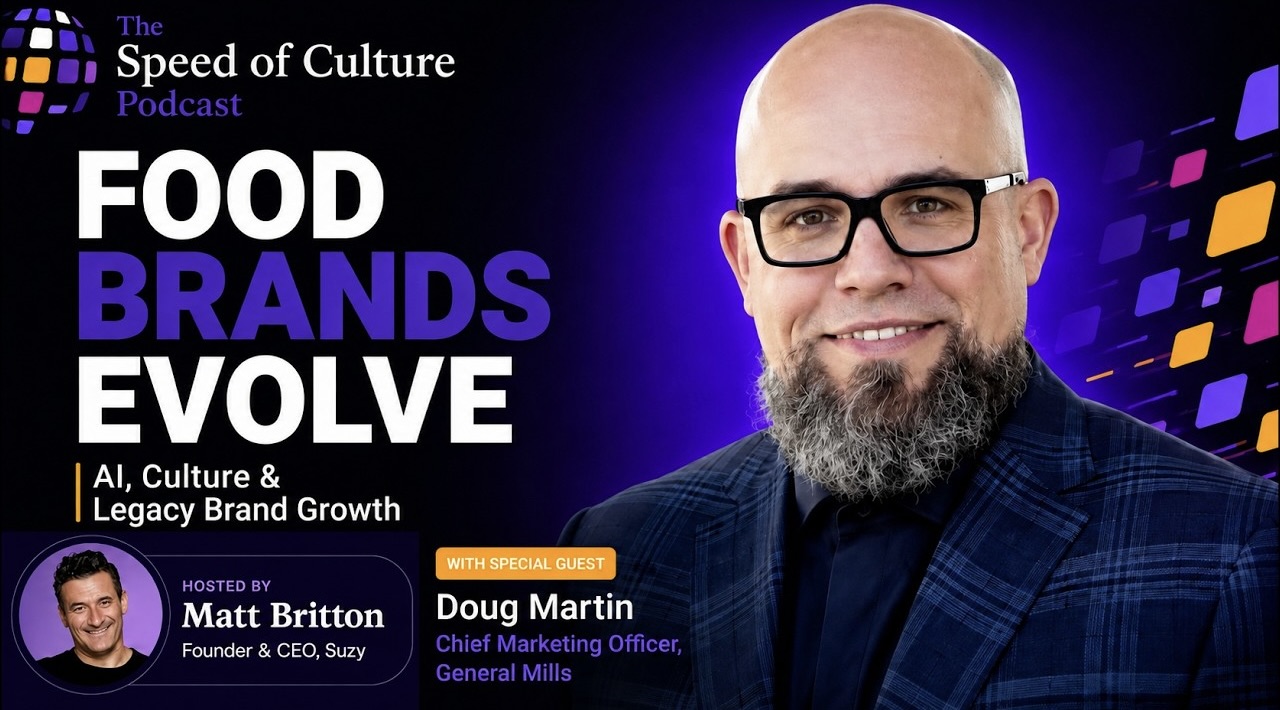
In an era where artificial intelligence drives marketing decisions and consumer data fragments across countless touchpoints, legacy food companies face an existential challenge: relevance. General Mills' Chief Marketing Officer Doug Martin confronts this reality head-on, leading one of North America's most storied consumer packaged goods portfolios. Cheerios, Haagen-Dazs, Progresso, Totino's, and dozens more brands that have defined American kitchens for generations.
During his appearance on The Speed of Culture Podcast, Martin shared candid insights into how hundred-year-old brands can act like nimble startups in a market dominated by innovation velocity and algorithmic recommendations. His philosophy centers on a counterintuitive truth: heritage is a liability without continuous relevance. The brands that thrive today are earning their place at the breakfast table, dinner table, and snack cabinet every single day rather than resting on longevity.
Matt Britton, founder and CEO of Suzy, the AI-powered consumer intelligence platform, hosts these conversations to uncover how leading brands navigate an accelerating landscape where cultural momentum and consumer behavior shift with each algorithm update. This episode of The Speed of Culture Podcast tackles the central tension of modern brand management: How do you scale consistency across a 100-brand portfolio while maintaining the creative chaos required to break through in a content-saturated world?
The answer, according to Martin, lies not in control, but in systems. Not in targeting, but in context. Not in message perfection, but in emotional clarity so powerful that consumers become your brand's amplifiers. For marketing leaders seeking to future-proof legacy businesses, this conversation offers a masterclass in operating at the speed of culture.
Building Marketing Ecosystems Instead of Silos
The traditional CMO playbook emphasizes centralized control: create the perfect brand guideline, maintain message consistency, and ensure every communication reflects the corporate strategy. Doug Martin inverts this approach. Rather than micromanaging campaigns, he focuses on building what he calls a “marketing ecosystem”, a system designed to empower 100-year-old brands to move with challenger-like velocity and punch above their weight in today's cluttered media landscape.
This ecosystem approach acknowledges a fundamental reality about modern marketing: no brand can create enough content to saturate attention alone. The brands that win are those that enable others (employees, creators, influencers, everyday consumers sharing dinner hacks on TikTok) to tell their story authentically. General Mills is competing primarily for mental real estate in an environment where consumers are exposed to millions of messages daily, rather than against other food companies.
Martin's framework involves scaling what he calls “consistent excellence” across the entire portfolio. Rather than each brand operating in isolation with its own marketing engine, the company functions as an integrated network where learnings flow between brands, media strategies align without losing autonomy, and creative standards remain high without stifling experimentation. This reduces duplication, accelerates time-to-market, and allows the organization to test tactics at scale.
The practical implementation manifests in several ways:
- Centralized excellence centers for key disciplines (social media, performance marketing, and content creation) that work across the portfolio.
- Shared data and analytics infrastructure, allowing Cheerios' performance insights to inform Totino's strategy.
- Clear brand guardrails, the “seven-word elevator pitch” instead of 48-slide brand decks. That provide clarity without prescriptiveness.
This ecosystem thinking extends to how General Mills partners with creators and influencers. Rather than controlling every mention of Cheerios, the company invests in an “influencer ecosystem” where major campaigns (like partnerships with NFL players) operate alongside grassroots creator content. The brand message becomes powerful enough that thousands of independent creators naturally amplify it because the authentic insight resonates with their audiences.
A Totino's pizza hack on TikTok doesn't come from the corporate account, it comes from a Gen Z creator genuinely excited about the product. That authenticity becomes the multiplier.
Context-Based Relevance: From Targeting to When and Where It Matters
For decades, consumer packaged goods companies built their competitive advantage on data and targeting sophistication. With detailed shopper information, purchase history, and demographic profiles, brands could construct laser-focused campaigns to reach precisely the right consumer at the right moment. That era is ending.
As first-party data access declines (driven by privacy regulation, browser changes, and platform shifts) the traditional targeting playbook no longer delivers ROI. Doug Martin reframes this constraint as opportunity. Instead of obsessing over who you're reaching through detailed segmentation, General Mills shifts focus to when and where consumers are most receptive.
The company calls this “context-based relevance.”
Consider the classic scenario: a household needs dinner in 45 minutes. A parent is mentally cycling through options, what's in the freezer, what sounds good, what can come together quickly. In that moment of “what's for dinner,” Totino's has extraordinary value. It's not about whether you're a 35-year-old suburban parent with two kids and a household income of $75K. It's about what you need right now.
This shift has profound implications for media strategy. General Mills moves budget away from spray-and-pray targeting toward platforms and moments where consumers are actively problem-solving or seeking inspiration. The company leans heavily into TikTok and Instagram for younger audiences because those platforms capture moments when users are scrolling for meal ideas, snack inspiration, or creative food hacks.
Performance marketing shifts from “reach everyone in this demographic” to “reach everyone searching for this type of content.”
The approach extends to product and experience design. When General Mills launched Cheerios Protein in late 2024, positioning the brand toward health-conscious consumers and protein-focused diets, the company paired product innovation with content strategy targeting the exact moments when consumers consider breakfast nutrition. Educational content about protein intake aligns the brand with consumer decision-making at the precise moment of relevance.
This context-based thinking also informs how General Mills segments its consumer universe. Rather than traditional demographic categories, the company identifies behavioral and need-state segments:
- The 55+ consumer prioritizing health and wellness
- The GLP-1 user seeking foods compatible with new dietary patterns
- The Hispanic shopper for whom cultural relevance and authentic representation matter profoundly
For each segment, the company asks: “Where do these consumers naturally congregate? What moments matter most? How can our brands provide authentic value in those contexts?” The answers shape product formulation, packaging, media placement, and creative strategy.
Emotional Clarity Over Message Control in an AI-Saturated World
One of Martin's most provocative insights addresses a paradox of modern marketing: as everyone gains access to the same AI tools and consumer intelligence platforms, differentiation becomes nearly impossible through traditional means. If every brand uses the same data science toolkit, if every agency deploys generative AI to brainstorm creative concepts, and if every platform's algorithm operates on similar principles, then competitive advantage dissolves.
If everyone's message sounds the same, no one gets remembered.
In this environment, the brands that break through are those delivering unexpected, distinctly human creative. This doesn't mean marketing becomes un-data-informed. Rather, it means that after the data and analytics point toward opportunity, creative excellence becomes the moat.
The insight might be data-driven (“consumers in this moment seek convenience”), but the creative response must transcend commodity thinking. A Totino's campaign celebrating the joy of pizza night goes beyond product benefits to emotional resonance so clear and powerful that people repeat it, share it, and internalize it.
Martin emphasizes that this emotional clarity doesn't require complexity. General Mills standardized around a principle of “seven words or less”, if you can't distill your brand's core positioning to fewer than seven words, it's not clear enough. This runs counter to the industry norm of 48-slide brand positioning decks and countless attributes.
Brevity demands clarity. Clarity enables amplification.
Rather than producing the “perfect” campaign and distributing it across channels, the company focuses on core creative ideas so potent that they generate spins, variations, interpretations, and adaptations from creators and consumers themselves. A clever Progresso soup hack might originate from corporate content, but the real amplification happens when home cooks share their own variations, each adding their authentic voice while maintaining the emotional core.
This approach also shapes how General Mills interacts with emerging technologies. Rather than viewing AI as a replacement for human creativity, the company positions AI as an accelerator of human creativity. AI helps identify trends, accelerate research, and test ideas at scale. But the campaign concept and emotional hook remain human-generated.
The best AI marketing in 2025 doesn't feel like it was written by a machine. It feels unexpectedly human.
The Daily Earning Principle: Heritage Alone Doesn't Guarantee Loyalty
Perhaps Doug Martin's most important contribution to brand strategy thinking is what he calls the “daily earning principle.” This concept directly challenges assumptions many legacy brands hold about their competitive advantage.
A 100-year-old brand with deep distribution and awareness might assume these assets provide durable moats. Martin's perspective is more demanding: every single day, Cheerios must earn its place in the consumer's breakfast routine.
This shift from “we've always been here” to “we're earning this moment” transforms how legacy brands operate. Heritage is a baseline expectation that must be continuously validated through superior product quality, delightful consumer experiences, and values that feel current and authentic.
The daily earning principle plays out across three dimensions:
- Product excellence. Cheerios must taste great, offer genuine nutritional benefits, and represent honest value. Product innovation, like Cheerios Protein, ensures the portfolio evolves alongside changing breakfast needs.
- Experience design. The brand includes every touchpoint: TikTok creators, Instagram recipes, retail interactions, and earned media. Each moment either reinforces or erodes trust.
- Authentic values. Consumers care about sustainability, inclusivity, and social contribution. Brands must reflect these priorities in ways that feel genuine, not performative.
The daily earning principle also reshapes how General Mills approaches heritage. Rather than using history as a crutch, “Cheerios have been here for 100 years, therefore buy them” the company frames history as context for ongoing innovation.
“We've been feeding families for a century, and here's how we're evolving to meet your needs today” becomes the narrative.
This philosophy extends to portfolio strategy. General Mills regularly evaluates which brands warrant continued investment and which have reached the end of their earning curve. The company isn't afraid to sunset brands that no longer resonate or incubate new brands addressing emerging needs, even if that means cannibalizing legacy revenue.
The Influencer Ecosystem and Relinquishing Total Message Control
In traditional brand management, the goal was maximum message control. That model has become impossible to execute, and, Martin argues, undesirable to attempt. Instead, successful brands build an influencer ecosystem where clarity about brand essence is so powerful that others naturally amplify it.
This ecosystem operates at multiple levels:
- Macro influencers and cultural partnerships generate awareness and cultural moments, such as partnerships with high-profile athletes that spark earned media and conversation.
- Mid-tier creators and niche communities build targeted affinity. A TikTok creator focused on quick weeknight dinners becomes a credible advocate because the product genuinely solves their audience's problem.
- Everyday consumer creators amplify through user-generated content, parents sharing dinner moments or home cooks experimenting with recipes.
Building a thriving influencer ecosystem requires relinquishing the control instinct. General Mills cannot dictate exactly how creators will speak about Cheerios. But this “loss” of control unlocks greater reach and credibility than paid campaigns alone.
This shift also changes how marketing effectiveness is measured. Instead of focusing solely on message delivery, ecosystem thinking emphasizes message resonance and amplification. The best metric is the volume and authenticity of consumer-generated variations on the brand theme, rather than impressions.
Key Takeaways
- Marketing ecosystems beat silos. Integrated systems enable scaling across 100+ brands while maintaining flexibility and speed.
- Context matters more than who. Shift from demographic targeting to identifying receptive moments and environments.
- Emotional clarity is the moat in an AI-saturated world. Distinctly human creative, distilled to essential clarity, breaks through algorithmic sameness.
- Heritage requires daily validation. Legacy brands must earn their place every day through superior products, experiences, and values.
- Relinquish control to gain reach. Influencer ecosystems and user-generated content unlock amplification no paid campaign can replicate.
FAQ
How can legacy brands compete against agile, data-focused challenger brands?
Legacy brands possess advantages challenger brands cannot easily replicate: established distribution, consumer trust, and the ability to invest significantly in innovation. However, these assets become liabilities if the organization operates with legacy thinking.
Martin emphasizes that legacy brands must operate with challenger-like speed and creativity while leveraging their distribution and trust advantages. This requires moving from siloed brand teams to integrated ecosystems where speed and innovation are possible, and maintaining relentless focus on product innovation that addresses evolving consumer needs.
How should B2B brands adapt these principles for enterprise sales environments?
While Martin's examples focus on consumer food brands, the core principles translate across industries. Context-based relevance becomes identifying key decision-making moments in the B2B buying journey and delivering relevant content precisely when prospects evaluate solutions.
Emotional clarity means distilling complex enterprise propositions into core value propositions that resonate with multiple stakeholders. The influencer ecosystem translates to peer communities, analysts, and customer advocates who authentically champion the brand.
What should CMOs prioritize first when transitioning to context-based marketing?
Martin's approach suggests three concurrent priorities:
- Invest in understanding consumer need-states and decision-making moments relevant to your category.
- Identify the platforms and contexts where those moments naturally occur.
- Create content and experiences optimized for those moments rather than broad mass-market messaging.
Start with one or two core need-states where your brand delivers clear value, prove the model, and scale from there.
How does AI change the urgency of adopting these strategies?
AI accelerates both opportunity and threat. Brands that embrace AI can scale personalization and test creative variations at unprecedented speed, but competitors have access to the same tools.
The brands that differentiate won't be those with better AI alone, but those with more powerful human creativity and clearer emotional resonance. That makes Martin's principles more urgent than ever.
Looking Ahead
The brands that thrive in the next decade won't be distinguished by heritage, distribution advantage, or marketing budget. They'll be distinguished by the ability to operate as dynamic systems that scale innovation, clarity, and human creativity across portfolios and markets.
Doug Martin's philosophy. That 100-year-old brands can act like challengers, that emotional clarity matters more than message perfection, and that relinquishing control amplifies reach, provides a strategic framework for making that transition.
Heritage is not a moat; speed, clarity, and authentic emotional resonance are.
To explore consumer intelligence platforms that support rapid insight gathering and testing, visit Suzy. For more episodes examining how leading brands navigate cultural acceleration, visit The Speed of Culture Podcast.
For deeper exploration of how AI and emerging consumer behavior shape brand strategy, explore Generation AI and Matt Britton’s AI keynote speaker resources. For additional marketing leadership content, visit Speaker HQ.

%20(400%20x%20100%20px)%20(300%20x%2050%20px)%20(150%20x%2050%20px).avif)