Opening
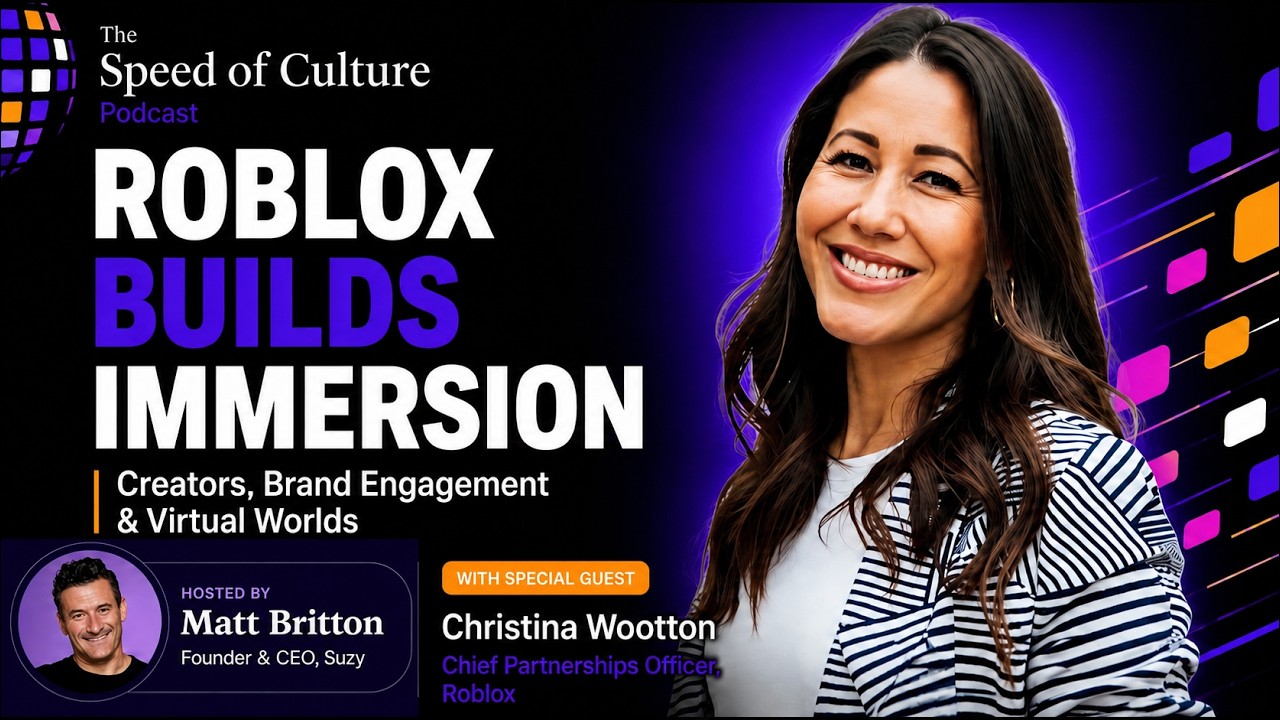
The metaverse is no longer a distant science fiction concept, it has become a thriving, legitimate commercial marketplace where brands are making real money. In Episode 180 of The Speed of Culture Podcast, host Matt Britton, founder and CEO of Suzy, the AI-powered consumer intelligence platform, sits down with Christina Wootton, Chief Partnerships Officer at Roblox, to explore why the platform has become the epicenter of brand-to-consumer engagement for Generation Z and Generation Alpha.
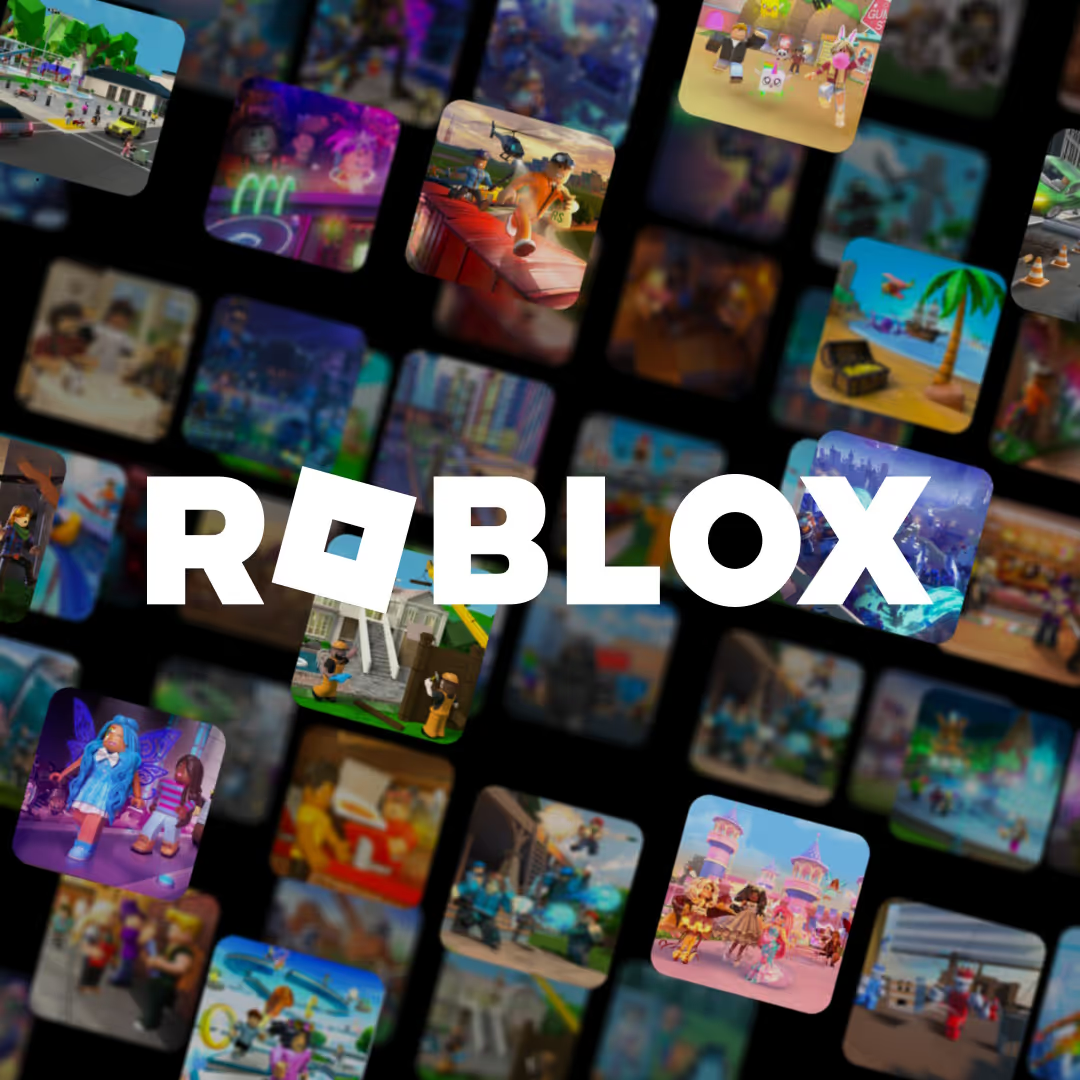
With 85 million daily active users and over 380 million monthly active users worldwide, Roblox represents one of the most accessible entry points for brands seeking to build authentic, immersive experiences that resonate with younger audiences.
Wootton, who has spent over 11 years at Roblox building partnerships that have generated more than $1 billion in revenue, brings invaluable insights into how brands are fundamentally rethinking their approach to consumer engagement. Unlike traditional advertising channels where brands interrupt audiences with promotional messages, Roblox enables brands to create user-generated, community-driven experiences where engagement becomes organic, voluntary, and deeply integrated into entertainment.
This shift represents a seismic change in how modern brands connect with digital natives who have grown up in immersive digital environments and distrust conventional marketing tactics.
The discussion reveals that Roblox is far more than a gaming platform. It's a digital ecosystem where commerce, entertainment, culture, and community converge. From virtual fashion shows to branded gaming experiences, from NFL merchandise to Elton John's groundbreaking virtual concert, Roblox has become the proving ground where brands test innovative engagement strategies.
For CMOs and marketing leaders, understanding how to effectively navigate and leverage Roblox partnerships is no longer optional; it's essential for remaining competitive in an increasingly digital-first consumer landscape.
Why Brands Shell Out Big Bucks for Roblox Partnerships
Christina Wootton's perspective cuts to the heart of why Fortune 500 companies invest heavily in Roblox partnerships: the platform offers unparalleled access to engaged, valuable audiences at scale. Roblox's 85 million daily users represent a demographic goldmine, more than half are Gen Z, with growing representation from Gen Alpha, the next wave of digital natives who will define consumer behavior for decades to come.
What makes Roblox fundamentally different from other digital platforms is the depth of engagement it facilitates. Traditional social media platforms measure success in seconds of view time; Roblox experiences generate an average of 11 minutes of user engagement per session.
This extended engagement window creates unprecedented opportunities for brands to tell more sophisticated stories, build brand affinity, and drive measurable business outcomes. When a brand invests in a Roblox experience, users are actively participating in immersive environments that blur the line between entertainment and brand expression.
The financial incentive is equally compelling. Brands increasingly view Roblox not merely as a marketing channel for brand awareness, but as a legitimate revenue-generating platform.
The ecosystem supports direct-to-consumer commerce, with brands selling virtual items, limited-edition digital goods, and branded experiences that generate quantifiable revenue. The NFL has successfully sold virtual merchandise on Roblox, while fashion brands like Nike, Tommy Hilfiger, Adidas, and Ralph Lauren have partnered with creators to develop virtual collections that appeal to audiences who are willing to spend real money on digital assets.
Furthermore, research demonstrates measurable real-world purchasing impact. According to Roblox's 2023 Digital Expression, Fashion & Beauty Trends Report, 84% of Gen Z users on the platform report being “somewhat likely” or more likely to consider a brand in the physical world after trying on virtual items, with 50% indicating they are “very” or “extremely” likely to make that transition.
This bridges the critical gap between digital experience and offline consumer behavior, proving that metaverse engagement directly influences purchasing decisions in the physical marketplace.
The Creator Economy as the Engine of Authentic Brand Connection
One of Wootton's most compelling points centers on the power of the creator economy within Roblox. Rather than forcing top-down brand narratives, successful Roblox partnerships empower creators, the platform's most trusted voices, to develop experiences that organically integrate brand messaging.
This approach acknowledges a fundamental truth about Gen Z consumer psychology: this generation fundamentally distrusts traditional advertising but deeply values authentic voices and peer recommendations.
Roblox creators have built massive, loyal communities. When a creator launches a branded experience, their followers perceive it as a trusted recommendation rather than a corporate advertisement.
This distinction is crucial. Gen Z and Gen Alpha have developed sophisticated marketing literacy; they can detect and reject inauthentic brand messaging within milliseconds. But they engage enthusiastically with creator-led experiences because those creators have already earned trust through consistent, high-quality entertainment.
The creator economy on Roblox also solves a critical challenge for legacy brands: cultural relevance. Established companies often struggle to maintain credibility with younger audiences.
By partnering with creators who understand Gen Z culture intuitively, brands gain access to cultural insight and authenticity they couldn't manufacture internally. Creators serve as cultural translators, helping brands navigate the rapidly evolving preferences, language, humor, and values that define youth culture.
This partnership approach has proven more effective than any amount of top-down brand storytelling.
Additionally, the economics of creator partnerships benefit both parties. Roblox creators earn substantial revenue through various monetization mechanisms, creating career opportunities that incentivize high-quality creative work.
Brands benefit from access to fresh, innovative creative talent. This alignment of incentives generates better outcomes than traditional advertising arrangements where brand and creator interests often diverge.
From Virtual to Physical: The Metaverse as Commerce Bridge
Wootton emphasizes a critical strategic insight: successful brands are thinking about Roblox as more than a brand awareness channel. They're viewing the platform as an essential component of integrated, omnichannel commerce strategies. The metaverse, particularly Roblox, serves as a bridge between digital and physical consumer behavior.
This hybrid approach is exemplified by brands that use Roblox experiences to drive awareness, build emotional connection, test new products, and ultimately influence purchasing decisions across all consumer touchpoints.
A brand might launch a limited-edition virtual clothing collection on Roblox, generating digital revenue while simultaneously building awareness for a complementary physical product launch. The virtual experience serves as proof of concept, market testing, and demand generation simultaneously.
Roblox's recent expansion of Commerce APIs represents a significant evolution, allowing creators to sell physical merchandise directly within their games and experiences. This functionality removes friction between discovery and purchase, enabling consumers to move seamlessly from digital experience to physical product acquisition without leaving the platform.
The convergence of digital and physical commerce on a single platform creates efficiency gains and removes barriers to conversion.
For younger audiences, this integration feels natural and expected. Gen Alpha especially, having grown up entirely in digital environments, doesn't experience the same psychological distinction between virtual and physical purchases.
A Gen Alpha user who has spent hours customizing a virtual avatar is entirely comfortable purchasing physical apparel to match their digital style. Brands that recognize and enable this seamless integration capture consumer spending across both channels.
The implications extend beyond simple commercial transactions. Successful Roblox partnerships are teaching brands how to think about consumer engagement holistically, across digital and physical touchpoints.
This mindset shift has implications for broader digital transformation strategies, helping companies understand how immersive technologies can enhance rather than replace traditional commerce.
AI-Powered Creation and the Future of Brand Experiences
Wootton highlights an emerging technology trend that will reshape brand engagement on Roblox: artificial intelligence. The platform is investing heavily in AI tools that lower technical barriers to content creation, enabling more creators to develop higher-quality experiences faster.
This democratization of creative tools has profound implications for brand partnerships.
Historically, developing high-quality branded experiences required substantial technical expertise and investment. This limitation meant that only well-resourced brands could participate meaningfully in immersive platform experiences.
AI-powered creation tools are changing this dynamic. Smaller brands, emerging companies, and independent creators can now develop sophisticated, engaging experiences without requiring extensive engineering or game development backgrounds.
For established brands, AI tools enable more rapid experimentation and iteration. A brand can test multiple experience concepts, gather user feedback, and refine offerings in real time, something that was logistically and financially prohibitive in previous eras.
This agility matters enormously in youth-focused marketing, where trends evolve at incredible velocity. The brands that can rapidly adapt and experiment will outpace competitors bound by slower, more traditional development cycles.
The AI acceleration also creates opportunities for hyper-personalization. As Roblox's AI capabilities mature, brands may be able to deliver customized experiences tailored to individual user preferences, behavior patterns, and demographic characteristics.
Imagine a Roblox experience where the brand narrative subtly shifts based on a player's in-game choices, creating a personalized journey for each user. This level of sophistication in consumer engagement represents a generational leap in marketing effectiveness.
However, Wootton's emphasis on AI tools also carries an implicit caution: success on Roblox will increasingly require not just creative talent but also technical sophistication. Brands that invest in understanding and leveraging AI-powered tools will establish competitive advantages.
Those that ignore these capabilities risk obsolescence as the platform evolves.
Strategic Lessons for Brand Leaders and Marketing Executives
The Speed of Culture Podcast conversation with Christina Wootton distills several critical strategic insights that should inform how established brands approach metaverse engagement and Gen Z marketing.
First, authenticity remains non-negotiable. While Roblox offers sophisticated tools and massive reach, success depends on genuine integration rather than forced brand insertion. Brands that attempt to infiltrate Roblox culture without understanding community values and creator expectations will fail, often spectacularly and publicly.
The cost of brand misstep in digitally native communities is high and immediate. Successful brands conduct ethnographic research, engage deeply with creators, and build partnership models that respect the platform's culture.
Second, user-generated content and creator empowerment trump top-down campaigns. Brands that attempt to control brand narratives rigidly will struggle on Roblox. Creators and their communities expect agency and authenticity.
Brands that grant creators freedom to innovate, take creative risks, and express themselves authentically will generate more compelling experiences and stronger community engagement. This requires organizational culture shifts in many traditional companies, where marketing typically maintains tight brand control.
Third, metrics and success measures must expand beyond traditional marketing KPIs. Standard advertising metrics like impressions and click-through rates don't capture the full value of Roblox partnerships.
Brands must develop more sophisticated measurement frameworks that account for time engagement, community sentiment, brand perception shifts, and ultimately real-world purchasing impact. Suzy, Matt Britton's consumer intelligence platform, represents the type of research infrastructure that enables brands to understand and quantify metaverse marketing effectiveness.
Fourth, integration with physical commerce is essential to maximizing Roblox ROI. Brands that leverage Roblox solely for awareness or brand building will capture only partial value.
Strategic brands use Roblox experiences as demand generation for physical products, as testing grounds for new offers, as engagement mechanisms that influence multi-channel purchasing behavior. This integration requires coordination between digital marketing, e-commerce, and retail teams, breaking down organizational silos that traditionally separate online and offline strategies.
Fifth, demographic reach extends beyond Gen Z to include Gen Alpha and even younger millennials still active on the platform. While Gen Z represents the core audience, brands should recognize that Roblox reaches a broader demographic band than many assume.
Gen Alpha users in particular represent invaluable long-term audience access; building brand affinity with 10-year-olds through authentic, engaging Roblox experiences creates lifetime customer relationships. This long-term perspective should influence how brands think about Roblox investment, not as short-term marketing tactics but as foundational brand-building for the next decade.
Key Takeaways
- Roblox has become a legitimate commercial platform with 85 million daily active users and over $1 billion in brand partnership revenue, representing unparalleled access to engaged Gen Z and Gen Alpha audiences at scale.
- Authentic creator partnerships and user-generated content are more effective than top-down branded campaigns, reflecting Gen Z's fundamental distrust of traditional advertising and preference for peer-recommended experiences.
- The metaverse functions as a bridge between digital and physical commerce, with 84% of Gen Z users indicating likelihood to purchase physical products based on virtual brand experiences.
- AI-powered creation tools are democratizing access to immersive brand experience development, enabling smaller brands to compete while allowing established companies to experiment and iterate rapidly.
- Strategic success on Roblox requires integrated thinking that spans content creation, community engagement, data analysis, commerce integration, and long-term audience relationship building rather than transactional short-term marketing campaigns.
Frequently Asked Questions
How much do brands typically spend on Roblox partnerships?
Roblox partnership investment varies enormously based on experience scope, creator involvement, and campaign duration. Entry-level branded experiences may cost $50,000 to $200,000, while sophisticated multi-month campaigns with prominent creator partnerships can reach $500,000 to $2 million.
The platform's monetization model means brands can also benefit from revenue sharing on successful experiences, creating potential upside beyond initial investment. Forward-thinking brands view this spending as market research and audience relationship investment rather than traditional media spend.
What types of brands see the most success on Roblox?
Brands across diverse categories have found success, but certain characteristics predict stronger outcomes.
- Fashion and apparel brands (Nike, Tommy Hilfiger, Ralph Lauren) leverage avatar customization desires.
- Entertainment brands (Netflix, Disney, Warner Bros) create story-driven experiences.
- Beverage and snack brands develop casual, social experiences.
- Sports franchises (NFL) sell merchandise and create fan engagement.
- Technology brands use Roblox for product education and brand building.
Successful brands typically share authentic interest in the community rather than simply seeking demographic reach.
How can brands measure Roblox partnership effectiveness?
Effective measurement requires multi-layered approach: engagement metrics (time spent, repeat visits, user retention), sentiment analysis and community feedback, brand perception tracking through surveys, and ideally, attribution modeling connecting Roblox exposure to downstream purchasing behavior.
Advanced brands integrate Roblox data with first-party customer data, enabling sophisticated cross-channel attribution. Suzy and similar consumer intelligence platforms enable this type of comprehensive measurement, allowing brands to demonstrate clear ROI on Roblox investments to internal stakeholders.
Is Roblox marketing only relevant for Gen Z brands?
While Gen Z represents the core demographic, Roblox reaches meaningful Gen Alpha audiences and retention from older millennials. Brands should recognize Roblox as essential for building long-term affinity with younger consumers, creating customer relationships that span decades.
Additionally, many adult-oriented brands (financial services, automotive, corporate employers) are discovering Roblox value for employer branding, talent recruitment, and long-term brand building. The platform's demographic breadth is expanding beyond initial perception of purely youth-focused marketing.
Looking Ahead
The conversation between Matt Britton and Christina Wootton illuminates a fundamental shift in how brands must engage with digitally native consumers. Roblox represents not just another marketing channel but a harbinger of how consumer engagement will evolve across the coming decade.
As immersive technologies become mainstream, as younger demographics shape consumer culture, and as boundaries between digital and physical commerce dissolve, brands that master authentic, creator-empowered, community-integrated marketing on platforms like Roblox will establish durable competitive advantages.
For leaders seeking deeper insights into Gen Z and Gen Alpha consumer behavior, shifting marketing approaches, and the business implications of cultural transformation, The Speed of Culture Podcast offers invaluable perspective.
Hosted by Matt Britton, the podcast delivers weekly conversations with executives from leading enterprises, exploring how brands can maintain cultural relevance in rapidly evolving markets.
Explore these related resources to deepen your understanding:
- The Speed of Culture Podcast - Weekly episodes exploring marketing, culture, and consumer behavior trends
- Suzy - AI-powered consumer intelligence platform enabling real-time market research and insights
- Generation AI: The Book - National bestselling exploration of how AI is reshaping Generation Alpha and consumer behavior
- AI Keynote Speaker - Executive keynote presentations on Gen Z, AI, and future consumer trends
- Speaker HQ - Full speaker platform featuring Matt Britton's available engagement formats
As brands navigate the increasing complexity of digital consumer engagement, having access to cutting-edge research capabilities and executive perspective becomes invaluable. Whether through Suzy's platform-based consumer intelligence or direct engagement with thought leaders like Matt Britton, the brands that invest in understanding emerging consumer behavior will outpace competitors relying on outdated marketing models.
%20(400%20x%20100%20px)%20(300%20x%2050%20px)%20(150%20x%2050%20px).avif)