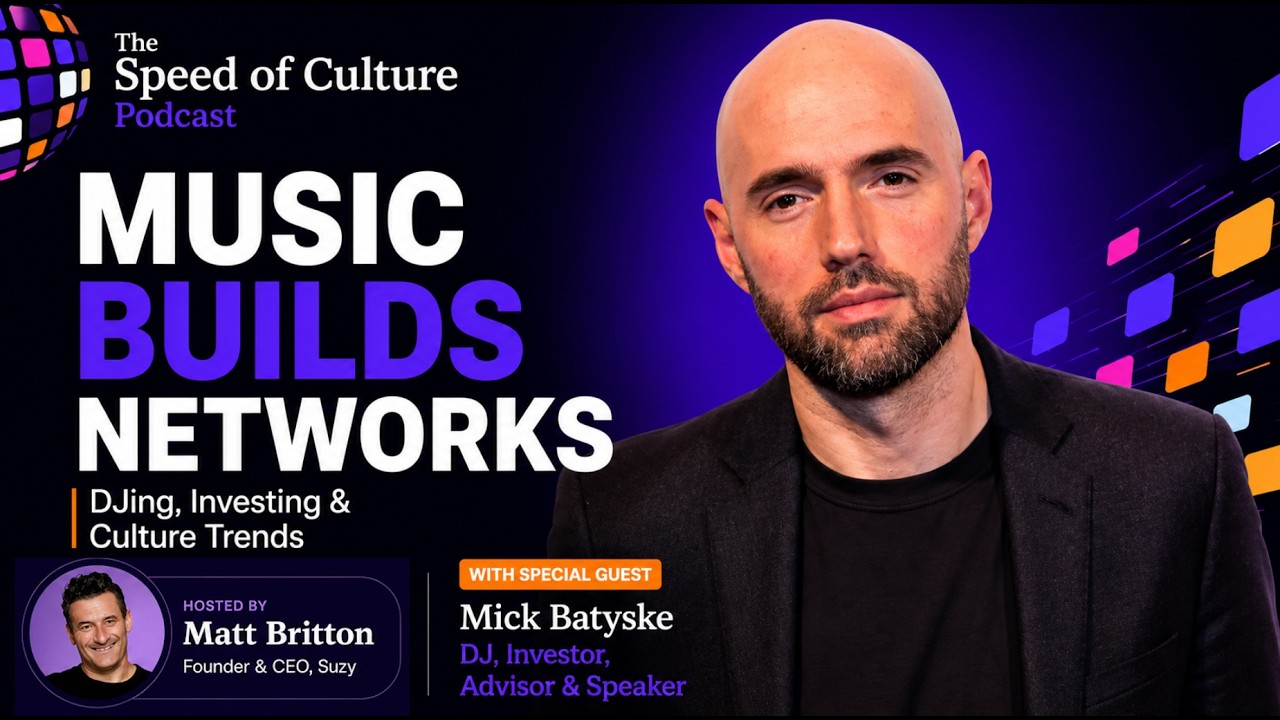
How Music, Culture, and Investing Work Together: Insights from Mick Batyske
What does being a DJ and investing have in common? At first glance, these seem like completely disparate career paths. One exists in the realm of art, culture, and entertainment, spinning tracks, reading crowds, creating memorable experiences. The other operates in spreadsheets, due diligence, and financial metrics.
Yet Mick Batyske has successfully bridged these two worlds, creating a thriving career that leverages culture as the ultimate business asset.
In this episode of The Speed of Culture podcast, Suzy founder and CEO Matt Britton sits down with Batyske (DJ, investor, adviser, and speaker at MICK) to explore how he built a meaningful network through music, the evolution of the music industry, current and future trends in the space, and the surprising parallels between curating the perfect DJ set and curating a successful investment portfolio.
Inc Magazine referred to him as “a combination of Gary Vaynerchuk and Questlove.” Complex Music called him “the most entrepreneurial DJ.”
Despite these accolades, Batyske remains grounded, identifying himself first as a father and network builder. This foundation has enabled him to work with globally recognized brands and personalities, from Andreessen Horowitz to Cartier, GQ, Instagram, LeBron James, Michelle Obama, Twitter, and Will Smith, while maintaining an investment portfolio that includes promising startups like Freestyle, Backdrop, Buzzer, Dot Dot Dash, and Winc.
The intersection of culture and commerce has never been more relevant. As brands increasingly recognize that authenticity and cultural credibility are non-negotiable, understanding how someone like Mick Batyske builds businesses, and networks, offers valuable lessons for entrepreneurs, marketers, and investors alike.
The Art and Business of DJing: Building Influence Through Music
For many, DJing exists as a pursuit of passion, a weekend activity or a path rooted purely in entertainment. For Mick Batyske, DJing became a vehicle for something far more significant: building a genuine, lasting network of influential people and brands who value culture and authenticity.
Batyske’s approach transcends technical skill. He views the craft as a form of curation and connection. Every event he DJs is an opportunity to identify talent, build relationships, and position himself at the intersection of culture, commerce, and community.
This perspective, treating DJ gigs as networking opportunities rather than one-off performances, fundamentally changed his career trajectory.
Throughout his career, Batyske has positioned himself as a cultural authority and tastemaker. By consistently delivering excellent experiences and demonstrating deep knowledge of music culture, he became someone high-profile brands and personalities wanted to collaborate with. Each engagement added another layer to his network and credibility.
The lesson extends beyond music. In an era where Generation AI is reshaping consumer behavior and expectations, the ability to build genuine connections and maintain cultural relevance is a competitive advantage. Whether you're a marketer, entrepreneur, or business leader, Batyske’s approach demonstrates the power of expertise, authenticity, and strategic relationship-building.
The experience economy, where consumers value memorable experiences over material goods, is booming. Batyske recognized this shift and positioned himself as a key player in creating those experiences. When you combine entertainment value with business acumen, the opportunities multiply.
Educating the Next Generation: D Is for DJ and Music Culture Literacy
One of Batyske’s most creative projects is his children’s book, D Is for DJ, which teaches the ABCs through the lens of DJ culture and hip-hop history. Rather than traditional vocabulary, the book introduces young readers to the fundamentals, history, and cultural significance of hip-hop and DJ culture.
This project represents the democratization and legitimization of DJ culture as an educational framework. For too long, mainstream education overlooked the technical complexity and cultural depth of DJing and hip-hop production. Batyske’s book aims to change that.
The project also reflects the rise of the creator economy, where individuals with influence and expertise directly shape cultural narratives. It aligns with broader trends in how AI keynote speakers and thought leaders are reshaping how we consume knowledge and understand emerging trends.
For businesses, the takeaway is clear: education and entertainment are merging. Brands that provide genuine value (through entertainment, education, or culturally meaningful experiences) will win long-term loyalty.
The Evolution of Music: NFTs, TikTok, and the Future of Discovery
The music industry is experiencing unprecedented disruption. While some changes remain new and occasionally confusing, their impact on how music is created, distributed, and consumed is undeniable.
NFTs and Blockchain Technology
NFTs (non-fungible tokens) are beginning to reshape the economics of music. Artists are exploring new revenue streams, ownership models, and direct-to-fan relationships without intermediaries.
Batyske believes the music space will experience significant changes in the next five years as blockchain technology matures and moves beyond speculation into practical application.
TikTok’s Impact on Music Discovery and Trends
No platform has disrupted music discovery more dramatically than TikTok. The short-form video platform has become a primary engine for how people discover new artists, and rediscover older tracks.
TikTok has resurfaced forgotten songs, giving them new life with younger audiences. This shift has massive implications for:
- Artist marketing strategies
- Music publishing and royalties
- How the industry measures success (streams, engagement, cultural penetration)
- The importance of viral and cultural moments
Many songs now gain traction through short clips discovered accidentally through feeds and recommendations. This has democratized discovery, since you no longer need radio or MTV to break through, but it has also created new challenges around attribution and compensation.
The Streaming Economy and Creator Economy Intersection
Spotify, Apple Music, and other streaming platforms have fundamentally altered how artists earn money and build audiences. Coupled with the rise of the creator economy, the economics of music are more fragmented and complex than ever.
For marketers and business leaders, understanding these shifts is critical. Music is now integral to social strategy, brand building, and audience engagement, especially among younger demographics.
The Philosophy of Investing: Treating Portfolios Like Mixtapes
Perhaps the most insightful part of the conversation is how Batyske approaches investing. He treats a portfolio the same way he curates a mixtape: identify great people doing unique things and recognize their promise early.
Rather than focusing purely on financial metrics, Batyske emphasizes the human element. At its core, investing is about backing people, not just ideas.
Key Principles from Batyske’s Investing Approach
- People Over Ideas: A mediocre idea executed by extraordinary people will often outperform a great idea executed by average people.
- Cultural Fit and Vision: Founders must understand culture and communicate a compelling vision rooted in authenticity.
- Early Recognition: Like discovering an artist before mainstream success, investing requires spotting potential before consensus forms.
- Network as Asset: Batyske leverages his network to open doors, make introductions, and create value beyond capital.
His portfolio, including Freestyle, Backdrop, Buzzer, Dot Dot Dash, and Winc, reflects this thesis. Each company sits at the intersection of culture and commerce, led by passionate founders solving real market needs.
For entrepreneurs seeking investment, the message is clear: investors like Batyske evaluate your vision, cultural awareness, and ability to execute, not just your financial projections.
The Broader Implications: Culture as a Business Asset
The conversation highlights a broader truth: culture is not a marketing function. It’s foundational to how businesses are built, how audiences are engaged, and how value is created.
This is particularly relevant in what Britton calls Generation AI, a cohort shaped by digital-first experiences and a demand for authenticity. These consumers can spot inauthenticity instantly. They support brands that demonstrate real cultural understanding.
Batyske’s career shows that the most powerful positions exist at the intersection of multiple domains. His DJ work informs his investing philosophy. His investing provides insight into emerging trends. His network amplifies opportunity for everyone around him.
Looking Ahead: The Future of Culture-Driven Business
The trends discussed in this episode of The Speed of Culture point to a future where:
- Culture fluency will be mandatory. Deep understanding of trends, music, art, and behavior will be essential for leaders.
- The creator economy will continue expanding. Individuals with expertise and credibility will shape industries without traditional gatekeepers.
- Technology will democratize opportunity. NFTs, blockchain, and decentralized platforms will enable direct creator-audience relationships.
- Authenticity will remain premium. As AI-generated content increases, genuine human creativity and cultural insight will become more valuable.
For deeper insight into shifting consumer behavior, explore Generation AI or visit Speaker HQ for resources on communicating these changes within your organization.
Key Takeaways
- Network Building Through Passion: DJing provided Batyske with a platform to build authentic relationships with influential brands and leaders.
- Music and Culture as Economic Drivers: The creator economy and entertainment trends are now central to business strategy.
- Invest in People, Not Just Ideas: Exceptional founders with clear vision are the foundation of successful investments.
- Cultural Curation Is a Skill: Identifying what resonates, and what will endure, is increasingly rare and valuable.
- Technology Is Reshaping Music and Business: From NFTs to TikTok, emerging platforms are redefining opportunity.
Frequently Asked Questions
How has TikTok changed the music industry?
TikTok has democratized music discovery by enabling short-form videos to drive virality. Older songs gain new life, traditional gatekeepers are disrupted, and TikTok success is now a key indicator of mainstream potential.
What are NFTs and why do they matter for music?
NFTs are blockchain-verified digital assets that allow artists to create new ownership models, exclusive experiences, and direct revenue streams. While still emerging, they are expected to reshape music economics over the next five years.
How can I apply Batyske’s investing philosophy to my own career?
Prioritize people and culture over metrics alone. Choose collaborators, mentors, and teams with strong vision, authenticity, and execution capability.
What’s the connection between DJing and investing?
Both require curation, cultural awareness, strong networks, and the ability to recognize what will endure. Ultimately, both disciplines are about creating value and meaningful experiences for others.
Explore Further
Learn more about consumer behavior, cultural trends, and the future of business by exploring Suzy, The Speed of Culture Podcast, or Matt Britton’s work on artificial intelligence and generational shifts. For insights into keynote speaking and thought leadership, visit AI Keynote Speaker or Speaker HQ.
This episode of The Speed of Culture podcast featuring Mick Batyske, DJ, investor, adviser, and speaker at MICK, aired on March 16, 2023.

%20(400%20x%20100%20px)%20(300%20x%2050%20px)%20(150%20x%2050%20px).avif)

.jpeg)