September 15, 2026
Pinterest CMO Claudine Cheever on the Intention Economy

Claudine Cheever
Chief Marketing Officer
This is some text inside of a div block.
This is some text inside of a div block.
LISTEN ANYWHERE YOU FIND YOUR PODCASTS
%20(400%20x%20100%20px)%20(300%20x%2050%20px)%20(150%20x%2050%20px).avif)


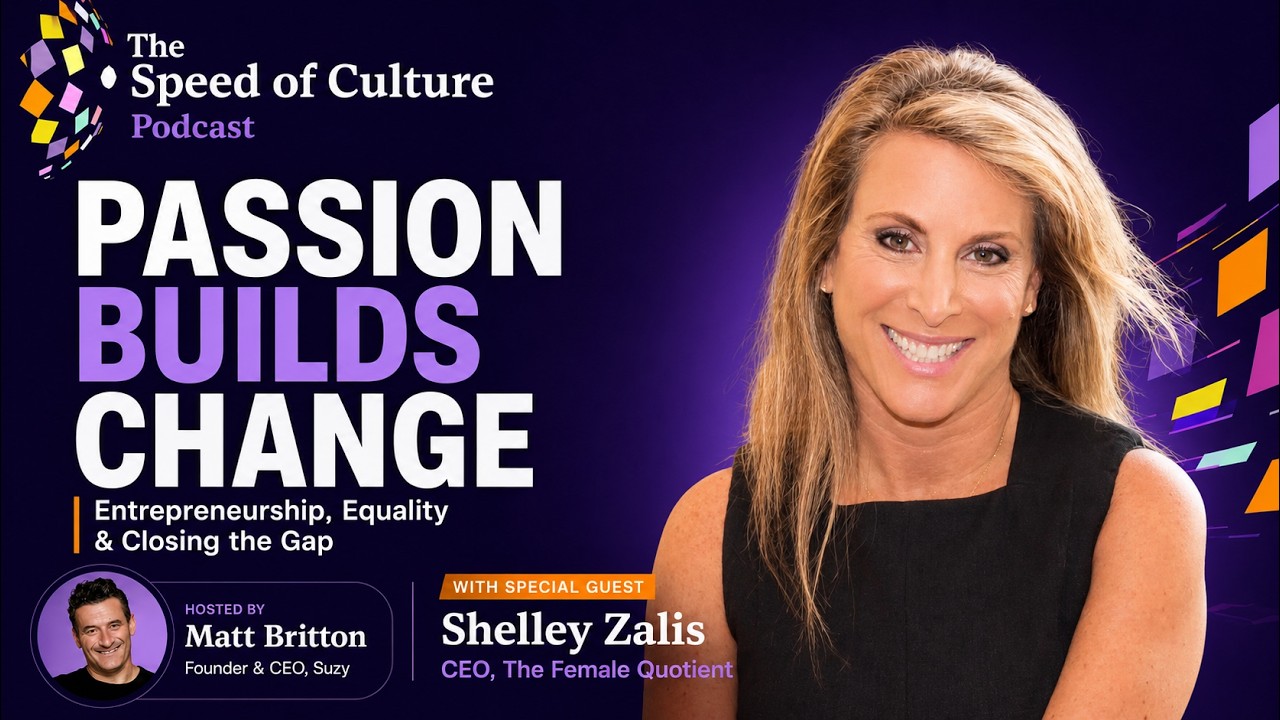
Asking people to put away their phones sounds like an unlikely strategy for a digital platform seeking attention. Yet that is precisely the experiment Pinterest brought to Coachella. In her conversation with Matt Britton on The Speed of Culture, Pinterest Chief Marketing Officer Claudine Cheever says the activation doubled the brand’s earned media. Guests experienced the brand, left with something worth talking about, and carried the story beyond the space.
The result captures a larger strategic idea running through the September 15, 2026 episode: a platform can create commercial value by helping people make progress in their lives. More scrolling is not the only way to build a business. A useful decision, a discovered preference, or a physical experience can give people a stronger reason to return than another stretch of passive consumption.
Cheever leads Pinterest’s global marketing, creative, and communications organization. Her discussion with Britton connects that consumer proposition to advertiser demand, visual search, brand differentiation, and the leadership habits required to protect a distinctive strategy. She also explains why her career across agencies and Amazon prepared her to connect creative storytelling with business outcomes.
For leaders, the central question is practical: what does a customer accomplish because your brand exists? The full Speed of Culture conversation with Claudine Cheever offers a useful way to examine that question, especially as AI changes discovery and consumers reconsider how much attention they want to give digital platforms.
Pinterest has long been associated with major projects: renovating a kitchen, planning a wedding, or imagining a vacation. Cheever describes an expansion of that role into smaller, more frequent decisions. A shopping mission, a room detail, or an idea for a personal look can bring someone to the platform without a major life event on the calendar.
This distinction matters because it changes the occasions on which a brand can be useful. A service associated exclusively with infrequent projects has to wait for those projects. A service that also helps with everyday choices can earn relevance between them. Cheever’s description suggests that Pinterest’s opportunity lies in making inspiration actionable across both large commitments and small moments.
She reports that 96% of searches on Pinterest are unbranded and that more than half have commercial intent. Those figures are claims shared in the episode, rather than independently audited findings. Their strategic significance is the combination: people can be interested in buying something before they have decided which brand deserves the purchase. Discovery can therefore influence a decision that a conventional product search might simply fulfill.
For marketers, that creates a reason to show how a product fits into someone’s desired life. A catalog image answers what an item is. A useful example can help someone understand why it belongs in their home, routine, or personal style. The opportunity is to become part of the decision while preferences are still forming.
Britton raises Pinterest’s unusual position among digital platforms: its promise often points toward getting offline. Cheever sees that difference as a core attraction of the company. She describes users arriving with a mission or an initial spark, rather than simply looking for passive entertainment. Their agency shapes what the experience is supposed to deliver.
The distinction is between time spent and progress made. Someone who finds an idea, resolves a choice, and acts on it may leave feeling that the session was productive. Cheever contrasts that with spending time online without making a decision or changing anything. Her argument is that a positive experience can serve both users and the business.
That does not establish that shorter sessions automatically produce better economics. It gives leaders a more demanding measurement question: which behaviors show that customers are achieving the outcome they came for? The answer will vary by product. Completing a comparison, saving a genuinely useful option, or taking a next step may reveal more than duration alone.
A business following this logic would still measure engagement, but connect it to customer progress. Otherwise, teams can optimize activity that looks healthy on a dashboard while making the experience less useful. Pinterest’s positioning is compelling because it makes the intended customer outcome clear enough to challenge those internal habits.
The Coachella example turns the positioning into a tangible brand choice. Cheever explains that Pinterest asked visitors to put their phones away in a setting heavily associated with documenting experiences. The decision was already in place when she entered the role, and she presents her enthusiasm for it as evidence that she had joined a company willing to act boldly on its beliefs.
According to Cheever, visitors waited to enter, participated in beauty experiences, and left with makeup and sparkles that prompted questions from other people. The experience gave them something visible to share through conversation. She attributes the activation’s earned-media result to this deeper engagement and the word of mouth it generated.
The episode does not specify the comparison period, attribution method, or complete measurement behind the reported doubling. Leaders should therefore treat it as an executive’s account of a successful activation, not a universal forecast for phone-free events. Removing phones without offering something meaningful would be an entirely different proposition.
The transferable lesson is about alignment. The activity made Pinterest’s promise understandable through participation. Its Manifestival follows a related logic, translating the creativity people pursue online into physical experiences. For another brand, the right activation could look completely different. The essential test is whether the experience demonstrates the customer benefit clearly enough that participants can describe it afterward.
AI is changing the entry points through which people seek information, products, and ideas. Britton frames this as a challenge to familiar search behavior. Cheever’s response centers on the value of visual discovery when someone cannot yet describe precisely what they want. A customer may begin with a color, a mood, or a fragment of an idea.
That is a different problem from retrieving a known answer. When the destination is unclear, seeing options helps the person form the question itself. Each selection, rejection, and refinement can make the preference more concrete. Cheever describes Pinterest’s accumulated signals about taste as an important part of how that experience develops.
Efficiency remains valuable, but the conversation highlights a potential tradeoff. An answer that closes a task quickly may also eliminate useful exploration. In creative decisions, a detour can be part of the value. A person furnishing a room may benefit from discovering a style they did not know to request, rather than receiving only the closest match to an initial description.
For teams pursuing AI transformation, the design implication is to distinguish tasks that need resolution from tasks that need exploration. Automating the former can remove friction. Preserving choice in the latter can improve the experience. Treating every journey as a race toward a single answer risks missing what the customer actually needs.
Cheever treats taste as an evolving part of identity. In the episode, she connects Pinterest’s appeal to the process of figuring out what someone likes and how they want to express it. She says more than half of the platform’s users are Gen Z, making that developmental role particularly relevant to her account of the audience.
Her examples are deliberately ordinary. Comparing different versions of a black T-shirt helps someone become more precise about their preference. Shared boards can help a couple reconcile different ideas for their home. These are decisions in which the act of exploring can build confidence, even before anything is purchased.
Britton connects this to the tension between fitting in and maintaining individuality. Recommendation systems and influential voices can make shared tastes easy to adopt. The conversation suggests an alternative role for a discovery platform: create room for people to refine their own judgment. That is a useful lens for understanding Gen Z consumer behavior without reducing an entire generation to a single preference.
For brands, the implication is to provide options and context rather than dictate a complete identity. Show different ways an item can work. Make variation visible. Give customers enough material to recognize their own preferences. Personalization is more useful when it supports a person’s decisions than when it assumes yesterday’s behavior defines everything they will want tomorrow.
Cheever describes Pinterest as supporting both brand building and performance, while emphasizing the period between them. That middle stage includes discovering possibilities, curating options, and deciding what fits. It is easy for marketing organizations to discuss awareness and conversion as separate disciplines while leaving that intervening work underdeveloped.
Her account is that advertisers benefit from reaching people who are actively considering ideas and looking for brands. Pinterest’s role includes sending users onward to advertiser destinations once they are ready to act. The commercial proposition depends on helping the decision mature, rather than keeping every step inside the platform.
Cheever calls the broader opportunity the intention economy. The useful distinction is between attracting notice and supporting a deliberate choice. A striking impression can earn attention without creating meaningful interest. A relevant idea can help someone evaluate a purchase even when it produces less immediate spectacle. The episode argues for understanding the customer’s state of mind alongside the media placement.
For a marketing team, the practical response is to identify what remains unresolved before purchase. Does the customer need inspiration, comparison, reassurance, or a clearer use case? Those needs call for different creative assets. Measurement should then test whether the assets help people move forward, rather than assume that every interaction has the same relationship to a sale.
Pinterest’s promise would be weaker if it existed only in campaign language. Throughout the interview, Cheever links differentiation to choices about the product, brand experience, and treatment of users. The phone-free activation is one expression of that connection. Her emphasis on customer well-being is another.
Reflecting on Amazon, she describes a culture of repeatedly asking whether the company is serving customers well enough. She connects that persistence to what attracted her to Pinterest: conviction about the end user and a willingness to protect the experience. In her telling, customer focus requires decisions that are sometimes uncomfortable in the short term.
The leadership lesson is to make the proposition usable inside the company. Teams need to understand what it requires them to prioritize, and which tempting opportunities would weaken it. If every initiative can be justified under the same broad promise, the promise is doing little strategic work. A clear position should help resolve at least some disagreements about where resources belong.
This is also why copying another company’s visible activation can miss the point. Pinterest’s offline experiences are connected to its role in discovery and action. Another business needs to identify its own customer benefit first. The strongest execution follows from a coherent choice about what the company is trying to help people accomplish.
Cheever’s career advice combines creative craft with commercial fluency. She values the agency experience of learning unfamiliar businesses quickly and moving between categories. As a planner, she developed an interest in finding the essential story: the tension, emotion, and recognizable brand elements that make an idea meaningful.
She also describes moving from creative work into media as a difficult but valuable decision. That experience strengthened her understanding of measurement and incrementality. The combination matters because a marketing leader has to assess both the quality of an idea and whether the investment produces an additional business outcome.
Her advice about opportunity is similarly concrete. Look for a place where there is something to build and a capability you can contribute. A perfectly finished organization may offer fewer chances to make a distinctive contribution. An unresolved gap can create the opportunity, provided the leader is willing to deal with the uncertainty that comes with it.
Finally, Cheever defines ownership through action rather than status. The responsibility is to address a problem that people have become accustomed to tolerating, including work that falls between established roles. As leaders become more senior, she notes, developing and managing people becomes a larger part of the job. Individual excellence remains useful, but the organization needs someone who can turn that expertise into collective progress.
Claudine Cheever is Pinterest’s Chief Marketing Officer. She leads global marketing, creative, and communications. In this Speed of Culture episode, she discusses Pinterest’s evolution, advertiser value, visual discovery, and leadership. Her earlier experience includes agency roles and serving as Vice President of Global Brand and Marketing at Amazon.
Cheever describes Pinterest as a place where inspiration should lead to action. Helping someone make a choice or enjoy a real-world experience can reinforce the platform’s usefulness. The strategy is about the quality and outcome of the interaction. It is not evidence that reducing time spent will improve every digital business.
In Cheever’s framing, it means helping consumers make deliberate choices. Attention indicates that someone noticed something; intention concerns what they are considering and may do next. Marketers can apply the distinction by identifying the customer’s decision, providing relevant ideas and information, and evaluating whether the experience helps that decision progress.
Cheever reports that asking visitors to put phones away coincided with doubled earned media. She emphasizes immersive participation and word of mouth. The broader lesson is to build an experience that makes the brand’s proposition memorable. The episode does not provide enough measurement detail to predict the same result for another brand.
Cheever’s conversation with Britton offers a clear strategic challenge: make the customer’s progress central to the business. Pinterest’s approach connects discovery, personal taste, physical experience, and deliberate purchase decisions. Its differentiation becomes credible when those elements reinforce each other, rather than compete for separate attention targets.
Leaders can begin by examining one important customer journey. Identify what the person hopes to accomplish, where the decision becomes difficult, and which company incentives support or obstruct that progress. That exercise makes the discussion concrete enough to change a product, a campaign, or a measurement plan.
To bring these questions into a leadership event or strategy conversation, explore Matt Britton’s keynote speaking topics or contact Matt’s team. The opportunity is to turn a changing understanding of consumers into better decisions about what the business builds next.