Opening
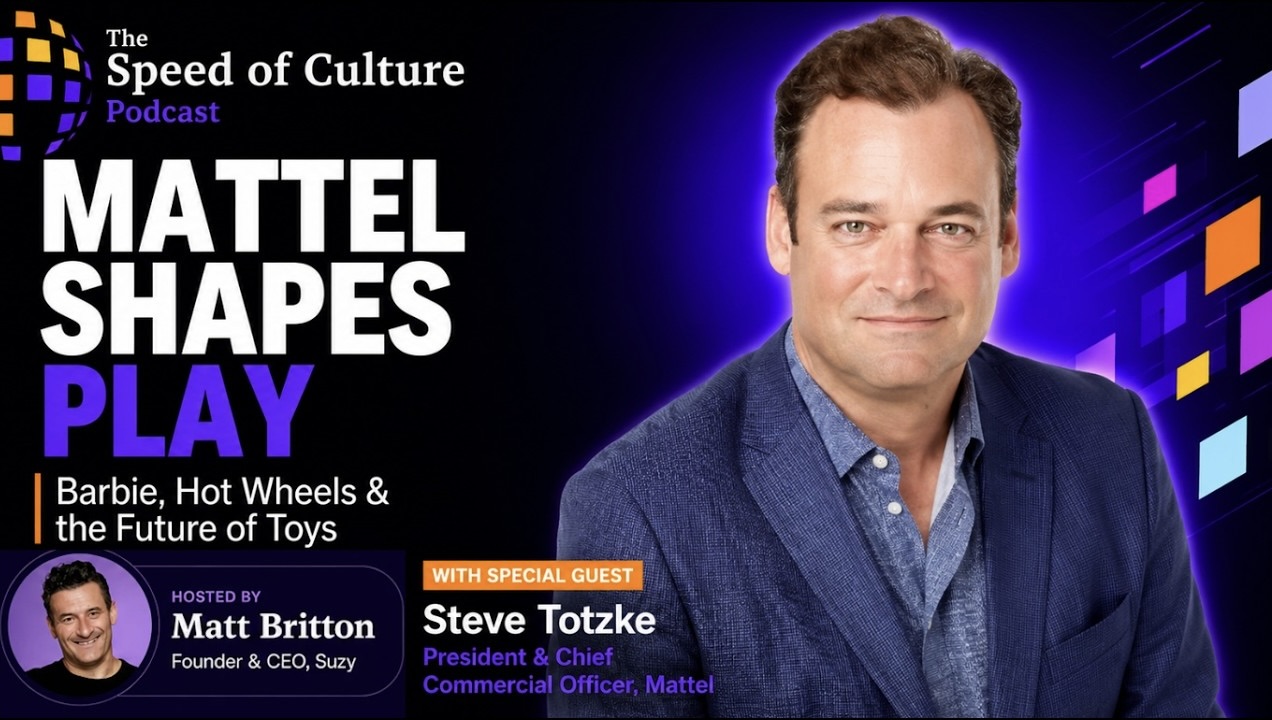
In the ever-evolving landscape of consumer behavior and cultural trends, few companies have demonstrated the remarkable longevity that Mattel has achieved. The toy industry is about creating cultural moments, emotional connections, and experiences that span generations, well beyond products sitting on shelves. Episode 127 of The Speed of Culture Podcast features an in-depth conversation with Steve Totzke, President and Chief Commercial Officer at Mattel, who brings nearly three decades of experience navigating one of the most dynamic sectors in consumer goods.
Hosted by Matt Britton, founder and CEO of Suzy, the AI-powered consumer intelligence platform, this episode delves into how Mattel maintains brand relevance across multiple generations, harnesses the power of nostalgia, and leverages emerging technologies like artificial intelligence to drive innovation. Totzke's insights reveal that the secret to Mattel's enduring success lies not in chasing trends, but in deeply understanding human behavior and the timeless nature of play itself.
The conversation covers critical business topics: how iconic brands like Barbie and Hot Wheels remain cultural touchstones decades after their inception, why the adult collector segment represents unprecedented growth opportunities, and how companies can balance physical and digital play experiences. Totzke discusses Mattel's systematic approach to innovation, the role of direct-to-consumer channels in gathering consumer intelligence, and how AI streamlines everything from product development to global marketing campaigns.
For marketing leaders, brand strategists, and business executives, this episode provides actionable insights into maintaining brand authenticity while adapting to cultural shifts, a challenge that extends far beyond the toy industry. The lessons Mattel has learned through decades of stewardship can inform strategies across consumer goods, technology, lifestyle, and entertainment sectors.
The Evolution of the Toy Industry: From Physical Products to Cultural Experiences
The toy industry has undergone a profound transformation over the past three decades. Where play once meant a child sitting alone with a doll, action figure, or board game, today's play ecosystem encompasses physical toys, digital interactions, streaming content, and social experiences. Steve Totzke's three-decade tenure at Mattel positions him uniquely to articulate this evolution.
What hasn't changed, according to Totzke, is the fundamental human need for play. Children still engage in imaginative play, creativity-building exercises, and social interaction through toys. However, the mechanisms through which this play occurs have expanded exponentially. A Hot Wheels die-cast car isn't just a miniature vehicle anymore, it can be part of an augmented reality experience, a collectible with investment potential, or a gateway to a digital world where collectors compete globally.
The toy industry has also experienced significant demographic shifts. Historically, the sector focused almost exclusively on children ages 0-12. While this demographic remains core, Mattel and its competitors have identified massive opportunities in the adult collector segment. This isn't a niche audience, it represents one of the fastest-growing consumer segments in entertainment and collectibles.
Adults who grew up with Barbie, Hot Wheels, and Fisher-Price products are now making purchasing decisions as affluent consumers willing to invest in premium versions of their childhood favorites.
Furthermore, the COVID-19 pandemic accelerated several trends that were already underway. Remote work increased disposable time for hobbies and collecting. E-commerce adoption skyrocketed, making specialty and limited-edition products more accessible.
Social media platforms became showcase spaces for collections, turning toy collecting into a social phenomenon. Streaming services created new opportunities for brand storytelling, as evidenced by the viral success of the Barbie movie, which grossed over $1 billion globally in 2023.
Understanding this evolution is critical for any business attempting to navigate consumer preferences. The toy industry's transformation demonstrates how companies must expand their business models beyond the primary use case. A toy manufacturer sells experiences, nostalgia, creativity, and social identity along with products.
Iconic Brands as Enduring Cultural Assets: The Barbie and Hot Wheels Case Studies
Perhaps no brands in the toy industry better exemplify the power of longevity than Barbie and Hot Wheels. Barbie debuted in 1959, making it over 60 years old. Hot Wheels launched in 1968, claiming nearly 60 years of market presence.
In an era where tech startups become irrelevant in 18 months and fashion trends shift quarterly, these toys have not only survived but thrived. Their success provides crucial lessons about brand stewardship, cultural responsiveness, and innovation.
Barbie's recent resurgence illustrates the potential of honoring heritage while embracing cultural change. For decades, Barbie faced criticism around body image, racial representation, and stereotyping. Rather than defending the original formulation, Mattel fundamentally reimagined the brand.
The introduction of diverse body types, skin tones, and career options reflected evolving consumer values while maintaining Barbie's core identity as a doll representing aspiration and possibility.
The Barbie movie phenomenon of 2023 represented a watershed moment for brand marketing. By collaborating with director Greta Gerwig and positioning the film as a cultural event rather than a commercial transaction, Mattel created a multi-generational experience that generated billions in earned media while driving sales across physical toys, apparel, home goods, and experiences.
The campaign demonstrated that heritage brands can become trending topics on social media when authentically connected to broader cultural conversations.
Hot Wheels operates in a different space, die-cast vehicles and track sets, yet achieves similar cultural resonance through different mechanisms. Hot Wheels has succeeded by maintaining a singular focus on performance, rarity, and collectibility.
The brand creates scarcity through limited production runs, celebrates collector culture, and maintains strong secondary markets where variants command premium prices. This scarcity-driven strategy, combined with product quality that appeals to both children and adults, has created an ecosystem where Hot Wheels cars maintain value and cultural cache.
Both brands share critical success factors: clear brand identity, willingness to evolve aesthetically and narratively, investment in quality and authenticity, and deep understanding of their consumer base across demographic segments.
They've avoided the fatal mistake of assuming their audience is static. Instead, Mattel has recognized that each generation discovers these brands anew while existing consumers age and develop new relationships with the products.
For businesses across industries, the Barbie and Hot Wheels examples underscore an important principle: heritage and innovation are not mutually exclusive. The most successful enduring brands balance reverence for their origins with courageous adaptation to contemporary values and consumer expectations.
The Adult Collector Phenomenon: Unlocking a Massive Untapped Segment
One of the most significant business developments in the toy industry over the past decade is the legitimization and explosion of adult collecting. What was once considered a niche hobby practiced by a small percentage of consumers has become a mainstream cultural phenomenon with substantial economic impact.
Mattel has positioned itself at the forefront of this trend through strategic investments and dedicated divisions like Mattel Creations.
The adult collector segment operates on different motivations than the children's market. Adult collectors purchase for nostalgia, recapturing emotional connections to childhood. They collect for investment purposes, viewing rare toys as asset classes similar to trading cards, coins, or memorabilia.
They participate in collector communities, gain social status through their collections, and view toys as legitimate art objects worthy of display in home environments.
This creates several business opportunities. First, adult collectors typically have higher disposable incomes than children's parents, enabling premium pricing for limited-edition releases, special packaging, and exclusive variants.
Second, adult collectors demonstrate significantly higher lifetime value as customers. They maintain purchasing relationships for decades, not just the few years that characterize childhood toy consumption.
Third, adult collectors engage in robust secondary markets, creating organic word-of-mouth marketing and viral moments when rare items sell for substantial premiums.
Mattel Creations exemplifies how companies can serve this demographic strategically. The division focuses on heritage brands reimagined for adult audiences, premium articulated figures, collectible dioramas, limited-edition releases, and designer collaborations.
By establishing separate brand architecture for adult products, Mattel avoids diluting the children's brands while capturing the emotional and financial power of nostalgia.
The business model also generates valuable consumer data. Adult collectors are engaged, opinionated, and vocal about their preferences.
They participate actively in feedback loops that inform future product development. They post extensively on social media, creating organic content that drives awareness among peers.
They pay for exclusive access, memberships, and pre-release opportunities, diversifying revenue streams beyond pure product sales.
From a strategic perspective, the adult collector phenomenon represents a masterclass in market expansion. Rather than attempting to convince adults to abandon their childhood brands or viewing the segment as a small afterthought, Mattel has recognized and invested in it as a core growth engine.
This requires different marketing approaches, distribution channels, pricing strategies, and product development processes, acknowledging that the adult buying decision differs fundamentally from the parent buying for a child.
Blending Physical and Digital: The Future of Play in a Connected World
The integration of physical toys with digital experiences represents one of the most significant strategic pivots in the industry's recent history. For decades, toys and digital entertainment existed in separate silos.
A child might play with a Barbie doll, then turn on a television to watch a Barbie movie, but the experiences remained disconnected. Today, the most innovative toy companies are creating seamless bridges between physical play, digital interaction, and storytelling.
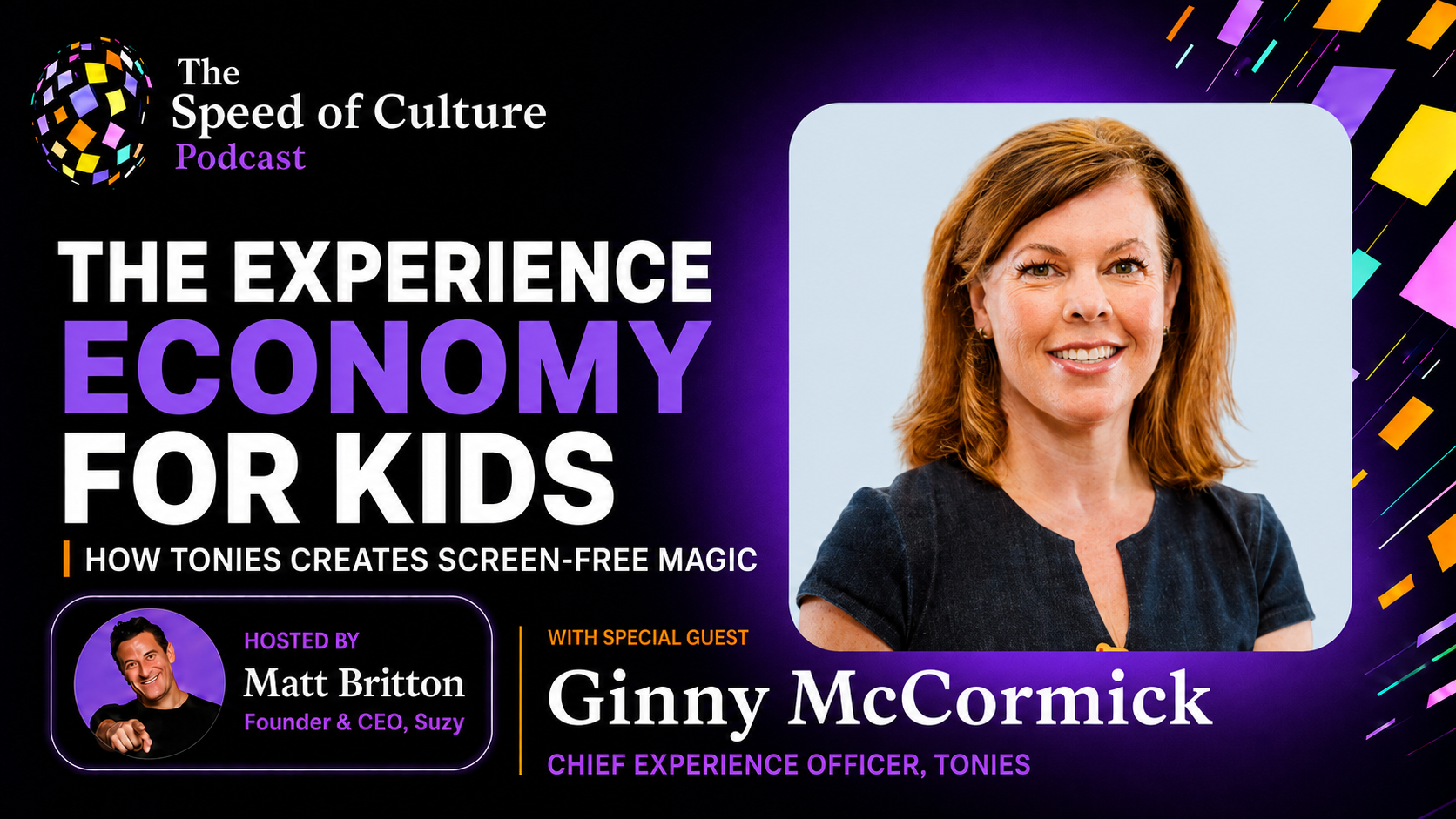
Totzke points to products like Tonie Box as exemplars of this blended approach. Tonie Box is a speaker designed for children that plays audio content through physical NFC-enabled figurines.
Instead of navigating menus or touching a screen, a child places a physical "Tonie" on top of the speaker, and it plays curated audio content: stories, music, educational programming. The experience combines tactile interaction with digital content delivery in a way that feels natural and age-appropriate.
This hybrid model addresses several contemporary concerns about childhood development. Parents worry about screen time and its potential impacts on attention, eye health, and developmental outcomes.
By creating physical interfaces to digital content, companies like Mattel offer alternatives that reduce screen dependency while maintaining engagement benefits of digital media.
From a business perspective, blended physical-digital offerings create multiple revenue streams and extended customer relationships. A consumer might purchase the initial device or figurine, then subscribe to content, purchase additional figurines, upgrade to premium content tiers, or spend money on licensed character figurines.
The model encourages ongoing engagement and repeat purchases, improving customer lifetime value significantly compared to one-time toy purchases.
Technology enables more sophisticated personalization and customization. AI can analyze play patterns, learning styles, and preferences to recommend content tailored to individual children.
The physical-digital boundary disappears, allowing companies to gather behavioral data that informs product development, marketing targeting, and content creation.
The physical-digital integration also addresses logistics and inventory challenges. Traditional toys require physical manufacturing, warehousing, shipping, and retail placement, complex supply chain operations with significant capital requirements.
Digital content delivery can scale efficiently without proportional increases in manufacturing or logistical costs. Companies can offer infinite variations of content without manufacturing complexity.
For businesses across industries, the physical-digital integration model Mattel is pioneering suggests that the future of consumer experiences involves seamless blending of tangible and digital interaction rather than competition between them.
AI-Driven Innovation: Accelerating Product Development and Global Marketing
The conversation between Britton and Totzke extensively addresses artificial intelligence's role in modern toy manufacturing and marketing. This is not speculative. Mattel is actively deploying AI across multiple functions, from product design to marketing execution to supply chain optimization.
In product development, AI accelerates design iteration and visualization. Rather than traditional processes where designers create concept sketches and physical prototypes, AI can rapidly generate hundreds of design variations based on input parameters.
This enables designers to explore possibilities more comprehensively while reducing the time between conception and prototype creation.
AI also streamlines content creation and marketing execution. AI-powered tools can generate initial designs, marketing copy, and visual assets that human creatives then refine and customize.
This enables smaller teams to execute on larger scales while maintaining quality standards.
Critically, AI enables personalization and localization at scale. A single toy campaign might need customization for different geographic markets, demographic segments, or retail channels.
AI can adapt messaging, imagery, and distribution strategies to regional preferences while maintaining brand consistency.
Supply chain optimization represents another frontier for AI application. AI can predict demand more accurately, optimize inventory levels, and improve logistics efficiency.
In the toy industry, where inventory forecasting errors lead to massive write-downs or stock-outs during critical selling seasons, AI-driven demand prediction could yield substantial competitive advantages and profitability improvements.
The conversation also touches on AI's limitations and concerns. AI is a tool that amplifies human capability and decision-making, not a replacement for human creativity, judgment, or cultural sensitivity.
Companies must implement appropriate safeguards around AI deployment to ensure that efficiency gains don't come at the expense of brand authenticity, cultural sensitivity, or accuracy.
Consumer Research and Direct-to-Consumer Channels: Building Real-Time Intelligence
Understanding consumer preferences is essential in any industry, but it's particularly critical in toys, where trends can shift rapidly. Totzke emphasizes Mattel's commitment to systematic consumer research and the strategic importance of direct-to-consumer channels.
Traditional research methods (surveys, focus groups, retail data analysis) remain valuable, but they're reactive. Direct-to-consumer channels like American Girl provide Mattel with real-time insight into consumer preferences.
When a consumer purchases through the direct channel, Mattel captures transaction data, browsing behavior, review feedback, and customer demographics. This information flows directly to product development teams, informing decisions about future products, colors, styles, and features.
The direct-to-consumer model also enables rapid testing and iteration. Companies can test product concepts with limited releases, gather feedback, and adjust offerings based on real data.
E-commerce platforms facilitate valuable qualitative feedback. Customer reviews provide detailed insight into what consumers love and what frustrates them.
Social media communities create spaces where enthusiasts discuss preferences, suggest improvements, and influence purchasing decisions. By monitoring these conversations, Mattel gains insights into consumer sentiment, competitive positioning, and emerging opportunities.
The integration of this real-time consumer intelligence with AI enables sophisticated personalization. Companies can customize messaging, product recommendations, and promotional offers based on individual browsing history and inferred preferences.
From a strategic perspective, direct-to-consumer channels reduce dependency on retail partners, improve margins, and provide direct relationships with customers. They generate valuable data that informs strategic decisions across the organization.
Key Takeaways
- Heritage brands thrive through cultural responsiveness. Barbie and Hot Wheels have remained relevant for 60+ years by evolving aesthetically and narratively with contemporary values while maintaining core brand identity. Heritage and innovation are complementary, not contradictory.
- Adult collectors represent a massive untapped segment. The adult collector market has evolved from niche hobbyist community to mainstream consumer segment with substantial disposable income, high lifetime value, and valuable word-of-mouth marketing potential.
- Physical-digital integration creates superior consumer experiences. Products that seamlessly blend tactile play with digital content engagement address contemporary parental concerns while delivering richer experiences and generating multiple revenue streams.
- AI accelerates innovation and enables personalization at scale. From product design and content creation to demand forecasting and inventory optimization, AI is becoming essential infrastructure for companies seeking operational efficiency and market responsiveness.
- Direct-to-consumer channels provide invaluable real-time consumer intelligence. Real-time transaction data, customer reviews, and social feedback enable rapid iteration and personalization that outpace traditional market research methods.
FAQ
What makes Barbie and Hot Wheels so culturally enduring compared to other toy brands?
Barbie and Hot Wheels have succeeded through a combination of factors: clear, distinctive brand identity; willingness to evolve while maintaining core values; consistent product quality and attention to detail; and deep understanding of diverse consumer segments from children to adult collectors. Both brands also benefited from strategic marketing that elevated them beyond products into cultural phenomena, the Barbie movie being a contemporary example.
How is Mattel capturing the adult collector market, and why is it significant?
Through divisions like Mattel Creations, Mattel develops premium, limited-edition products explicitly designed for adult consumers. This segment is significant because adult collectors have higher disposable incomes than children's parents, demonstrate decades-long customer relationships rather than years, participate in robust secondary markets, and generate organic word-of-mouth marketing through collector communities.
What are the risks and benefits of AI integration in toy manufacturing and marketing?
Benefits include accelerated design iteration, personalization at scale, more accurate demand forecasting, and improved supply chain efficiency. Risks include potential loss of human creativity and cultural sensitivity if AI implementation isn't carefully managed, quality control challenges with AI-generated content, and the need for robust safeguards to ensure authenticity and accuracy.
How do direct-to-consumer channels like American Girl provide competitive advantages?
Direct-to-consumer channels provide real-time consumer data, reduce retail partner dependency, improve profit margins, enable rapid product testing and iteration, and create direct customer relationships. By monitoring customer feedback, reviews, and social discussions, companies gain insight into preferences and can customize marketing and product offerings accordingly.
Looking Ahead
The insights Steve Totzke shares in Episode 127 of The Speed of Culture Podcast extend far beyond the toy industry. Whether you're leading a heritage brand, building a consumer goods company, or navigating the intersection of physical and digital experiences, the strategies Mattel employs offer actionable lessons.
To deepen your understanding of consumer behavior, AI's role in modern marketing, and building sustainable competitive advantages, explore these resources:
- Suzy. AI-powered consumer intelligence platform providing real-time market research and insights
- The Speed of Culture Podcast. Weekly conversations with industry leaders on evolving consumer behaviors
- Generation AI: The Book. Comprehensive exploration of AI's impact on consumer behavior and business strategy
- AI Keynote Speaker. Engage with Matt Britton to bring these insights to your organization
- Speaker HQ. Connect with industry-leading speakers on consumer trends and business transformation

%20(400%20x%20100%20px)%20(300%20x%2050%20px)%20(150%20x%2050%20px).avif)