Introduction: The QSR Revolution
The quick service restaurant industry is experiencing a seismic shift. No longer confined to the role of convenient, transactional dining, QSRs are actively transforming themselves into lifestyle brands that resonate with cultural movements, consumer values, and aspirational living.
This transformation is the result of intentional brand strategy, innovative marketing, and a deep understanding of evolving consumer behaviors.
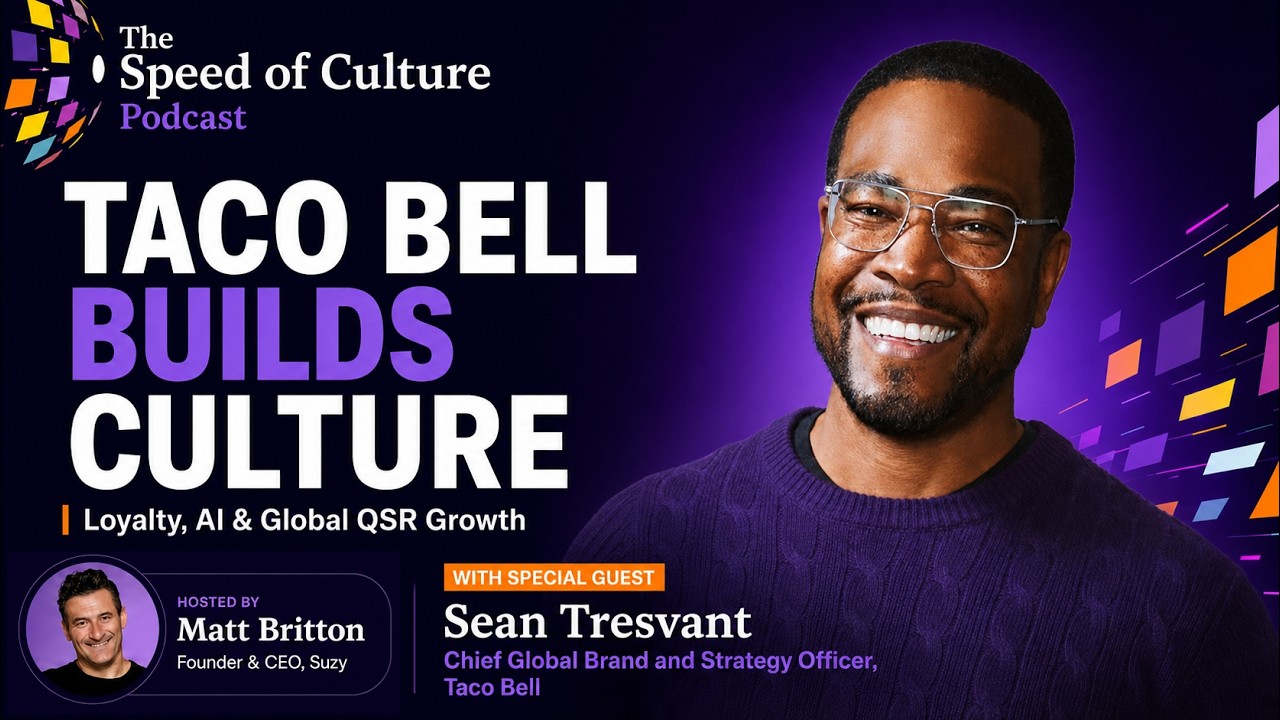
At the forefront of this revolution is Taco Bell, under the leadership of Sean Tresvant, Chief Global Brand and Strategy Officer. In this episode of the Speed of Culture Podcast, hosted by Matt Britton, Tresvant reveals how Taco Bell has redefined what it means to be a fast-food brand in an era where Gen Z and millennial consumers demand more than just food. They demand experiences, cultural relevance, and brands that align with their identities.
The conversation explores the strategic framework behind Taco Bell's transformation, the role of celebrity partnerships and influencer collaborations, the impact of experiential events like Live Más LIVE, and how digital innovation has become central to the brand's growth narrative.
For marketing executives, brand strategists, and CMOs seeking to understand how their companies can evolve into lifestyle brands, this episode offers a masterclass in cultural positioning, consumer intelligence, and the art of building authentic brand moments that drive both awareness and financial performance.
The Evolution from Convenience to Culture
Historically, the quick service restaurant industry has been defined by speed, affordability, and convenience. These three pillars built empires. However, as consumer behavior has evolved, particularly among younger demographics, the industry has faced a critical question: Can a brand focused primarily on functional benefits compete in an era where emotional connection drives purchasing decisions?
Taco Bell's answer has been an unequivocal yes, but with a caveat. The brand has maintained its core promise of accessibility and speed while layering on cultural relevance, experiential value, and aspirational positioning that elevates it beyond its QSR peers.
The QSR market reached a valuation of $406.17 billion USD in 2024 and is projected to grow to $662.53 billion USD by 2029. This growth represents a fundamental shift in how consumers perceive and interact with quick service restaurants.
No longer are these establishments merely places to grab a quick meal; they have become cultural touchpoints where brands engage audiences on emotional and aspirational levels.
The distinction between lifestyle brands and transaction-driven businesses lies in the depth of customer engagement. Lifestyle brands create identity associations and offer consumers a way to express who they are and who they aspire to be.
For Taco Bell, the Live Más campaign represents this philosophical pivot. Rather than promoting a taco or combo meal, the brand promotes a lifestyle: living more, embracing passion, and celebrating individuality.
This repositioning has profound implications for marketing, menu innovation, customer experience design, and technology integration. It also reflects consumer behavior trends: Gen Z and millennial consumers spend 37% of their dining occasions at fast food establishments, and approximately 36% of children aged 2–19 eat fast food daily.
These numbers represent a massive, engaged audience that views these brands as central to their daily lives and cultural identity.
Strategic Brand Architecture: The Framework Behind Taco Bell's Success
Transforming from convenience-focused to culture-centric requires more than inspirational messaging. It demands a comprehensive strategic framework that touches every aspect of the organization, from food innovation and restaurant design to communications strategy and digital customer touchpoints.
Under Sean Tresvant's leadership, Taco Bell developed the R.I.N.G. The Bell strategy, a framework designed to drive relentless innovation while deepening customer engagement and cultural relevance.
Food Innovation
Taco Bell recognizes that culinary innovation is central to maintaining relevance and driving sales growth. The brand aims for Cantina Chicken Menu items to reach $5 billion in system sales by 2030, with beverages similarly targeting $5 billion in system sales.
This demonstrates that innovation is targeted toward categories that resonate with consumer preferences and demographic trends.
Modernized Restaurant Experience
Beyond the menu, Taco Bell is reimagining the physical and digital spaces where customers interact with the brand. The emphasis is on creating a “winning team culture that balances accuracy and speed with connection and meaningful interaction.”
This approach recognizes that Gen Z and younger millennial consumers value authenticity and genuine connection.
Omnichannel Integration
Taco Bell's digital business grew 40% year-over-year in 2022 and expanded another 60% in Q1 2023, resulting in an eight-point improvement in digital mix for that quarter.
The brand ensures customers can engage seamlessly across mobile app, website, in-restaurant, drive-through, and third-party delivery platforms.
Global Expansion and Localization
As Taco Bell expands internationally, the brand maintains core cultural identity while adapting to local market dynamics, balancing global consistency with local relevance.
This strategic architecture reflects a sophisticated understanding of modern consumer behavior: customers don’t separate dining experiences from lifestyle and identity construction.
The Power of Experiential Marketing: Live Más LIVE and Cultural Moments
If strategy is the skeleton of brand transformation, experiential marketing is its lifeblood. Taco Bell's Live Más LIVE event earned more than 7 billion media impressions, generated 632 pieces of media coverage, and drove 500,000 YouTube views.
In 2024, the guest list was split 50% celebrities and 50% fans. For 2025, Taco Bell is shifting to 90% fans and influencers, prioritizing authentic brand advocates over traditional celebrity presence.
This shift reflects a sophisticated understanding of modern consumer psychology: in an era of influencer saturation, authentic fan voices often carry more weight than celebrity endorsements.
Celebrity Partnerships and Cultural Collaborations
Taco Bell has partnered with icons like Doja Cat, Paris Hilton, and LeBron James. These partnerships create cultural moments rather than traditional endorsements.
The Paris Hilton Volcano Menu return tapped into Y2K nostalgia, while the Doja Cat Super Bowl campaign reworked Hole's “Celebrity Skin,” transcending traditional advertising.
Feed the Beat Initiative
The Feed the Beat program supports musicians and connects directly to the brand’s Live Más philosophy. Taco Bell understands that lifestyle brands don’t just consume culture. They actively support it.
Menu-Driven Cultural Events
The return of the Mexican Pizza became a cultural event rather than a simple product launch, driving significant awareness and sales lift.
Modern consumers want to participate in brand experiences. They value authenticity, cultural relevance, and opportunities to express identity through brand associations.
Digital Transformation and the Future of QSR Engagement
The 60% digital growth in Q1 2023 signals a fundamental reorganization of customer interaction within QSR.
Loyalty Programs and Data Collection
51% of diners use a loyalty program, and 49% participate in QSR loyalty programs. These programs reward frequency while generating valuable first-party data.
Personalization at Scale
Digital platforms allow individualized menu recommendations, targeted promotions, and exclusive offers, driving both frequency and average check size.
Menu Innovation Driven by Data
The global vegan fast-food market was worth $5,971.23 million USD in 2023 and is projected to reach $11,163.92 million USD by 2032.
Digital insights help Taco Bell align menu development with actual consumer behavior.
Omnichannel Consistency and Cultural Participation
Consistency across mobile, in-store, and third-party platforms builds trust. Digital platforms also amplify cultural messaging across TikTok, Instagram, and Snapchat.
For Taco Bell, digital infrastructure is the backbone of customer intelligence, personalization, and cultural relevance, well beyond a sales channel.
Building Consumer Intelligence and Agile Marketing
Sean Tresvant’s approach reflects a commitment to precision and agility in understanding consumers.
Matt Britton’s Suzy platform embodies this philosophy by harnessing AI-powered consumer intelligence to provide real-time insights for faster, better-informed decisions.
- Real-Time Market Sensing: Continuous monitoring of consumer sentiment and trends enables rapid response to opportunities and threats.
- Insight-Driven Innovation: Rapid research testing reduces risk and improves launch success rates.
- Agile Campaign Development: Real-time optimization ensures messaging resonates with fast-moving Gen Z audiences.
- Competitive Benchmarking: Understanding perception versus competitors informs positioning and product priorities.
- Demographic and Psychographic Segmentation: Tailoring experiences for Gen Z, millennials, Gen X, and boomers maximizes penetration.
Data-driven marketing is a necessity.
Key Takeaways: The QSR-to-Lifestyle-Brand Transformation
- Lifestyle Positioning Transcends Product Categories: Emotional bonds create durable competitive advantages beyond functional benefits.
- Experiential Marketing Drives Cultural Relevance: Large-scale activations generate earned media and authentic engagement.
- Digital Transformation Is Non-Negotiable: Digital platforms enable personalization, data collection, and omnichannel consistency.
- Celebrity Partnerships Must Align with Brand Values: Authenticity enhances credibility with target audiences.
- Innovation Must Be Strategic and Data-Driven: Clear financial targets align innovation with business goals.
- Team Culture Directly Impacts Brand Delivery: Employee engagement translates into better customer experiences.
- Measurement and Accountability Drive Strategic Clarity: Specific targets ensure focus and organizational alignment.
Looking Ahead: The Future of Lifestyle QSRs
The transformation of Taco Bell into a lifestyle brand signals broader evolution in the QSR industry. As competition intensifies, differentiation through cultural relevance becomes essential.
- Develop distinctive brand identities that resonate emotionally
- Invest in consumer intelligence and data-driven marketing
- Create experiential moments that generate earned media
- Build seamless omnichannel experiences
- Support innovation through strategic partnerships
- Cultivate positive team cultures
- Use technology to enhance human connection
Taco Bell’s transformation under Sean Tresvant demonstrates that even in commoditized categories, intentional strategy and consumer focus can create sustainable competitive advantage.
Explore more insights about consumer culture and AI-driven marketing strategies at Suzy, or dive deeper into brand transformation with Matt Britton’s latest thinking in Generation AI. For executive teams seeking expert perspective, learn about Matt Britton’s work as an AI keynote speaker or visit Speaker HQ for resources. Tune in to the Speed of Culture Podcast for more conversations about brands reshaping culture.
FAQ: Understanding QSRs as Lifestyle Brands
What exactly distinguishes a "lifestyle brand" from a traditional product brand?
Lifestyle brands create identity associations and enable consumers to express who they are and who they aspire to be. Rather than competing primarily on functional benefits like price and speed, lifestyle brands appeal to emotional and aspirational dimensions.
Taco Bell's Live Más positioning exemplifies this distinction, the brand sells an experience and a philosophy of living fully, not merely a convenient meal.
How does digital transformation specifically enable lifestyle brand positioning?
Digital platforms generate continuous consumer data that enables personalization, real-time responsiveness, and community building.
For Taco Bell, digital channels represent 60% growth opportunities and essential infrastructure for maintaining cultural relevance with Gen Z audiences.
Can all QSRs successfully transform into lifestyle brands?
Transformation requires strategic clarity, consistent execution, significant investment, and leadership vision. Not all QSRs have the resources or positioning to undertake this shift.
However, brands that achieve lifestyle status can command premium positioning, higher loyalty, and greater lifetime customer value.
Meta Description: Sean Tresvant reveals how Taco Bell transformed from a QSR into a global lifestyle brand through strategic innovation, experiential marketing, and digital transformation. Discover the framework behind the Live Más campaign and what other brands can learn.
Keywords: QSR marketing strategy, lifestyle brands, Taco Bell brand transformation, Live Más campaign, fast food culture, Gen Z marketing, restaurant innovation, experiential marketing, digital transformation, consumer intelligence
This article is based on insights from the Speed of Culture Podcast featuring Sean Tresvant, Chief Global Brand and Strategy Officer at Taco Bell, hosted by Matt Britton, Founder and CEO of Suzy.

%20(400%20x%20100%20px)%20(300%20x%2050%20px)%20(150%20x%2050%20px).avif)