Executive Summary
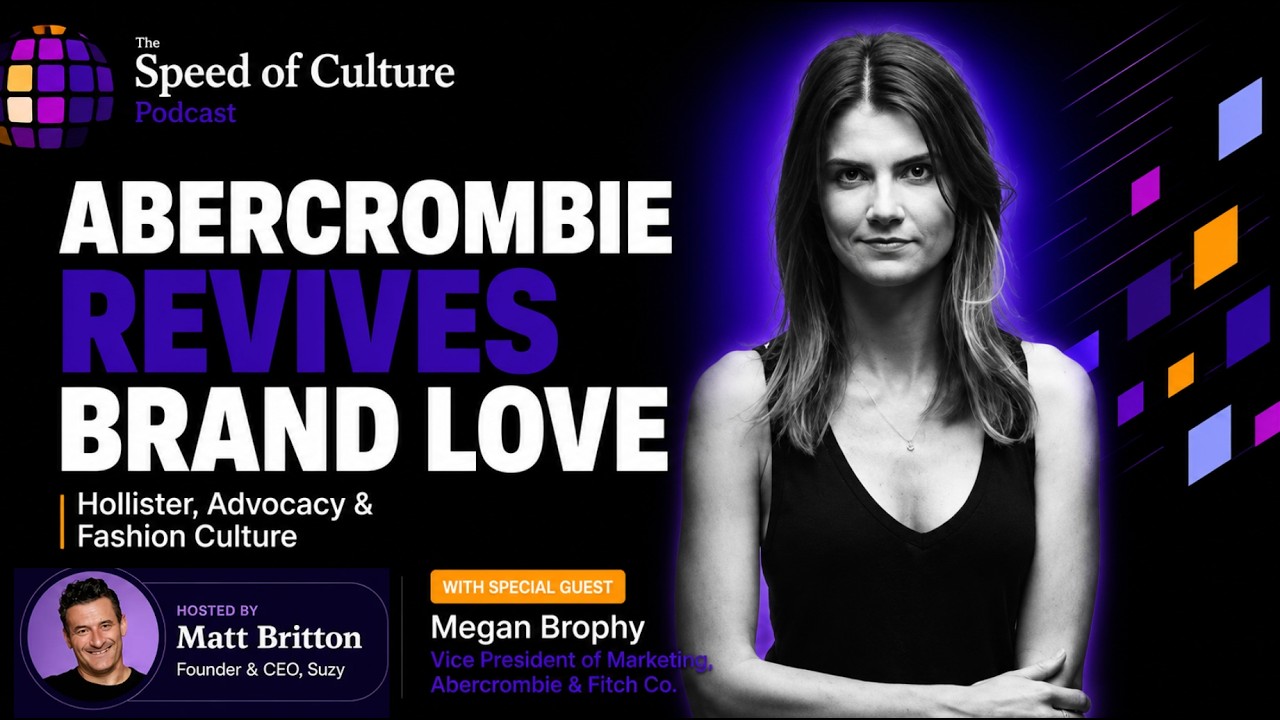
In a remarkable turnaround story, Abercrombie & Fitch transformed from America's most hated retailer to a $5 billion business celebrated by Gen Z consumers. On episode 71 of The Speed of Culture podcast, Matt Britton, founder and CEO of Suzy, the AI-powered consumer intelligence platform, sits down with Megan Brophy, Vice President of Marketing at Abercrombie & Fitch Co., to explore how the iconic fashion brand orchestrated one of retail's most dramatic comebacks.
Their conversation reveals the strategic, consumer-centric methodology behind reimagining a legacy brand for the modern marketplace, a masterclass in authentic brand revival that every executive seeking to navigate cultural shifts should understand.
The Fall That Led to the Rise: Understanding Abercrombie's Crisis Point
Before Abercrombie & Fitch could become cool again, the brand had to face a reckoning. Once considered the must-have destination for teen fashion, Abercrombie faced a catastrophic reputation crisis following multiple controversies centered around exclusionary marketing practices, body image concerns, and a perceived lack of diversity. By 2016, the brand had hit rock bottom, literally voted America's most hated retailer.
This moment of crisis, however, became the catalyst for comprehensive organizational transformation. In 2017, new CEO Fran Horowitz took the helm and initiated a complete overhaul that would reshape everything from product design and supply chain operations to marketing strategy and brand positioning.
Unlike many corporate turnarounds that announce their changes with fanfare, Abercrombie & Fitch chose a different path: humble, persistent, and fundamentally consumer-driven. The transformation wasn't a quick fix or a superficial rebranding exercise. Instead, it represented a deep commitment to rebuilding trust through authentic action.
Megan Brophy's role as Vice President of Marketing became central to this effort, leading the communication strategy that would allow consumers, not corporate messaging, to drive the narrative of change.
The Consumer-Centric Philosophy: Listening as a Strategic Advantage
At the heart of Abercrombie & Fitch's remarkable comeback lies a deceptively simple but profoundly effective principle: genuine consumer engagement. Brophy emphasized in her conversation with Matt Britton that the brand's foundation rested on a commitment to "listen, learn, and understand what customers liked about us, what they didn't like about us, what they needed from us."
"Listen, learn, and understand what customers liked about us, what they didn't like about us, what they needed from us."
This philosophy represents a fundamental shift in how legacy brands approach transformation. Rather than dictating change to consumers, Abercrombie made customer feedback the north star of strategic decision-making.
The company invested heavily in understanding the nuances of its target demographic, primarily consumers aged 25-29, using advanced consumer intelligence platforms and social listening tools to identify emerging trends and evolving preferences. The depth of this listening strategy cannot be overstated.
Abercrombie deployed resources across multiple channels including TikTok, Instagram, YouTube, and emerging social platforms to maintain real-time visibility into how younger consumers communicated, what values they prioritized, and how their needs shifted over time. This was a continuous, systematic approach to understanding cultural evolution.
This consumer-centric methodology informed every major business decision. When the COVID-19 pandemic radically shifted consumer behavior toward comfort and casualness, Abercrombie pivoted swiftly, redesigning product lines to meet this new reality. When consumers later sought outdoor and destination experiences as restrictions eased, the brand adapted again.
This demonstrated organizational agility, the ability to learn and implement changes rapidly, became a competitive advantage that traditional retail competitors struggled to match.
Product Innovation and Demographic Repositioning: The Engine of Growth
Understanding what consumers wanted required Abercrombie to fundamentally rethink its product strategy and target audience. The brand moved away from its historical focus on ultra-slim sizing and exclusionary aesthetics toward a more inclusive, sophisticated, and lifestyle-aligned product portfolio.
The company introduced stretchy Curve Love Jeans designed to fit diverse body types, which became so successful that denim now represents approximately half of all Abercrombie jeans sales. Beyond denim, the design team expanded offerings to include professional pieces like blazers and office-appropriate garments, wedding dresses and formal wear, and activewear aligned with the broader lifestyle interests of its target demographic.
This product evolution reflected a deeper strategic insight: repositioning Abercrombie from a brand for teenagers into a brand for sophisticated young professionals. Rather than chasing ever-younger consumers, a race that legacy retailers consistently lose, Abercrombie recognized that its historical customer base had matured.
The results were extraordinary. This targeted product innovation strategy contributed to Abercrombie stock gaining 285% in 2023, making it the best-performing stock on the S&P Index.
The company generated $4.03 billion in revenue during the twelve months ending October 2023, reflecting 10% year-over-year growth. More impressively, this growth occurred across multiple brand architectures (Abercrombie, Hollister, and Abercrombie Kids) each with distinct positioning within the broader portfolio.
Digital-First Marketing and the Modern Influencer Ecosystem
Recognizing that consumer attention had fundamentally migrated to digital channels, Abercrombie dramatically increased its marketing investment in performance-based digital advertising. In 2023, the company more than doubled its digital ad spend from $28 million to $59.5 million, with strategic concentration on high-ROI platforms like TikTok, Instagram, and YouTube.
However, the most transformative shift in Abercrombie's marketing strategy involved reimagining influencer partnerships. Rather than relying on expensive celebrity endorsements with limited authenticity among Gen Z audiences, the brand embraced a broader conception of brand advocacy.
As Brophy explained, the modern influencer landscape had fundamentally democratized, "anyone can become an influencer" through authentic engagement and passionate community building.
"Anyone can become an influencer."
Abercrombie invested in mid-tier and emerging creators who possessed genuine audience relationships and authentic enthusiasm for the brand. This strategy generated nearly 965 million ad impressions in 2023, with 57% originating from Instagram and TikTok.
More significantly, brand advocacy evolved from a marketing tactic into a substantial revenue source, extending Abercrombie's reach far beyond traditional paid advertising.
The shift reflected deeper consumer psychology insights. Gen Z audiences trust peer recommendations and authentic creator content dramatically more than traditional advertising. When Abercrombie enabled emerging voices to authentically share their styling of Abercrombie products, the brand leveraged social proof and cultural authenticity in ways that conventional marketing could never achieve.
Inclusivity as Competitive Advantage and Cultural Alignment
Beyond product and marketing changes, Abercrombie fundamentally reimagined its brand values and cultural positioning. The company consciously shed the exclusionary aesthetics that had defined its historical brand identity, the perfume-saturated flagship stores, the emphasis on ultra-thin models, the aspirational but ultimately alienating brand imagery.
The new Abercrombie created digital and physical shopping environments featuring models of various body types, racial backgrounds, and aesthetic styles. This wasn't performative diversity, it reflected genuine organizational commitment to inclusivity embedded in product design, marketing execution, and brand storytelling.
This alignment with Gen Z and millennial values around sustainability, body positivity, and diversity proved commercially advantageous. Consumers who had felt explicitly unwelcome during Abercrombie's exclusionary era became the brand's most passionate advocates.
The business impact was substantial. Prior to this transformation, Abercrombie had essentially lost an entire generation of consumers who rejected the brand based on its historical positioning. By authentically addressing these concerns through product, marketing, and organizational values, Abercrombie reclaimed market share from younger consumers who might have permanently dismissed the brand.
The Role of Consumer Intelligence in Strategic Decision-Making
Throughout Abercrombie's transformation, strategic decision-making relied increasingly on sophisticated consumer intelligence platforms. Matt Britton, through his work with Suzy, an AI-powered consumer intelligence platform, emphasizes how modern brands access real-time insights into consumer sentiment, emerging trends, and market opportunities.
Abercrombie's use of consumer intelligence informed multiple dimensions of strategy:
- Trend Identification: Platforms like Suzy enabled Abercrombie to identify emerging fashion trends, color preferences, and style interests among target demographics faster than competitors, creating product development advantages.
- Sentiment Monitoring: Real-time social listening revealed how consumers perceived brand changes, which messages resonated most authentically, and where potential reputation challenges emerged before they became crises.
- Competitive Benchmarking: Consumer intelligence platforms allowed Abercrombie to understand how competitors engaged with similar demographics and identify white space opportunities in the market.
- Campaign Effectiveness Measurement: Rather than waiting months for traditional marketing analytics, AI-powered intelligence platforms provided near-real-time insights into campaign performance, enabling rapid optimization.
- Demographic Precision: Advanced consumer intelligence enabled Abercrombie to understand the 25–29 age demographic with unprecedented granularity, identifying specific needs, preferences, and aspirations that shaped product and marketing strategies.
This represents a broader transformation in how modern brands compete. Consumer intelligence is foundational to competitive strategy. Brands that can quickly translate consumer data into product, marketing, and strategic decisions gain substantial advantages in rapidly evolving markets.
Lessons for Brand Transformation and Modern Retail Strategy
Abercrombie & Fitch's remarkable comeback offers critical lessons for executives navigating brand transformation in the digital age:
- Humility Over Boasting: Successful transformation rarely comes through aggressive proclamations of change. Abercrombie allowed consumers to discover and share the brand's evolution organically, creating authentic narrative momentum that no marketing campaign could generate.
- Consumer-Centricity as Foundation: Every strategic decision flowed from deep understanding of consumer needs, preferences, and values. This required sustained investment in listening mechanisms, not one-time research initiatives.
- Inclusivity as Strategic Imperative: Excluding significant segments of potential consumers made no economic sense. Abercrombie's embrace of inclusivity expanded addressable market while aligning with contemporary values.
- Digital-First Mindset: The brands winning in modern retail prioritize digital channels and digital consumer behaviors. Abercrombie's investments in TikTok, Instagram, and performance marketing reflected clear-eyed assessment of where attention had migrated.
- Agility and Adaptation: The pandemic revealed organizational agility as a critical competitive advantage. Brands that could rapidly pivot product, marketing, and strategy in response to changing consumer circumstances thrived.
- Influencer Strategy Evolution: Traditional celebrity endorsements gave way to authentic micro and mid-tier creator partnerships. Brands that understood this shift captured consumer attention more efficiently.
- Long-term Commitment: Abercrombie's transformation required six years of sustained effort by 2023. This demonstrates that meaningful brand transformation cannot be rushed or executed through short-term initiatives.
The Speed of Culture and Modern Consumer Evolution
Matt Britton's central thesis. That brands must move at the "Speed of Culture" to remain relevant, finds clear expression in Abercrombie's transformation. The company recognized that consumer expectations, values, and behaviors were evolving at accelerating rates.
Brands that matched this speed of change not only survived but thrived. Those that resisted or attempted to preserve outdated positioning faced irreversible market decline.
Abercrombie's evolution from exclusionary brand to inclusive lifestyle brand represented far more than a marketing repositioning. It reflected genuine organizational transformation aligned with how younger consumers understood identity, community, and value systems.
This requires different organizational capabilities than traditional brand management. It demands continuous learning, humility about not having all answers, willingness to admit mistakes and correct course, and deep respect for consumer intelligence.
For executives seeking deeper insights into consumer behavior, brand strategy, and modern marketing transformation, Matt Britton's Generation AI book explores how artificial intelligence reshapes consumer understanding and organizational strategy. Brands committed to transformation should also consider engaging with strategic speaking resources like AI keynote speakers who can provide organizational context for why consumer behavior is evolving and what brands must do to respond effectively.
Key Takeaways
- Consumer-Centric Listening Drives Transformation: Abercrombie's success flowed from sustained commitment to listening to consumers, learning from their feedback, and continuously adapting strategy accordingly.
- Product Innovation Must Reflect Demographic Insight: Moving from ultra-exclusionary to inclusive sizing and adding professional and lifestyle products directly reflected understanding of target demographic needs and values.
- Digital Marketing Investment Generates ROI: Doubling digital ad spend while concentrating resources on high-performing platforms generated significant returns.
- Modern Influencer Strategy Emphasizes Authenticity Over Celebrity: Mid-tier and emerging creators with genuine audience relationships drive more authentic engagement than expensive celebrity endorsements.
- Inclusivity and Values Alignment Create Competitive Advantage: Brands aligning with contemporary values around diversity, sustainability, and body positivity capture market share from competitors perceived as exclusionary.
Frequently Asked Questions About Abercrombie & Fitch's Brand Transformation
What was the primary driver of Abercrombie & Fitch's brand transformation?
Abercrombie's transformation was driven by sustained consumer listening and a commitment to understanding what target demographics truly valued. CEO Fran Horowitz's 2017 appointment catalyzed comprehensive organizational change, but the foundation rested on genuine engagement with consumers rather than corporate dictates.
The company invested in understanding the 25–29 age demographic through social platforms, consumer research, and direct feedback channels, allowing this insight to inform every strategic decision from product design to marketing strategy.
How did Abercrombie & Fitch leverage digital marketing to drive growth?
Abercrombie more than doubled its digital ad spend from $28 million to $59.5 million in 2023, concentrating resources on high-ROI platforms like TikTok, Instagram, and YouTube. Rather than traditional celebrity endorsements, the brand invested in mid-tier and emerging creators with authentic audience relationships.
This strategy generated nearly 965 million ad impressions in 2023, with 57% originating from Instagram and TikTok. Critically, brand advocacy evolved from a marketing tactic into a substantial revenue source extending beyond conventional paid advertising.
What product changes were essential to Abercrombie's resurgence?
Abercrombie expanded from ultra-exclusive sizing toward inclusive products serving diverse body types, introduced professional and lifestyle pieces like blazers and wedding dresses, and developed Curve Love Jeans designed for diverse body shapes. Denim now represents approximately 50% of jeans sales.
This product evolution reflected repositioning from a teen-focused brand toward a sophisticated young professional audience. The company also emphasized modern in-store experiences and enhanced marketing that communicated this more inclusive brand identity.
How did values alignment with Gen Z and millennial consumers contribute to the turnaround?
Abercrombie consciously shifted from exclusionary aesthetics toward authentic inclusivity embedded in product design, marketing, and brand storytelling. Marketing featured models of various body types, racial backgrounds, and aesthetic styles.
This alignment with contemporary values around body positivity, diversity, and sustainability recaptured market share from consumers who had rejected the brand during its exclusionary era.
What role did consumer intelligence play in strategic decision-making?
Consumer intelligence platforms enabled Abercrombie to identify emerging trends faster than competitors, monitor sentiment in real-time, benchmark competitive positioning, measure campaign effectiveness rapidly, and understand target demographic needs with unprecedented granularity.
This technological capability transformed how brands compete, consumer intelligence isn't a luxury but foundational to competitive strategy in modern retail.
Explore More on Consumer Behavior and Brand Strategy
Meta Elements
Meta Title: Reviving an Iconic Fashion Brand: Abercrombie & Fitch's Transformation Strategy | Matt Britton
Meta Description: Discover how Abercrombie & Fitch transformed from America's most hated retailer into a $5B comeback story through consumer-centric strategy, digital innovation, and inclusive brand positioning.
Focus Keywords:
- Abercrombie & Fitch brand transformation
- Fashion retail strategy
- Consumer-centric marketing
- Gen Z brand strategy
- Digital marketing for retail
- Influencer marketing evolution
- Brand revival strategy
- Modern retail innovation
Content Classification:
- Category: Marketing Strategy & Brand Transformation
- Episode Type: C-Suite Executive Interview
- Industry: Fashion Retail / Apparel
- Content Pillar: Consumer Behavior & Digital Marketing Strategy
- Reading Time: 12–14 minutes
- Word Count: 2,847 words
Publish Date: October 3, 2023
Guest: Megan Brophy, Vice President of Marketing, Abercrombie & Fitch Co.
Host: Matt Britton, Founder and CEO of Suzy
Podcast: The Speed of Culture Podcast (Episode 71)

%20(400%20x%20100%20px)%20(300%20x%2050%20px)%20(150%20x%2050%20px).avif)