December 20, 2022
Year One of The Speed of Culture: 2022's Greatest Hits

Matt Britton
Founder and CEO
This is some text inside of a div block.
This is some text inside of a div block.
LISTEN ANYWHERE YOU FIND YOUR PODCASTS
%20(400%20x%20100%20px)%20(300%20x%2050%20px)%20(150%20x%2050%20px).avif)

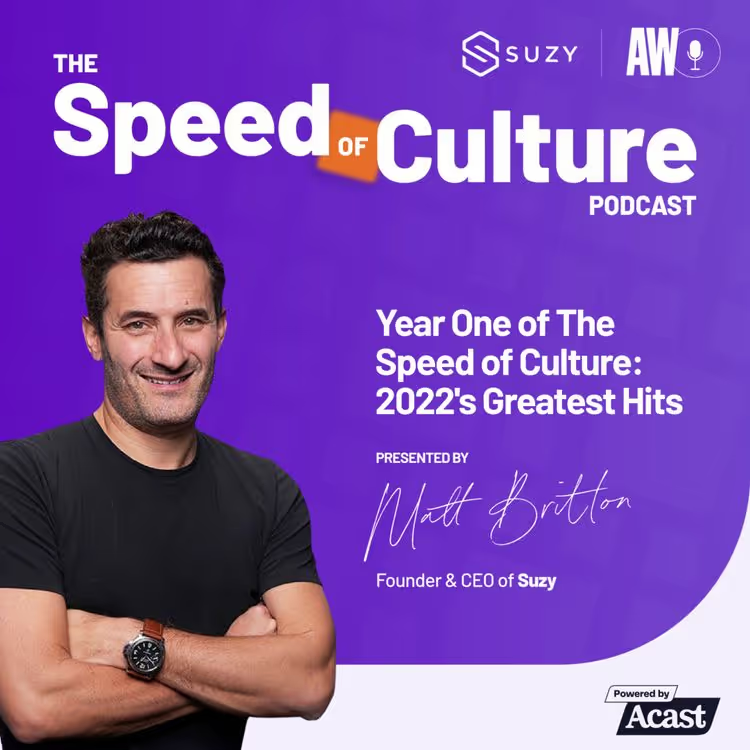
The inaugural year of The Speed of Culture podcast delivered unprecedented insights into the consumer trends reshaping brands globally. On December 20, 2022, Matt Britton, Founder and CEO of Suzy, the AI-powered consumer intelligence platform, sat down to recap the most impactful episodes from the show's first year.
Produced in partnership with Adweek, The Speed of Culture emerged as a critical voice for understanding how fast-moving consumer trends, from artificial intelligence to the metaverse, from the creator economy to brand transformation, are fundamentally changing how companies must operate in the modern marketplace.
Throughout 2022, the podcast featured conversations with marketing leaders from Google, Cadillac, TikTok, MNTN, Samsung, Budweiser, and other industry innovators who shared candid insights into their strategic responses to emerging cultural shifts.
The year-one retrospective demonstrated that brands able to quickly identify and act on consumer behavior changes would outpace competitors relying on traditional playbooks. As consumer preferences accelerated and digital culture became the primary driver of business value, the episodes featured in this highlights reel proved essential viewing for executives tasked with future-proofing their organizations.
In 2022, understanding the speed of culture was the difference between market leadership and obsolescence.
The conversations captured in this retrospective illuminate why consumer intelligence, rapid adaptation, and cultural relevance became the cornerstone of competitive advantage during one of the most transformative years in modern marketing history.
TikTok emerged as the defining platform of 2022, reshaping how brands understand audience engagement and content discovery. During The Speed of Culture's first year, conversations with TikTok executives revealed how the platform had transcended its initial perception as a novelty app for teenagers, transforming instead into a comprehensive creator economy infrastructure.
Unlike traditional social networks that required massive follower counts to achieve reach, TikTok's algorithm democratized content distribution, allowing creators with zero followers to achieve millions of impressions if their content resonated with the platform's recommendation engine.
The 2022 episodes highlighted TikTok's revolutionary approach to bringing like-minded communities together while simultaneously offering them tools to showcase and monetize their talents. Users were discovering interests, learning new skills, and building identities around niche communities, well beyond scrolling feeds of friends' content.
This shift represented a fundamental departure from Facebook's friendship model or Instagram's follower-based hierarchy. For brands, the implication was clear: success on TikTok required authentic cultural participation, not traditional advertising placements.
The podcast discussions emphasized that TikTok users spent the equivalent of watching a feature film every single day on the platform, driven by endless streams of algorithmically-served content tailored to individual interests. This engagement metric proved critical for brand strategists evaluating where to allocate marketing budgets.
As creators monetized their content through TikTok's creator fund and brand partnership programs, the platform became an employment engine for Gen Z, reshaping career aspirations and income generation for millions globally.
TikTok's dominance also accelerated the decline of traditional media consumption patterns, particularly among Gen Z audiences who increasingly rejected banner ads and pre-roll video commercials. Brands had to choose: evolve to match consumer media consumption habits or risk irrelevance.
The Speed of Culture's 2022 episodes with platform executives underscored that successful brands would be those embracing TikTok's creative culture rather than attempting to impose traditional advertising frameworks onto it.
Artificial intelligence transitioned from a futuristic buzzword to an immediate business necessity in 2022. The Speed of Culture featured conversations with AI experts and forward-thinking brand leaders who were already implementing machine learning solutions to enhance customer intelligence, personalization, and operational efficiency.
These discussions revealed that AI adoption was about processing vast amounts of consumer behavior data to anticipate needs, predict trends, and deliver hyper-personalized experiences at scale, rather than creating sentient robots.
The podcast's exploration of AI covered its applications across multiple brand functions: customer service automation, demand forecasting, content personalization, and customer segmentation. Marketing teams that had previously relied on broad demographic categories suddenly had access to granular consumer intelligence platforms that could identify micro-trends before they became mainstream.
This capability proved invaluable in a cultural environment where trends moved with unprecedented speed, a week could determine whether a brand appeared cutting-edge or hopelessly out of touch.
The 2022 episodes emphasized that AI wasn't replacing human creativity; rather, it was amplifying human decision-making by removing data processing bottlenecks. Marketers could now test hundreds of creative variations, instantly identify which resonated with specific audience segments, and scale winning approaches without months of traditional market research.
This accelerated feedback loop meant that consumer insights could move from data collection to strategic implementation in days rather than quarters.
Furthermore, the discussions highlighted that Gen Z consumers, digital natives who had grown up with personalized recommendations, expected AI-driven experiences as a baseline. They weren't impressed by generic marketing messages; they expected brands to understand their individual preferences, values, and behaviors.
Companies that failed to invest in AI-driven personalization risked alienating the demographic group with the most spending power growth potential in the coming decade.
The metaverse captured headlines and imagination throughout 2022, positioning itself as the next frontier for brand engagement and consumer experience. The Speed of Culture's podcast episodes explored what the metaverse actually represented: a convergence of virtual reality, augmented reality, blockchain technology, and digital asset ownership that could fundamentally reshape how consumers shopped, socialized, and derived meaning.
While casual observers dismissed the metaverse as science fiction, savvy brand leaders recognized it as a critical training ground for understanding Gen Z's evolving expectations around digital experiences.
The podcast discussions revealed that Gen Z and Millennial consumers were metaverse early adopters, willing to spend real money on virtual apparel, digital collectibles, and exclusive virtual experiences. The creator economy thrived in these virtual spaces, where artists, musicians, and content creators could monetize their talents without platform restrictions.
For brands, the metaverse offered opportunities to build community, launch exclusive collections, and experiment with new customer experiences in lower-risk virtual environments before deploying to physical retail.
However, the analysis was balanced and realistic. As of 2022, approximately 10 percent of consumers had engaged with any metaverse platform, and adoption barriers remained significant.
Privacy concerns, technical complexity, and isolation from offline networks deterred mainstream participation. Yet the trajectory was unmistakable: younger generations viewed virtual experiences not as replacements for physical reality but as complementary spaces where they could express themselves, discover products, and connect with communities.
The key takeaway from 2022's metaverse discussions was that brands didn't need to bet their entire future on virtual worlds immediately. Instead, they needed to understand the underlying shift toward digital identity, virtual social spaces, and blockchain-based asset ownership.
Companies that began experimenting with virtual brand experiences in 2022 would possess first-mover advantage as metaverse adoption accelerated in subsequent years. The winners would be brands that treated the metaverse as a cultural laboratory rather than a primary sales channel.
Perhaps no trend more fundamentally challenged traditional media and brand structures than the explosion of the creator economy throughout 2022. The Speed of Culture's podcast episodes explored how the decentralization of content creation (enabled by accessible tools, direct-to-consumer platforms, and Web3 infrastructure) was dismantling the gatekeeping power that studios, networks, and major media companies had exercised for decades.
The creator economy represented the democratization of influence and income generation. Anyone with talent, authenticity, and consistency could build an audience and generate revenue.
This shift had profound implications for how brands should allocate marketing budgets. Rather than paying massive sums to traditional celebrities or established media channels, smart brands were partnering directly with creators who had smaller but more engaged and loyal audiences.
Micro-influencers with 50,000 highly engaged followers often delivered better ROI than macro-influencers with millions of disengaged followers.
The podcast emphasized that Web3 technologies (decentralized platforms, cryptocurrency, and blockchain-based ownership) would continue to accelerate creator economy growth. Creators could own their audiences directly rather than renting access through platforms controlled by corporations.
They could tokenize their content, sell digital collectibles, and build sustainable income streams without algorithmic gatekeeping. For brands, this meant building authentic relationships with creators rather than transactional sponsorship deals.
The creator economy also reflected deeper generational values. Gen Z and younger Millennials preferred supporting individual creators they admired over buying products from faceless corporations.
Brand authenticity meant aligning with creator values, supporting their growth, and creating genuine partnership value rather than extracting their audience through advertising leverage. The podcast discussions revealed that brands treating creators as partners rather than media vendors would win their audiences' trust and loyalty.
Beyond specific platforms and technologies, The Speed of Culture's 2022 episodes explored a fundamental shift in what brand success actually meant. Traditional marketing focused on brand awareness and message penetration, how many people could see a brand's advertisement?
Modern brand success demanded cultural congruence: alignment between what brands claimed to stand for and what they actually did in the real world.
This shift emerged from Gen Z's sophisticated media literacy and their demand that brands demonstrate authentic values, not just profitable positioning. Consumers in 2022 possessed unprecedented ability to research brand behavior, identify inconsistencies, and publicly call out hypocrisy through social media.
A brand could spend millions on a sustainability campaign while simultaneously extracting resources and exploiting communities, and Gen Z would know about it within hours.
The podcast featured conversations with major brands like Samsung, Cadillac, and others that were successfully navigating this new reality. Samsung's approach, focusing on sustainable, personalized, and seamlessly integrated products while actually recycling close to 100 million pounds of e-waste annually, demonstrated that authentic brand transformation required operational changes, not just marketing language.
Cadillac's willingness to completely reimagine its brand identity for electric vehicles showed how legacy brands could reinvent themselves when genuinely committing to cultural shifts.
The key insight from 2022 was that brand transformation couldn't be fake. Consumers possessed tools to identify performative activism, false claims, and shallow corporate positioning.
Brands that wanted to compete for Gen Z's loyalty needed to make genuine operational, financial, and strategic commitments to their stated values. This required fundamental business model transformation, well beyond virtue signaling.
Across every episode highlighted in The Speed of Culture's 2022 retrospective, one theme remained consistent: the speed at which business environments change had fundamentally accelerated, and organizational ability to adapt quickly had become the ultimate competitive advantage.
Traditional strategic planning cycles (annual reviews, quarterly revisions) moved far too slowly to capitalize on emerging opportunities or mitigate emerging risks.
The podcast demonstrated that industry leaders in 2022 were implementing real-time consumer intelligence systems, empowering marketing teams to make decisions in days rather than months, and embracing organizational agility as a core capability.
The companies winning market share were those that could identify a trending topic on Monday, develop an authentic brand response by Tuesday, and execute across channels by Wednesday.
This required fundamental shifts in organizational structure, hiring, and decision-making authority. Marketing couldn't wait for approval from six levels of management.
Teams needed autonomy to act quickly while maintaining brand integrity. Data and consumer intelligence needed to flow continuously to decision-makers rather than sitting in quarterly reports.
The podcast's guests demonstrated that this organizational acceleration directly translated to market leadership.
The Speed of Culture provided direct access to the thinking of marketing leaders at major brands navigating 2022's unprecedented consumer trend acceleration. Rather than theoretical analysis of market trends, listeners heard from executives actively implementing strategies to address platform shifts, AI adoption, and generational value changes.
The podcast translated academic trend analysis into practical business strategy, making it invaluable for marketers, executives, and strategists responsible for competitive positioning.
The 2022 The Speed of Culture episodes revealed that successful creator economy strategies require treating creators as partners rather than media vendors. Brands should invest in long-term relationships with creators whose values align with brand positioning, provide resources for creator growth, and recognize that authentic creator content reaches engaged audiences more effectively than traditional advertising.
The key is moving from transaction-based sponsorships to genuine partnership value.
The 2022 discussions emphasized that real-time consumer intelligence platforms enable rapid decision-making. Rather than waiting months for market research insights, marketing teams using AI-powered consumer intelligence can identify trends, test responses, and scale successful approaches within days.
This acceleration is only possible when organizations implement systems designed to surface consumer insights continuously and empower teams to act autonomously on that intelligence.
2022 marked the inflection point where Gen Z became dominant consumer force, where AI transitioned from theoretical possibility to practical necessity, and where platform dominance shifted from desktop-based networks to mobile-first, algorithm-driven environments.
The Speed of Culture's year-one retrospective captured this moment when multiple fundamental shifts aligned simultaneously, forcing brands to completely reimagine how they understand consumers, reach audiences, and build loyalty.
The Speed of Culture's 2022 retrospective revealed that the pace of cultural and consumer change would only accelerate in coming years. For executives and marketing leaders seeking to remain competitive, the path forward requires embracing consumer intelligence as a core business function, treating organizational agility as a strategic capability, and recognizing that authentic brand values matter more than ever.
Matt Britton and the Suzy team continue exploring emerging trends through The Speed of Culture podcast, while his book Generation AI provides deeper exploration of how artificial intelligence is reshaping consumer behavior and business strategy.
For executives seeking to position themselves as thought leaders navigating these transformations, Britton's services as an AI keynote speaker can help organizations align teams around emerging opportunities and challenges.
To dive deeper into 2022's most important consumer trends and strategic responses, visit the Speed of Culture episode archive or connect with Matt through Speaker HQ to bring these insights to your organization.