Opening
The sports world is experiencing a seismic shift. Female athletes are now defining culture rather than supplementing it. This transformation is the result of deliberate strategy, authentic storytelling, and brands willing to recognize female athletes as cultural icons rather than niche audiences.
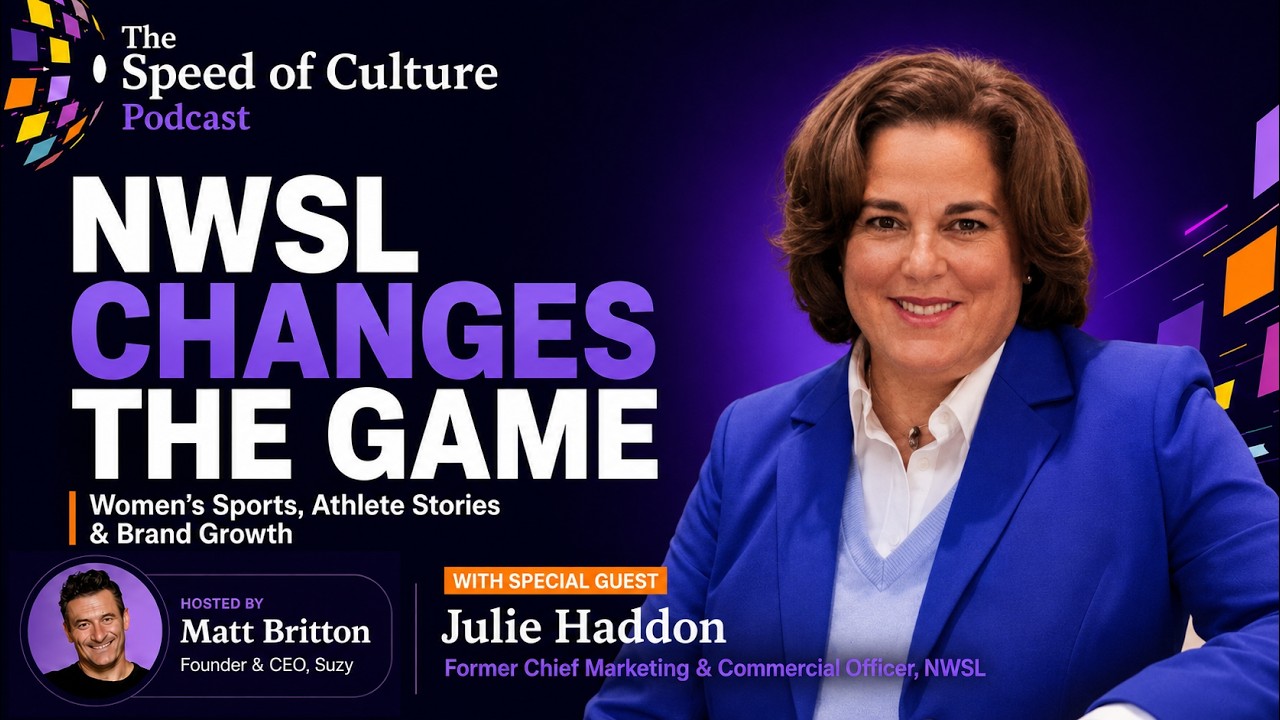
In a groundbreaking episode of the Speed of Culture Podcast, Matt Britton, founder and CEO of Suzy, the AI-powered consumer intelligence platform, sits down with Julie Haddon, former Chief Marketing and Commercial Officer of the National Women's Soccer League (NWSL). During this insightful 27-minute conversation, Haddon reveals how the NWSL navigated explosive growth by putting athletes at the center of every strategic decision.
The discussion explores athlete-led storytelling, breakthrough brand partnerships, and the cultural mechanisms driving women's sports from the margins to mainstream relevance.
Julie Haddon's five-year tenure at the NWSL, spanning her role as the league's first-ever Chief Marketing Officer and subsequent promotion to Chief Marketing and Commercial Officer, coincided with unprecedented growth. Under her leadership, the NWSL launched its inaugural marketing campaign, achieved record-breaking attendance numbers, and secured a groundbreaking $240 million media rights deal, a testament to the power of centering female athletes in culture.
Before joining the NWSL in 2022, Haddon spent five years at the NFL as Senior Vice President of Global Brand and Consumer Marketing, bringing invaluable experience in sports marketing to a league determined to reshape the narrative around women's soccer.
This episode captures a pivotal moment in sports history, where the convergence of athlete authenticity, strategic brand alignment, and cultural relevance creates unprecedented opportunities for both the athletes themselves and the brands that partner with them. For marketing executives, brand strategists, and anyone seeking to understand how to genuinely connect with modern consumers, this conversation offers a masterclass in culture-led marketing.
The Evolution of Women's Sports Marketing: From Niche to Mainstream
The women's sports industry is experiencing what can only be described as hypergrowth. For decades, female athletes competed in relative obscurity, receiving a fraction of media coverage, sponsorship dollars, and audience attention compared to their male counterparts. That reality is fundamentally changing.
In 2024 and 2025, women's sports reached a critical inflection point. Televised games from the WNBA, NCAA women's basketball, and the NWSL generated approximately 370 million viewer hours, representing a staggering 430 percent increase from 2021. The NWSL, in particular, saw an average annual value increase of 40 times following new broadcast deals with CBS, ESPN, Prime, and Scripps Sports.
The WNBA's new media rights deal, valued at $200 million annually beginning in 2026, more than triples its previous deal from 2023 to 2025, outpacing even the NBA's renewal rate by 2.6 times.
This is fundamental market expansion, well beyond increased viewership. Women's sport revenues are projected to reach $2.35 billion in 2025, nearly triple the value from three years prior. The number of Fortune 500 companies investing in women's sports sponsorships has doubled year-over-year.
Sponsorships across women's sports grew 12 percent annually, outpacing the 8 percent growth across men's professional leagues.
Julie Haddon's leadership at the NWSL exemplifies how strategic positioning can accelerate this growth trajectory. By recognizing that female athletes possess cultural relevance extending far beyond the pitch, the league transformed how it communicated with audiences. The NWSL moved beyond traditional sports marketing, leveraging player influence across broader cultural conversations, fashion, activism, entrepreneurship, and entertainment.
The transformation reflects a deeper market truth: 77 percent of those who follow women's sports athletes and creators on social platforms report being positively influenced to discover, consider, or purchase items. Women's sports fans demonstrate exceptional loyalty; more than one in four fans of women's soccer have made a purchase because of a brand's sponsorship, making them 58 percent more likely to convert compared to fans of other women's sports.
This combination of cultural relevance and commercial effectiveness makes female athletes uniquely valuable in the contemporary marketing landscape.
Athlete-Led Storytelling: Authenticity as Competitive Advantage
At the core of the NWSL's marketing revolution lies a fundamental insight: today's female athletes are also entrepreneurs, activists, content creators, and culturally relevant voices shaping conversations across multiple platforms. Rather than imposing narratives upon them, the NWSL recognized that the most powerful marketing strategy involves amplifying their authentic stories.
This approach represents a paradigm shift from traditional sports marketing, where organizations controlled athlete narratives through carefully managed messaging. The NWSL instead inverted this structure, building marketing infrastructure designed to support players' own storytelling efforts.
To execute this strategy effectively, the NWSL partnered with digital media management company Greenfly to supply every player with matchday photos and videos for their personal social media accounts. This seemingly simple infrastructure change had profound implications: it removed barriers between players and their audiences, enabling direct communication without institutional mediation.
The league invested in sophisticated visual storytelling by bringing on renowned photographer Brigitte Lacombe to shoot high-fashion-style portraits of players during media day. These images, designed to position athletes as cultural figures rather than sports commodities, circulated across social platforms and traditional media, reshaping how female soccer players were visually represented in popular culture.
Content partnerships extended beyond photography. The NWSL debuted a docuseries titled For the Win: NWSL with Prime Video, providing long-form narrative space for player stories. Over time, partnership with Overtime, a digital media platform commanding over 100 million followers across social channels, enabled the NWSL to distribute game highlights and behind-the-scenes footage through channels more attuned to contemporary consumption patterns than traditional television broadcasts.
The strategic brilliance lies in recognizing that modern consumers, particularly younger demographics driving cultural trends, don't trust institutional messaging. They trust authenticity. When female athletes control their narratives and share their authentic perspectives, that authenticity becomes priceless to brands seeking genuine cultural connection.
Julie Haddon understood this shift intuitively. Her background at the NFL provided experience managing large-scale sports properties, but her vision for the NWSL required fundamental reimagining of how athletes fit within the marketing ecosystem. Rather than athletes serving marketing strategies, the NWSL's strategies served athlete empowerment.
Brand Partnerships as Cultural Alignment: Beyond Transactional Sponsorships
Traditional sports sponsorships often function transactionally: a brand pays for visibility, the sports property receives capital, and athletes lend their image to corporate messaging. The NWSL's approach evolved beyond this model toward partnerships built on genuine cultural alignment and co-creation.
This shift reflects broader changes in consumer behavior, particularly among younger demographics. A striking 86 percent of sponsors surveyed reported that their women's sports investments met or exceeded return on investment expectations, with one-third reporting activations that delivered better-than-expected results.
The e.l.f. Beauty partnership exemplifies this evolved model. Rather than a traditional sponsorship arrangement, e.l.f. Beauty became the first official makeup and skincare partner of the NWSL, expanding its partnership to include the “Glow for Glory” initiative. This program offered open tryouts to aspiring players, merging brand visibility with genuine support for female athletic development.
Similarly, Bobby's partnership with the NWSL centers on supporting athlete mothers, recognizing that many professional female athletes navigate parenthood while maintaining elite athletic careers. This positioning celebrates an aspect of female athlete experience that male-dominated sports narratives typically ignore.
The NWSL's partnership with Canon as the Official Imaging Partner launched a multi-year content collaboration focused on elevating visual storytelling around the league, its athletes, and its fans. This partnership invests in infrastructure supporting how the NWSL's stories are captured and disseminated.
Cosmetics and spirits emerged as fastest-growing sponsorship categories in women's sports during 2025. The NWSL more than doubled its spirits sponsorships year-over-year, indicating that luxury and lifestyle brands increasingly view female athletes as aspirational figures worthy of premium association.
One notable example involved aligning player kits with Met Gala fashion moments, a creative decision that elevated player style beyond athletic utility toward fashion cultural significance. This positioning signaled that NWSL players operate at the intersection of sports and culture.
Data-Driven Cultural Strategy: Understanding Consumer Psychology in Women's Sports
Behind the NWSL's marketing success lies sophisticated understanding of consumer behavior, audience psychology, and cultural trends. This strategic foundation relies on data-driven insights that inform decision-making across all marketing initiatives.
Understanding consumer intelligence in the context of women's sports requires recognizing fundamental shifts in how contemporary consumers, particularly Gen Z and younger millennials, evaluate brands and make purchasing decisions. Female athletes embody multiple values simultaneously: athletic excellence, personal authenticity, social advocacy, and entrepreneurial ambition.
The Speed of Culture Podcast itself represents a commitment to understanding shifting consumer culture. Matt Britton's leadership of Suzy, an AI-powered consumer intelligence platform utilized by Fortune 500 companies including Amazon, Microsoft, Google, P&G, Johnson & Johnson, Pepsi, and Netflix, positions him to recognize broader patterns in how culture shapes consumer behavior.
Data supporting women's sports growth demonstrates that this cultural shift isn't temporary or cyclical, it reflects structural changes in how audiences consume sports content. The 170 percent increase in WNBA regular season viewers, the 430 percent growth in televised women's sports viewership, and the doubling of Fortune 500 companies investing in women's sports sponsorships all point toward sustained transformation.
Strategic marketing in this context requires moving beyond intuition toward evidence-based decision-making grounded in consumer psychology. The NWSL's success demonstrates that organizations willing to invest in understanding their audiences, and trusting athletes to communicate authentically, position themselves to capitalize on this cultural transformation.
The Future of Female Athletes in Culture: Implications for Brands and the Industry
Julie Haddon's conversation with Matt Britton arrives at a pivotal moment: female athletes have achieved undeniable cultural relevance, yet the full implications of this shift remain emerging. What does this transformation mean for brands seeking to engage authentically? How should marketing strategies evolve to reflect this new reality?
Several clear trends emerge from current market dynamics. First, authenticity has become non-negotiable. Audiences quickly identify and reject inauthentic brand partnerships attempting to exploit female athlete visibility without genuine alignment.
Second, investment in athlete infrastructure and storytelling support yields measurable returns. The NWSL's partnerships with Greenfly, Canon, and Overtime demonstrate that organizations supporting how athletes communicate their narratives outperform those attempting to control messaging.
Third, the intersection of culture and commerce creates unprecedented opportunities for forward-thinking brands. Female athletes command attention across sports, fashion, activism, entertainment, and lifestyle categories.
Fourth, younger demographics driving cultural trends strongly preference brands demonstrating genuine commitment to female athlete support. Female athlete support increasingly functions as a values statement, communicating organizational commitment to equity, representation, and cultural progress.
The NWSL's achievement of a $240 million media rights deal, all-time high sponsorship levels, and record attendance doesn't represent the ceiling for women's sports growth, it represents the beginning of a transformation still unfolding.
Key Takeaways
- Female Athletes as Cultural Icons: Female athletes have transcended their role as athletes to become entrepreneurs, activists, content creators, and culturally relevant voices, unlocking authentic connection opportunities beyond traditional sponsorship frameworks.
- Authenticity Drives Commercial Returns: Sponsorship investments in women's sports grew 12 percent annually while outpacing men's leagues at 8 percent, with 86 percent of sponsors reporting ROI meeting or exceeding expectations.
- Infrastructure Supporting Athlete Storytelling Matters: Investment in communication infrastructure yields superior outcomes compared to institutional message control.
- Data-Driven Strategy Drives Cultural Positioning: Understanding consumer psychology enables strategic decision-making that maximizes cultural relevance and commercial effectiveness.
- Growth Reflects Structural Change: The 430 percent increase in viewership, 40x increase in media value, and doubling of corporate sponsorships indicate sustained transformation.
Frequently Asked Questions
Why have female athletes suddenly become culturally relevant in mainstream marketing?
Female athletes haven't suddenly become relevant, rather, their cultural relevance has finally been recognized and amplified by mainstream institutions. The shift reflects broader societal changes prioritizing equity, representation, and authentic voices.
Contemporary consumers, particularly younger demographics, actively seek brands demonstrating commitment to inclusive representation. Female athletes embody athletic excellence, authenticity, social advocacy, and entrepreneurial ambition, making them uniquely positioned to connect with value-driven audiences.
How can brands authentically partner with female athletes without appearing exploitative?
Authentic brand partnerships require genuine alignment of values, not merely transactional sponsorship arrangements. The most successful partnerships address real needs within female athlete communities and involve co-creation and athlete agency in decision-making.
Rather than imposing narratives, female athletes should maintain control over how partnerships are communicated and positioned, ensuring credibility and measurable commercial returns.
What role does social media and athlete storytelling play in women's sports marketing success?
Social media has transformed the relationship between athletes and audiences, enabling direct communication without institutional mediation. When female athletes control their own narratives, authenticity drives deeper audience trust and engagement.
Brands seeking authentic connection increasingly recognize that direct partnerships with athletes' existing audiences yield superior outcomes compared to traditional broadcast-based sponsorship arrangements.
How do consumer intelligence and data analytics inform successful women's sports marketing strategies?
Data reveals that 77 percent of those following women's sports athletes on social platforms report being positively influenced toward purchase decisions. More than one in four women's soccer fans make purchases based on brand sponsorships, demonstrating exceptional conversion rates.
Organizations leveraging consumer intelligence to inform partnership strategy, content creation, and audience engagement achieve measurable competitive advantages in a rapidly evolving cultural landscape.
Looking Ahead
The conversation between Matt Britton and Julie Haddon on the Speed of Culture Podcast captures a pivotal cultural moment where female athletes have become undeniable forces in mainstream culture and commerce.
For marketing executives seeking to understand contemporary consumer culture, female athlete partnerships offer a masterclass in authenticity, values alignment, and data-driven strategy.
Explore the full episode and discover more insights at The Speed of Culture Podcast. Learn more about consumer intelligence and AI-powered brand strategy at Suzy.
For insights into how AI is reshaping culture and consumer behavior, discover Generation AI: The Book by Matt Britton. Looking to feature industry-leading insights at your organization? Explore AI Keynote Speaker options and Speaker HQ for comprehensive speaker bureau solutions.

%20(400%20x%20100%20px)%20(300%20x%2050%20px)%20(150%20x%2050%20px).avif)