Opening
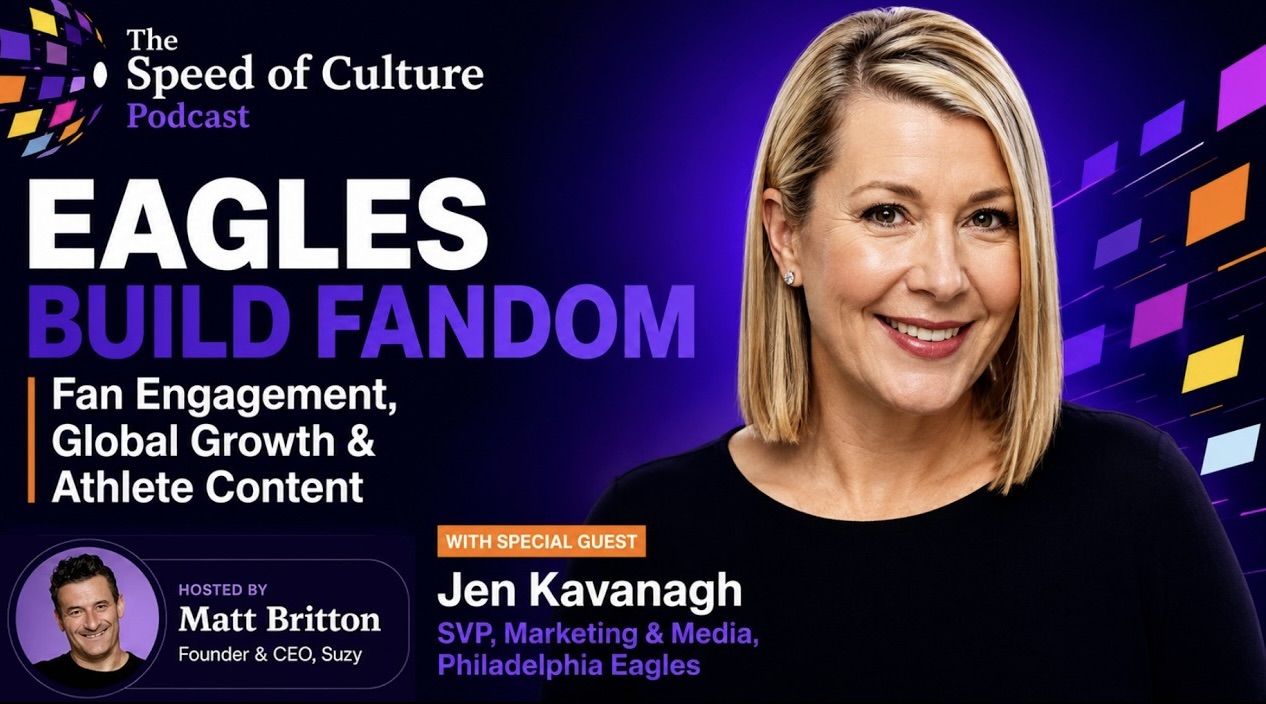
In a competitive sports landscape where fan engagement directly impacts revenue and brand loyalty, the Philadelphia Eagles have established themselves as one of the most innovative marketing organizations in professional sports. In Episode 189 of The Speed of Culture Podcast, host Matt Britton, founder and CEO of Suzy, the AI-powered consumer intelligence platform, sat down with Jen Kavanagh, SVP of Marketing & Media for the Philadelphia Eagles, to explore how the organization is staying ahead of the curve in an increasingly complex media environment.
The conversation reveals crucial insights into how established sports franchises are adapting their marketing strategies to reach new audiences while maintaining the loyalty of passionate fan bases. Kavanagh's leadership at the Eagles represents a case study in modern sports marketing excellence, one that balances traditional sports media, digital innovation, community engagement, and data-driven decision-making.
With the Eagles consistently among the league's most engaged fan communities and a robust social media presence, their marketing approach offers valuable lessons for brands across all industries.
The episode, which aired on May 15, 2025, dives deep into the strategic thinking behind one of the NFL's most respected organizations. From navigating the complexities of local versus national media strategy to building meaningful connections with a diverse fan base, Kavanagh discusses the evolution of sports marketing in the age of fragmented media consumption, personalization at scale, and the pressing need for authentic storytelling.
This conversation is essential for marketing leaders looking to understand how to build cultural relevance while maintaining institutional credibility, challenges that extend far beyond the football field.
Multi-Channel Marketing in the Age of Fragmentation
One of the most significant challenges facing modern sports franchises is the complete fragmentation of media consumption. Gone are the days when fans consumed sports through a single television broadcast or local newspaper coverage.
Today, the Eagles' marketing team must coordinate efforts across traditional broadcast television, streaming platforms, social media networks, in-stadium experiences, and direct-to-consumer digital channels. This requires not just larger budgets, but fundamentally different organizational structures and skill sets.
Kavanagh's approach at the Eagles reflects a sophisticated understanding of audience segmentation. The franchise recognizes that a 65-year-old season ticket holder who watches games on network television has entirely different media consumption habits than a 22-year-old Gen Z fan who discovers the Eagles through TikTok clips and Instagram Reels.
Rather than treating these as competing channels, the Eagles marketing team views them as complementary components of an integrated strategy. A single moment (an incredible catch, a controversial referee decision, a player interview) can be immediately repurposed across channels with platform-specific formatting, messaging, and tone.
This multi-channel approach also extends to sponsorship activation. Corporate partners of the Eagles expect value that goes beyond traditional signage in the stadium or a 30-second commercial during broadcasts.
Modern sponsorships involve integrated digital campaigns, influencer partnerships, experiential activations, and exclusive content access. The Eagles' marketing team must negotiate these complex arrangements while ensuring that each sponsor feels they're receiving authentic value and that the fan experience remains uncompromised.
This delicate balance is one of the defining challenges of contemporary sports marketing.
The Eagles have also invested heavily in their owned media channels. Rather than relying entirely on external platforms (which can change algorithms, policies, or priorities overnight) the franchise has developed robust digital properties including their official website, mobile application, and direct email channels.
These owned channels allow the Eagles to maintain direct communication with fans without intermediaries, to gather zero-party data (information fans willingly share), and to create personalized experiences. This mirrors strategies being employed by consumer brands across industries, demonstrating that sports organizations are increasingly sophisticated marketers competing for share of attention in a crowded marketplace.
Data, Personalization, and Consumer Intelligence
The role of data in modern sports marketing cannot be overstated. Jen Kavanagh's partnership with platforms like Suzy reflects the Eagles' commitment to understanding fan behavior at a granular level.
Gone are the days of "spray and pray" marketing campaigns that broadcast a single message to an undifferentiated audience. Today's most effective sports marketing is deeply informed by consumer intelligence, understanding not just demographics, but psychographics, behavioral patterns, media preferences, and sentiment.
The Eagles use data to answer critical questions:
- Which fan segments are most likely to purchase season tickets?
- What content drives the highest engagement across different age groups?
- How do local fans differ from national audiences in their consumption patterns?
- What messaging resonates most strongly with inactive season ticket holders?
- How does game performance impact merchandise sales across different regions?
By gathering and analyzing these insights, the Eagles can optimize every touchpoint in the fan journey.
Personalization enabled by data intelligence allows the Eagles to deliver the right message to the right person at the right time. A fan who attended a specific game might receive follow-up content highlighting moments from that game.
A fan who frequently engages with defensive highlight reels receives more defensive content. A fan showing early signs of disengagement receives special offers or exclusive content designed to re-engage them.
This level of personalization dramatically improves marketing efficiency and fan satisfaction.
The Eagles are also using data to understand emerging trends before they become mainstream. By monitoring social conversations, engagement patterns, and emerging fan interests, the team can identify new opportunities for content, partnership, or fan experience innovation.
This proactive approach to trend identification gives the Eagles a competitive advantage in a crowded media landscape where first-mover advantage often matters significantly.
Additionally, data allows the Eagles to measure and optimize marketing performance with unprecedented precision. Rather than relying on vanity metrics like impressions or followers, the team tracks meaningful business outcomes: ticket sales influenced, merchandise revenue generated, email open rates, website conversion rates, and long-term fan lifetime value.
This accountability-focused approach to marketing measurement represents a maturation of sports marketing as a discipline.
Community Engagement and Authentic Storytelling
While data and technology are essential, the Eagles recognize that authentic human connection remains the foundation of fan loyalty. The most successful sports marketing today tells real stories about real people, players, coaches, staff, and fans themselves.
The Eagles' marketing team works to elevate these authentic narratives rather than manufacturing artificial ones.
This approach manifests in several ways. The Eagles create content that goes beyond game highlights to show the human side of players and the organization.
A player's community involvement, charitable work, or personal journey becomes part of their brand narrative. The Eagles' marketing team actively seeks out these authentic stories and amplifies them through appropriate channels.
This creates a deeper emotional connection between fans and the organization: fans are rooting for talented athletes and supporting people whose values and character they respect.
The Eagles also invest significantly in community engagement initiatives that generate authentic storytelling opportunities. Youth football programs, community service projects, and local partnerships create opportunities for meaningful interaction between the organization and the Philadelphia community.
These initiatives generate authentic content that resonates far more powerfully than paid advertising ever could. When a fan sees a player volunteering in their neighborhood, that's a touchpoint that builds loyalty and creates word-of-mouth marketing that money cannot buy.
Social media engagement represents another crucial element of community building. Rather than treating social media as a one-way broadcast channel, the Eagles' team actively engages in conversations with fans, responds to comments and messages, and creates opportunities for fan-generated content.
This two-way dialogue reinforces the sense that the Eagles organization values its community. During major moments (wins, playoff runs, or championship seasons) this community-building investment pays enormous dividends as fans become active promoters and defenders of the brand.
The Eagles also recognize the power of nostalgia and tradition in building community. The franchise's long history provides rich material for storytelling that honors past achievements while building excitement for future success.
Celebrating legendary players, commemorating milestone moments, and telling the franchise's story engages fans on a deeper, more emotional level than promotion of upcoming ticket sales ever could.
Navigating Local vs. National Brand Identity
One of the unique challenges facing the Philadelphia Eagles is balancing a fiercely proud local fan base with aspirations for national and even international growth. Philadelphia sports fans are legendary for their passion and loyalty, but they're also known for being discerning and critical.
They demand authenticity and won't tolerate perceived disrespect or pandering. The Eagles' marketing strategy must honor this local identity while also building appeal beyond the tri-state area.
This requires sophisticated audience segmentation and channel strategy. Local campaigns emphasize Eagles pride, Philadelphia sports history, and the special connection between the organization and the city.
National campaigns focus on the team's competitiveness, playoff positioning, and star players who have appeal across markets. International campaigns might focus on the global nature of sports fandom and the opportunity to experience authentic American football culture.
These are coordinated components of an integrated strategy that maintains consistency while adapting to specific audience needs.
The Eagles also leverage local media relationships while building national and international media partnerships. Local Philadelphia media outlets have long-standing relationships with team personnel and access to unique content.
These outlets serve as trusted sources for local fans and generate local credibility. Meanwhile, national sports media outlets and emerging digital publishers reach broader audiences.
The Eagles' media strategy recognizes the unique value each outlet brings and tailors communication accordingly.
This local-to-national approach also applies to sponsorships and partnerships. Regional sponsors and local businesses are crucial to the Eagles' ecosystem, and marketing efforts must reflect this.
But the Eagles also partner with national and international brands seeking exposure to passionate sports fans. The marketing team must ensure that these partnerships feel authentic to both local and national stakeholders, a balance that requires careful negotiation and creative problem-solving.
The Evolution of Fan Engagement and Loyalty
The nature of fan loyalty has fundamentally changed in the past decade. Historically, sports team loyalty was generational, fans inherited their team preferences from family members and maintained those loyalties throughout their lives regardless of the team's performance.
Today, while some of this traditional loyalty persists, it exists alongside more fluid, performance-based, and experience-driven loyalty.
Modern fans expect more from their teams. They want authentic engagement, not just transactional marketing.
They want to feel that the organization values them as individuals, understands their preferences, and respects their time and money. They want opportunities to feel part of a community.
They want access and transparency. They want to be entertained not just on game day, but throughout the season, during the offseason, and even during years when the team isn't performing at championship levels.
The Eagles have responded to these evolving expectations by creating a comprehensive fan engagement ecosystem. Season ticket holders receive exclusive benefits including early access to playoff tickets, special events, and exclusive content.
Digital community platforms allow fans to connect with each other and with the organization. The Eagles' loyalty program rewards fans for engagement, both attending games and engaging with digital content.
VIP experiences offer affluent fans opportunities for exclusive access and premium experiences.
This tiered approach to fan loyalty recognition allows the Eagles to maximize value from their most engaged fans while continuing to build broader community. Not every fan can attend every game or afford premium experiences, but the Eagles create pathways for fans at every level to feel recognized and valued.
This inclusive approach to loyalty building strengthens overall community cohesion.
The Eagles also recognize that fan loyalty extends beyond game attendance to merchandise purchases, social media engagement, word-of-mouth advocacy, and even career decisions.
By tracking loyalty across all these dimensions, the Eagles' marketing team can identify truly valuable fans and customize engagement strategies accordingly.
Looking Ahead
The insights shared by Jen Kavanagh in Episode 189 of The Speed of Culture Podcast demonstrate that elite sports marketing requires balancing tradition with innovation, local authenticity with national ambition, data intelligence with human connection, and commercial objectives with fan community values.
The Philadelphia Eagles' approach offers valuable lessons not just for other sports organizations, but for any brand seeking to build sustainable competitive advantage through authentic engagement and strategic marketing excellence.
As media continues to fragment, consumer attention becomes increasingly scarce, and competition for engagement intensifies, the fundamentals that Kavanagh emphasizes, understanding your audience, delivering authentic value, maintaining community connection, and measuring impact against meaningful business outcomes, become even more critical.
The Eagles' willingness to invest in both technology and people, in both data and storytelling, positions them well for continued success in an increasingly complex marketing environment.
For marketing leaders seeking to understand contemporary best practices in audience engagement, community building, and integrated marketing strategy, The Speed of Culture Podcast Episode 189 provides invaluable insights from one of sports' most innovative marketing executives.
To explore more insights about marketing strategy, consumer behavior, and cultural trends shaping modern business, visit Suzy for AI-powered consumer intelligence solutions. Learn more about The Speed of Culture Podcast and listen to all episodes.
Discover additional resources on marketing innovation and cultural trends from Matt Britton at Generation AI, AI Keynote Speaker, and Speaker HQ.
Key Takeaways
- Multi-Channel Mastery is Essential: Modern sports teams must coordinate marketing efforts across broadcast television, streaming platforms, social media, in-stadium experiences, and direct-to-consumer channels while maintaining message consistency and platform-specific optimization.
- Data Intelligence Drives Personalization: Understanding fan behavior through advanced consumer intelligence platforms enables organizations to deliver personalized experiences that dramatically improve marketing efficiency and fan satisfaction while building predictable revenue streams.
- Authenticity Cannot Be Manufactured: Genuine community connection through authentic storytelling, player involvement in community initiatives, and transparent two-way engagement builds deeper loyalty than any paid advertising campaign.
- Local Pride and National Ambition Can Coexist: Successful sports marketing balances fierce local identity and pride with broader national and international growth aspirations through sophisticated audience segmentation and tailored messaging strategies.
- Loyalty is Multidimensional: Modern fan loyalty extends beyond game attendance to merchandise purchases, digital engagement, social advocacy, and emotional commitment, requiring comprehensive tracking and recognition systems that value fans across all engagement dimensions.
Frequently Asked Questions
How do modern sports franchises balance traditional media with digital engagement?
The Philadelphia Eagles exemplify a sophisticated approach that treats traditional broadcast media and digital channels as complementary rather than competing. Local television broadcasts serve loyal traditional fans, while social media platforms and streaming services reach younger, digitally-native audiences.
The Eagles leverage integrated strategies where a single content moment is adapted for different platforms with appropriate formatting and messaging. This requires coordinated planning, dedicated teams, and cross-functional collaboration to ensure consistency while maintaining platform-specific effectiveness.
What role does consumer intelligence play in sports marketing?
Consumer intelligence platforms like Suzy enable sports organizations to move beyond demographic assumptions to understand fan behavior, preferences, and sentiment at scale. Teams use these insights to answer critical questions about which audiences are most valuable, what messaging resonates with different segments, and which content drives engagement.
This data-driven approach allows teams to optimize marketing spend, personalize fan experiences, and identify emerging opportunities before competitors. The most sophisticated organizations measure marketing impact against business outcomes like ticket sales, merchandise revenue, and lifetime fan value rather than vanity metrics.
How do sports organizations authentically engage communities without appearing exploitative?
Authentic community engagement requires genuine commitment rather than superficial marketing gestures. The Eagles invest in long-term community programs that exist independently of marketing campaigns, youth football initiatives, charitable partnerships, and local community support.
These authentic efforts generate organic storytelling opportunities when content comes from real relationships rather than manufactured narratives. Fans immediately recognize the difference between genuine commitment and performative marketing, and only authentic engagement builds lasting loyalty.

%20(400%20x%20100%20px)%20(300%20x%2050%20px)%20(150%20x%2050%20px).avif)