Why Consumer Insights Beat Marketing Tactics
In a marketing landscape obsessed with the next platform, the newest format, and the shiniest technology, there is a counterintuitive truth that the most effective leaders already understand: powerful consumer insights outperform trendy tactics every time.
Matt Britton, founder and CEO of Suzy, the AI-powered consumer intelligence platform, has built his career on this principle. That organizations armed with deep consumer understanding consistently outperform those chasing the latest marketing fad.
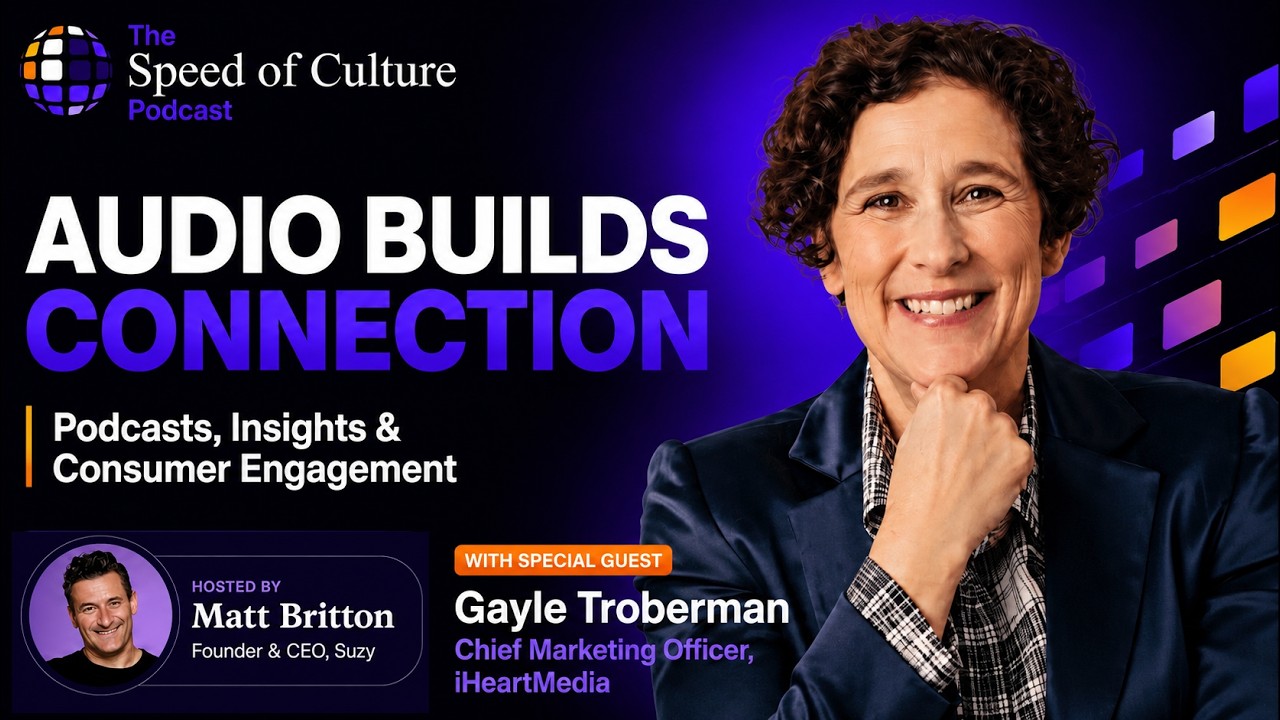
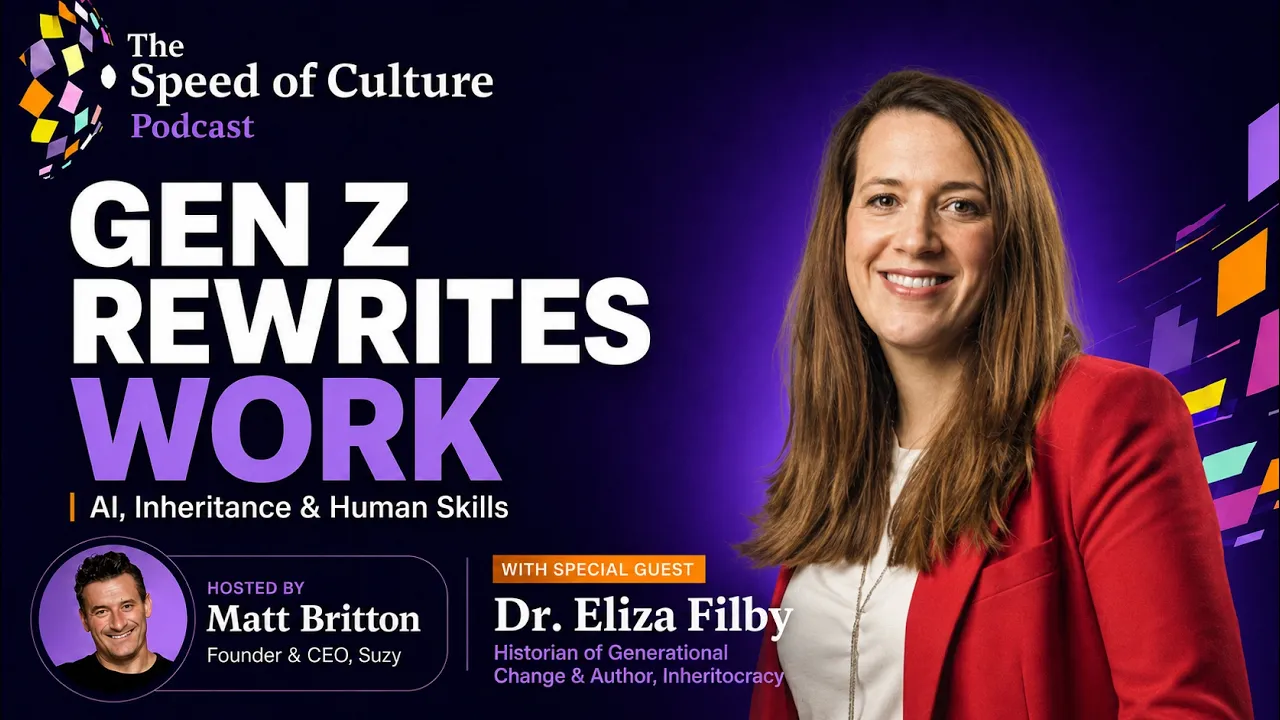
On The Speed of Culture podcast, Britton spoke with Gayle Troberman, Chief Marketing Officer at iHeartMedia, about why the audio industry is experiencing unprecedented growth, how consumer insights should drive every marketing decision, and what the emerging metaverse means for brands looking to connect with audiences in new ways.
Troberman, who spent 16 years at Microsoft as Chief Creative Officer before leading marketing at IPG Mediabrands and ultimately iHeartMedia, brings a rare cross-platform perspective to the conversation. Her career spanning technology, media agencies, and audio broadcasting has reinforced a single conviction: understand your consumer first, then determine which channels and tactics deliver against that understanding.
For marketing executives allocating budgets across an increasingly fragmented media landscape, Troberman's philosophy offers both a strategic framework and a competitive advantage.
The Unstoppable Growth of Audio Content
In a world dominated by visual content (TikTok videos, Instagram Reels, YouTube Shorts) it would be easy to assume that audio is a legacy medium in decline. The data tells a dramatically different story.
Broadcast radio still reaches 9 out of 10 Americans, and the audio ecosystem is expanding rapidly on top of this enormous base. Troberman described the growth as accelerating thanks to three converging forces: smart speakers transforming homes into always-on audio environments, wireless headphones making audio content accessible during any activity, and voice interfaces creating new interaction paradigms between consumers and content.
The result is that consumers can keep their ears connected to audio content around the clock, during commutes, workouts, household chores, cooking, and countless other moments when visual media cannot compete.
Podcasting, which sits at the heart of iHeartMedia's growth strategy, exemplifies this expansion. What Troberman described as “companionship conversation media” represents a category of content that fulfills fundamental human needs for connection, learning, and entertainment in ways that are distinct from visual media.
“Companionship conversation media.”
Listeners develop intimate relationships with podcast hosts and feel part of communities built around shared interests. For brands, this creates advertising environments characterized by attention, trust, and contextual relevance, qualities increasingly difficult to find in visual media environments plagued by banner blindness and scroll fatigue.
The implications for marketing strategy are significant. Audio content provides brand integration opportunities within trusted, high-attention environments that visual digital media increasingly struggles to deliver.
As Britton has emphasized through his keynotes to enterprise leaders, understanding where consumers are genuinely paying attention, rather than where impressions are cheapest, separates effective marketing investment from wasted spend.
The Discipline of Insight-Driven Marketing
The central thesis of Troberman's conversation with Britton is deceptively simple: do not buy the channel first and then justify it with data. Instead, develop a genuine insight about your consumer and then determine which channels deliver against that insight.
The difference between these two approaches may seem subtle, but it produces dramatically different outcomes. Tactic-first marketing leads to fragmented investments across whatever platforms are generating the most industry buzz. Insight-first marketing concentrates resources on the channels and creative approaches most likely to drive business outcomes.
Troberman acknowledged that this approach requires significant effort. Understanding consumers deeply enough to develop genuine insights, not just data points, but meaningful understanding of motivations, behaviors, and decision-making processes, is intellectually demanding work that requires both quantitative rigor and qualitative empathy.
But the payoff is substantial. Insight-driven campaigns consistently outperform tactic-driven campaigns because they are built on foundations of genuine consumer understanding rather than assumptions about where audiences might be found.
The role of creative testing in this framework is particularly instructive. Troberman noted that creative testing does not tell marketers all the answers, but it prevents disaster and sometimes helps identify creative genius.
This pragmatic view of testing, as a risk mitigation tool rather than a creative direction tool, reflects a mature understanding of how research should inform marketing decisions. Consumer intelligence platforms like Suzy enable this kind of rapid testing and insight generation, giving marketers the ability to validate creative approaches against real consumer responses before committing full budget.
Bridging Digital and Physical Experiences in the Metaverse
Looking toward the future, Troberman shared iHeartMedia's strategic thinking about the metaverse and how audio experiences might bridge digital and physical worlds. The company was planning to bring events into the metaverse, creating opportunities for fans and artists to connect through virtual concerts, festivals, and interactive experiences that complement rather than replace physical events.
While the metaverse landscape has evolved significantly since this conversation, the underlying strategic principle remains relevant: brands that create experiences spanning digital and physical environments will build deeper, more resilient relationships with consumers.
iHeartMedia's annual festivals and live events, which draw millions of fans, represent physical engagement anchors that can be extended through digital experiences to reach audiences who cannot attend in person.
The concept of tokenized access that Troberman discussed, where digital tokens or passes connect participation across physical and digital environments, foreshadows the broader trend toward unified consumer experiences that Britton explores in Generation AI. The generation growing up with AI and digital-native technologies expects seamless movement between physical and digital interactions with brands.
Organizations investing in this cross-environment capability today are building infrastructure for the consumer expectations of tomorrow. For marketing leaders evaluating metaverse and virtual experience investments, Troberman's approach offers a useful framework: start with what your brand does exceptionally well in physical environments, then explore how digital extensions can amplify reach, deepen engagement, and create new revenue streams without diluting the core experience.
The Leadership Imperative: Hiring Talent and Driving Accountability
Beyond marketing strategy, Troberman emphasized a leadership principle that underpins everything else: the quality of your team determines the quality of your outcomes. Her career spanning Microsoft, IPG Mediabrands, and iHeartMedia has consistently reinforced that hiring talented people and holding them accountable is the foundation of marketing excellence.
This principle carries particular weight in the current marketing environment, where the proliferation of channels, technologies, and data sources has made marketing execution exponentially more complex. No individual leader can master every platform, format, and analytics methodology.
Success requires building teams with diverse expertise, empowering them with genuine decision-making authority, and holding them accountable for business outcomes rather than activity metrics.
The distinction between activity metrics and business outcomes is crucial. Marketing teams measured on impressions delivered, content pieces produced, or campaigns launched will optimize for volume. Teams measured on consumer insights generated, brand consideration shifted, and revenue attributed to marketing investment will optimize for impact.
Troberman's insight-first philosophy naturally drives toward outcome measurement because the starting point is consumer understanding rather than channel activity.
For CMOs and marketing leaders building organizations capable of competing in an increasingly complex media landscape, the talent imperative cannot be overstated. The ability to attract, develop, and retain marketers who combine analytical rigor with creative instinct and strategic thinking is becoming the primary competitive advantage for marketing organizations.
What Audio's Growth Signals About Consumer Behavior
The growth of audio content is a signal about how consumer attention and behavior are evolving, well beyond a media trend. As visual media environments become more crowded and algorithmically driven, consumers are gravitating toward media formats that offer deeper engagement, genuine companionship, and trusted information.
This behavioral shift has implications that extend well beyond audio. It suggests that consumers are reaching saturation points with attention-extracting visual media and actively seeking alternatives that respect their time and intelligence.
Brands that recognize this shift and invest in content and advertising strategies aligned with deeper engagement, rather than more impressions, will build stronger consumer relationships.
Podcast advertising's effectiveness metrics support this interpretation. Podcast listeners consistently demonstrate higher ad recall, brand favorability, and purchase intent compared to consumers exposed to equivalent advertising in visual digital environments.
The intimate, trust-based relationship between listeners and podcast hosts creates a halo effect that transfers to brands advertised within that context. As the broader media landscape continues to fragment and consumer attention becomes the scarcest resource in marketing, the principles that drive audio content success (trust, companionship, contextual relevance, and genuine value exchange) offer a template for effective marketing across every channel.
Key Takeaways for Business Leaders
- Prioritize consumer insights over marketing tactics by understanding your audience deeply before selecting channels and creative approaches for campaign investment.
- Invest in audio content strategies that leverage the medium's unique strengths in trust, attention, and contextual relevance to build brand affinity and drive purchase consideration.
- Implement creative testing as a standard practice to prevent costly creative failures and identify breakthrough approaches before committing full campaign budgets.
- Explore cross-environment experiences that bridge physical and digital consumer touchpoints, building infrastructure for the seamless brand interactions consumers increasingly expect.
- Build marketing teams measured on business outcomes rather than activity metrics, attracting talent that combines analytical rigor with creative instinct and strategic vision.
Frequently Asked Questions
Why is audio content growing despite the dominance of video and visual media?
Audio content is growing because it occupies attention spaces that visual media cannot reach, commutes, workouts, household activities, and other moments when consumers cannot engage with screens. With smart speakers, wireless headphones, and voice interfaces making audio constantly accessible, the medium reaches 9 out of 10 Americans through broadcast radio alone, with podcasting adding rapid incremental growth on top of that base.
How should brands approach insight-driven marketing versus tactic-driven marketing?
Insight-driven marketing starts with deep consumer understanding and then selects channels and creative approaches that deliver against those insights. Tactic-driven marketing starts with channel selection based on industry trends and then justifies the investment with data. The insight-driven approach consistently outperforms because campaigns are built on genuine consumer understanding rather than assumptions about platform effectiveness.
What role does creative testing play in marketing effectiveness?
Creative testing serves as both a risk mitigation tool and an opportunity identification mechanism. It prevents campaigns from launching with creative approaches that will fail to resonate with target audiences, and it occasionally reveals breakthrough creative concepts that outperform expectations. Effective creative testing uses real-time consumer intelligence to validate approaches quickly before committing full campaign investment.
How can brands effectively leverage podcast advertising?
Brands should leverage podcast advertising by aligning with shows whose audiences match their target consumers, developing host-read integrations that leverage the trust relationship between listeners and hosts, and measuring effectiveness through brand lift and purchase intent rather than impression volume. The intimate, high-attention environment of podcast listening creates advertising conditions that consistently outperform visual digital alternatives.
Looking Ahead
Gayle Troberman's conversation with Matt Britton on The Speed of Culture podcast delivers a message that resonates across every marketing organization: the discipline of understanding consumers deeply will always outperform the excitement of chasing the latest platform or tactic.
In an era of accelerating media fragmentation and evolving consumer behavior, this principle is a competitive necessity.
Hear more insights from the leaders shaping the future of marketing, media, and consumer engagement on The Speed of Culture podcast. For a deeper dive into how generational shifts and AI are transforming consumer behavior, explore Matt Britton's national bestseller Generation AI.

%20(400%20x%20100%20px)%20(300%20x%2050%20px)%20(150%20x%2050%20px).avif)