June 17, 2025
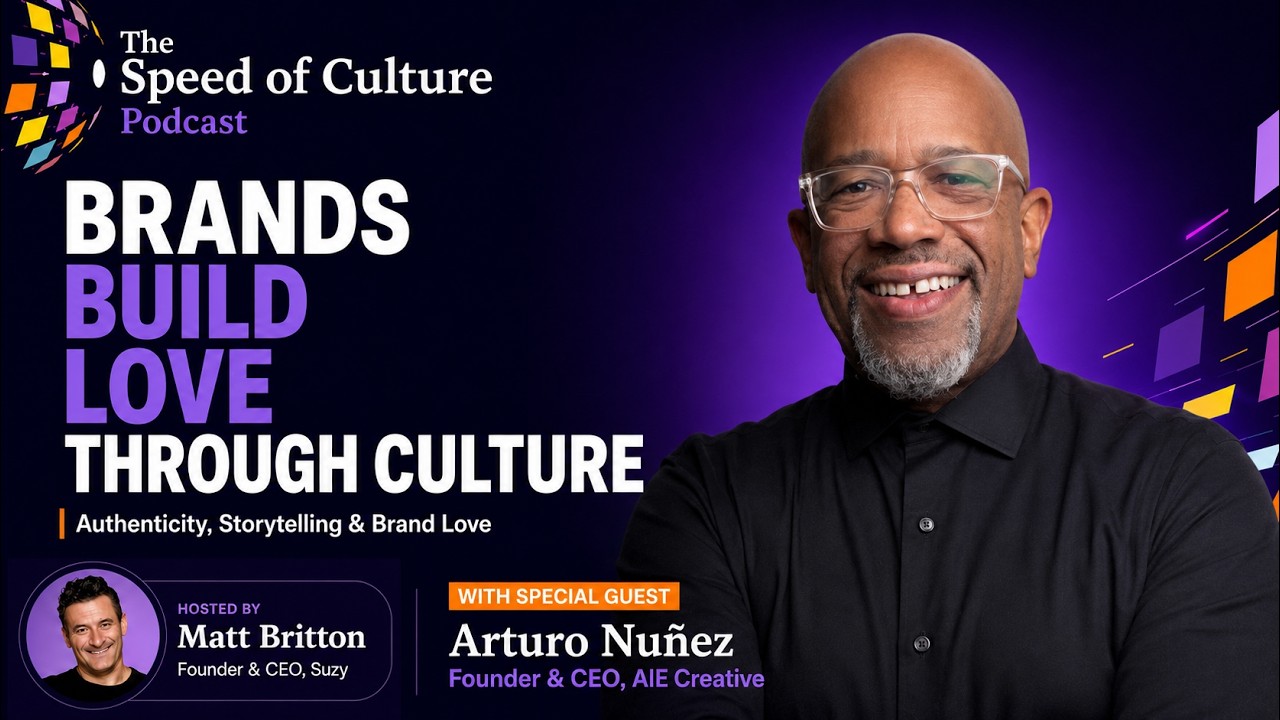
From Apple to Nike: How Arturo Nuñez builds powerhouse brands with his global vision

Arturo Nuñez
Founder & CEO
This is some text inside of a div block.
This is some text inside of a div block.
LISTEN ANYWHERE YOU FIND YOUR PODCASTS
%20(400%20x%20100%20px)%20(300%20x%2050%20px)%20(150%20x%2050%20px).avif)

In an era where consumers have unlimited choices and fleeting attention spans, the most successful brands have cracked a code that transcends traditional marketing. They've created not just customers, but believers, people who tattoo logos on their bodies, stand in line for hours for product launches, and evangelize their favorites like religious disciples.
The question every CMO wrestles with: How do you build this kind of irrational, unwavering loyalty?
The answer lies not in features, pricing, or distribution prowess. It lives in understanding the deepest human needs for belonging, identity, and meaning.
This is where Arturo Nuñez's three-decade career intersects with today's most pressing brand challenges. As Founder and CEO of AIE Creative, Nuñez has spent his professional life reverse-engineering the magic behind some of the world's most iconic brands, Apple, Nike, the NBA, and NuBank.
His insights, shared in the latest episode of The Speed of Culture Podcast with Matt Britton, founder and CEO of Suzy, the AI-powered consumer intelligence platform, reveal a masterclass in cultural authenticity and emotional connection that every leader should understand.
Nuñez's philosophy is deceptively simple yet profoundly transformative: identity beats specifications every time. When he built the brand strategy for NuBank, the Brazilian fintech that would become the strongest brand in Brazil by 2022, he didn't focus on transaction speeds or interest rates.
Instead, he crafted emotionally resonant stories about hope, dignity, and financial liberation that spoke to the deepest aspirations of an underserved market. The result? A brand so beloved that it achieved what most Fortune 500 companies dream of: genuine cultural relevance in a commodity category.
In a world saturated with content, algorithms, and competing for attention, Nuñez's message to modern marketers is clear and bracing: product specs don't build tribes, identity does. Communities trump campaigns. Authenticity is the loudest differentiator in a market full of noise.
This episode of the Speed of Culture Podcast distills decades of experience into actionable frameworks that reveal why brands like Apple and Nike have become movements.
When neuroscientists studied the brains of Apple customers using MRI machines, they discovered something remarkable. The apple symbol triggered brain empathy responses that matched how people respond to family members. Samsung users showed no comparable emotional activation.
This finding isn't merely academic, it explains why millions of people upgrade iPhones annually despite devices that function perfectly, why they arrange their entire digital ecosystems around Apple products, and why the brand commands some of the highest customer loyalty metrics in any industry.
Apple's strategy represents a masterclass in ecosystem lock-in married with identity creation. The brand understood early that customers buy membership in a tribe rather than products.
The seamless integration across iPhone, MacBook, iPad, Apple Watch, and AirPods creates practical switching costs, but more importantly, it signals belonging to an aesthetic philosophy: minimalism, innovation, and design excellence.
Every interaction with an Apple product reinforces the customer's self-image as someone who values simplicity, quality, and forward-thinking innovation. This is the power of the Apple ecosystem: it becomes inseparable from the user's identity.
Nike's approach mirrors Apple's in strategy but diverges in execution. Where Apple builds communities through technology ecosystems, Nike builds them through purpose and aspiration.
The brand's legendary slogan, "Just Do It", is an invitation to transcend limitations, to achieve personal excellence, to join a global community of doers and achievers.
When Arturo Nuñez served as Vice President of Global Marketing for Nike Basketball, he oversaw campaigns featuring LeBron James, Kobe Bryant, Kevin Durant, and other transformational athletes. These were mythmaking exercises rather than product endorsements. Nike was selling self-actualization.
The genius of Nike's playbook lies in understanding that loyalty flows from value alignment, not feature comparison.
Nike's community-building initiatives (from the Nike Run Club app where users organize local running events, to Nike Training Club customized programs) create spaces where customers become co-creators of brand meaning. The mobile platforms are gathering places where the brand's values of dedication, improvement, and community manifests in daily practice.
Both Apple and Nike achieved what marketers call "irrational advocacy", but this loyalty isn't irrational at all when understood through the lens of identity and belonging.
Once a consumer identifies with a brand as they would with family or community, the relationship transcends rational product evaluation. Price increases matter less. Competitive features matter less. Brand switches become acts of identity betrayal.
This is the endgame of all brand-building: making the brand inseparable from the customer's sense of self.
When Arturo Nuñez joined NuBank as Chief Marketing Officer in June 2021, the fintech faced a paradox. Brazil had an enormous underbanked population eager for modern financial services, yet the category felt cold, impersonal, and corporate.
Traditional banks had spent decades extracting value from customers while providing mediocre service. The opportunity wasn't to be faster or cheaper, though NuBank was both. The opportunity was to be felt.
Nuñez's strategy focused on a radical insight: financial services are about dignity, hope, and control far more than money.
In opening accounts, NuBank customers were joining a movement against a corrupt, exclusionary system that had kept them economically marginalized. Every campaign, every interaction, every brand touchpoint communicated that NuBank saw its customers as worthy of better, as deserving of respect, as capable of building wealth and security.
This cultural authenticity resonated because it aligned with genuine truth. NuBank's founders and mission genuinely rejected the elitist banking status quo.
The brand's vibrant visual identity, irreverent tone, and customer-first policies weren't manufactured for marketing effect. They reflected authentic organizational values. Customers recognized this authenticity and responded with unprecedented loyalty.
The strategy worked: NuBank was elected the strongest brand in Brazil in 2022 by WPP, the global marketing intelligence firm.
The NuBank case demonstrates a critical principle that Nuñez emphasizes across his career: authenticity is non-negotiable.
Consumers have built sophisticated detection systems for corporate inauthenticity. They can smell manufactured purpose from miles away. In contrast, when a brand's external communication honestly reflects its internal values and genuine mission, customers grant extraordinary permission and loyalty.
The fintech's success also illuminates how global brand building requires local cultural fluency.
Nuñez's prior experience at Apple Latin America, where he managed marketing across 38 countries in Latin America and the Caribbean, taught him that genuine cultural relevance requires deep understanding of local aspirations, values, and pain points.
The same brand can't be authentically expressed the same way in São Paulo and Mexico City and Santiago. Effective global brands maintain core identity while expressing that identity in culturally specific ways that feel true to each market's reality.
In an attention economy saturated with content, manufactured influencers, and algorithmic feed manipulation, authenticity has become the rarest and most valuable currency.
Arturo Nuñez's career represents a thesis that runs counter to much of modern marketing: the brands that win show what they genuinely love, not just what they sell. Optimizing for engagement and perfecting algorithms matter far less.
This principle extends across Nuñez's global experience. At Apple, he witnessed how the brand's obsessive attention to design details, user experience, and manufacturing excellence wasn't marketing theatre, it reflected the company's genuine philosophy.
Marketing departments didn't invent Apple's focus on simplicity and elegance; that ethos originated in the boardroom and flowed through every product decision. Marketing's job was to authentically communicate what already existed.
Similarly, at Nike, the brand's commitment to athletic innovation, athlete partnership, and performance pursuit was baked into product development, sponsorship philosophy, and organizational culture rather than treated as a campaign theme.
The most dangerous trap modern brands fall into is believing that marketing can manufacture authenticity.
This leads to campaigns that feel false, corporate social responsibility initiatives that seem tokenistic, or brand voice that doesn't match organizational reality. Customers eventually see through these performances.
In contrast, when an organization's genuine values (its real priorities, real investments, real decision-making frameworks) align with external brand communication, something powerful emerges. Trust builds. Community forms. Loyalty deepens.
For global brands navigating a world of increased consumer activism and cultural consciousness, this principle becomes existential.
Consumers now expect brands to participate authentically in conversations about social justice, environmental sustainability, and economic equity. This is a requirement for credibility rather than a marketing opportunity to exploit.
Gen Z consumers in particular demonstrate declining tolerance for corporate performance and increasing demand for authentic alignment between what brands say and what they do.
Nuñez's philosophy suggests that the brands winning in this environment are brands led by leaders and teams who genuinely care about the values they're communicating, rather than those with the biggest budgets or most sophisticated targeting.
This creates a hiring implication, a culture implication, and a strategic implication that transcends traditional marketing. Building powerhouse global brands increasingly requires organizational alignment around authentic values, not just marketing excellence.
The title of Matt Britton's podcast, The Speed of Culture, captures a fundamental challenge facing every brand leader. Culture moves rapidly, consumer expectations shift in real-time, and what felt relevant and authentic last quarter may feel dated or tone-deaf today.
Global brands operating across diverse markets face the additional complexity that culture moves differently across geographies, what resonates in San Francisco may feel alien in São Paulo or Seoul.
Arturo Nuñez's perspective, shaped by leading marketing for global organizations, emphasizes that brands must now listen to and actively participate in conversations led by consumers, rather than attempting to control or dictate those conversations.
This shift represents a fundamental realignment of marketing power.
The traditional broadcast model, where brands developed a message and pushed it through media channels, assumed that brands controlled the narrative. Digital, social, and participatory platforms have shattered that assumption.
Customers now co-create brand meaning through comments, shares, remixes, and grassroots community-building.
This cultural acceleration creates unprecedented pressure on brand authenticity.
A false move, a tone-deaf campaign, a CEO statement that contradicts values, a product launch that feels exploitative, can generate viral backlash within hours. In contrast, genuine brand moments that align with emerging cultural conversations can create exponential positive momentum.
The speed advantage goes to brands that maintain authentic cultural alignment, not brands that react fastest to trend cycles.
The implications for global brand building are profound.
Organizations need marketing leaders who possess genuine cultural fluency across diverse markets, not stereotypical understanding, but real knowledge of local aspirations, anxieties, values, and in-community conversations.
They need leaders willing to empower local teams to express the global brand in culturally authentic ways. They need organizational agility to adapt to rapid cultural shifts without compromising core authenticity.
This is precisely the type of thinking that drives AIE Creative, the brand consultancy Nuñez founded.
Rather than approaching brand strategy as a corporate function, AIE Creative treats it as a cultural practice, the deliberate creation of meaningful, immersive brand experiences that generate genuine emotional connection and foster community.
The distinction is critical: marketing creates campaigns; cultural practice creates movements.
The Speed of Culture Podcast episode featuring Arturo Nuñez delivers a masterclass in powerhouse brand building that every leader should absorb. Here are the essential insights:
Loyalty doesn't require Apple's budget or Nike's historical advantages. It requires ruthless clarity about what your brand authentically stands for at the identity level, what values does your organization genuinely prioritize, what problem does your brand genuinely care about solving, and what kind of person does your brand help become?
Once you understand your authentic positioning, the next step is communicating it with consistency and courage through multiple touchpoints and over extended periods.
Finally, create spaces where your most passionate customers can connect with each other and co-create brand meaning. Start small with genuine community-building efforts rather than massive campaigns with unclear purpose.
At first glance, choosing authenticity over optimization might seem economically irrational. However, the financial data tells a different story.
Consumers demonstrably pay premium prices for brands they feel emotionally connected to, research shows 57% of consumers will pay more for brands with whom they feel genuine connection.
More importantly, these customers become lifelong advocates who drive organic growth through recommendations, repeat purchases, and resistance to competitive offers.
The brands winning economically in 2025 are those that understood that emotional connection and authenticity generate superior financial returns compared to purely transactional optimization.
This requires genuine cultural fluency, not stereotypical cultural adaptation.
Leading global marketing at organizations like Apple and NuBank requires deep understanding of each market's unique aspirations, historical context, pain points, and cultural values.
An authentic brand expression in Brazil may look quite different from an authentic expression in Mexico, even for the same brand, because the cultural context differs.
The key is maintaining non-negotiable core values while empowering local teams to express those values in ways that feel true to local reality. This requires trusting local talent, staying close to customer conversations, and resisting pressure for cookie-cutter global consistency.
Platforms like Suzy, the AI-powered consumer intelligence platform founded by Matt Britton that sponsors the Speed of Culture Podcast, represent essential tools for understanding rapid cultural shifts and emerging consumer values.
AI-driven research can help brands stay attuned to what matters to customers, where cultural conversation is moving, and what anxieties or aspirations are emerging.
However, AI should inform strategy, not determine it.
The most successful brands use consumer intelligence to deepen their understanding of authentic customer needs and values, then find culturally authentic ways to address those needs.
AI is a listening tool and insight generator, authentic brand strategy still requires human judgment, cultural wisdom, and courageous decision-making about what the brand genuinely stands for.
As consumer expectations continue accelerating and cultural fluency becomes the essential leadership competency, the frameworks Arturo Nuñez has developed through decades of experience at Apple, Nike, the NBA, and NuBank offer a roadmap for brand leaders navigating this increasingly complex landscape.
The era of broadcast marketing, where brands developed clever messages and pushed them through media channels, has conclusively ended. The era of community-driven, authentically-expressed, culturally-fluent brand building is fully arrived.
Leaders seeking to build powerhouse brands should begin with radical honesty about organizational values, commit to authentic customer communication, invest in community creation rather than campaign development, and stay relentlessly attuned to emerging cultural conversations.
The brands that will dominate the next decade won't necessarily be the biggest or oldest. They'll be the ones with the clearest sense of authentic purpose and the organizational courage to operate from that purpose consistently.
For deeper insights on consumer intelligence and the latest trends in brand strategy, visit Suzy, the AI-powered consumer intelligence platform.
For more episodes featuring industry leaders discussing cultural trends and strategic innovation, listen to The Speed of Culture Podcast.
For foundational thinking on AI's role in modern marketing and consumer behavior, explore Generation AI: The Book by Matt Britton.
Leaders looking to accelerate their thinking on emerging trends should also consider engaging AI Keynote Speaker Matt Britton for speaking engagements, and explore Speaker HQ for comprehensive speaker management services.