Introduction: When Authenticity Becomes Strategy
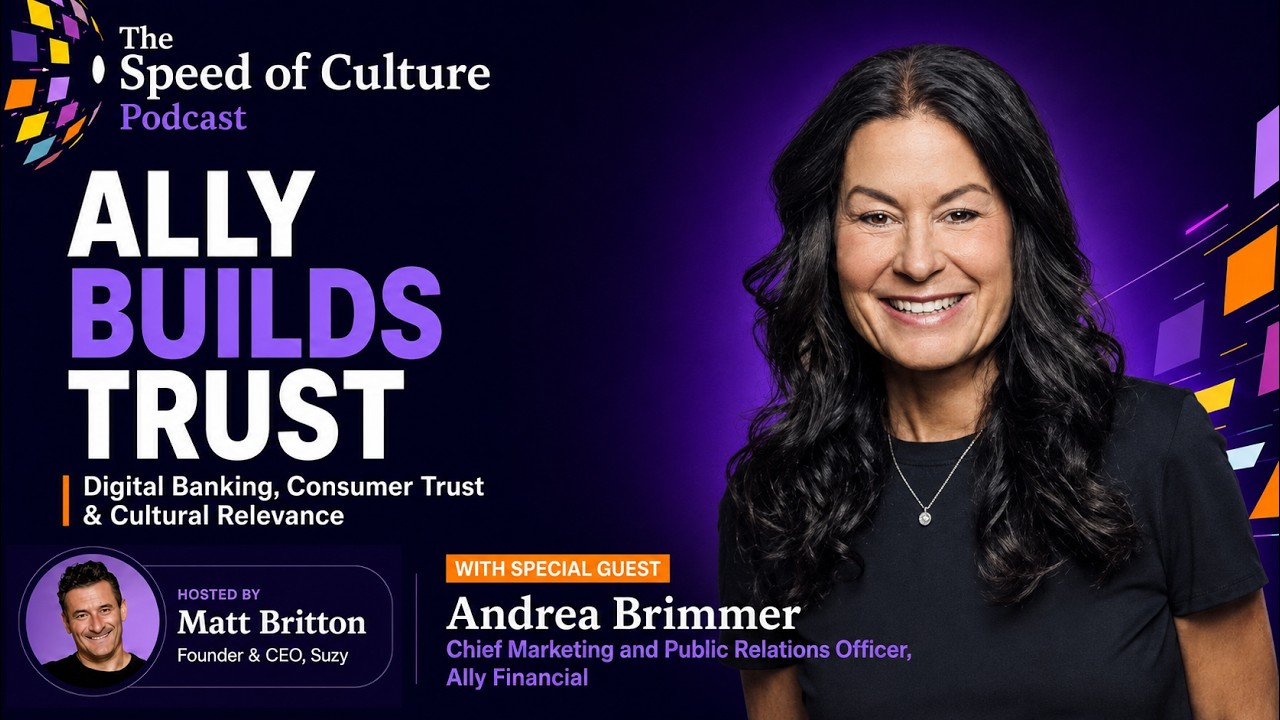
In an era where financial services marketing often feels sterile, corporate, and disconnected from real consumer behavior, Andrea Brimmer. Chief Marketing and PR Officer at Ally Financial, is challenging the status quo with an unconventional philosophy: embrace the slop. This seemingly counterintuitive approach to brand communication represents a fundamental shift in how legacy financial institutions can compete in the digital banking space while maintaining credibility with younger, more skeptical audiences.
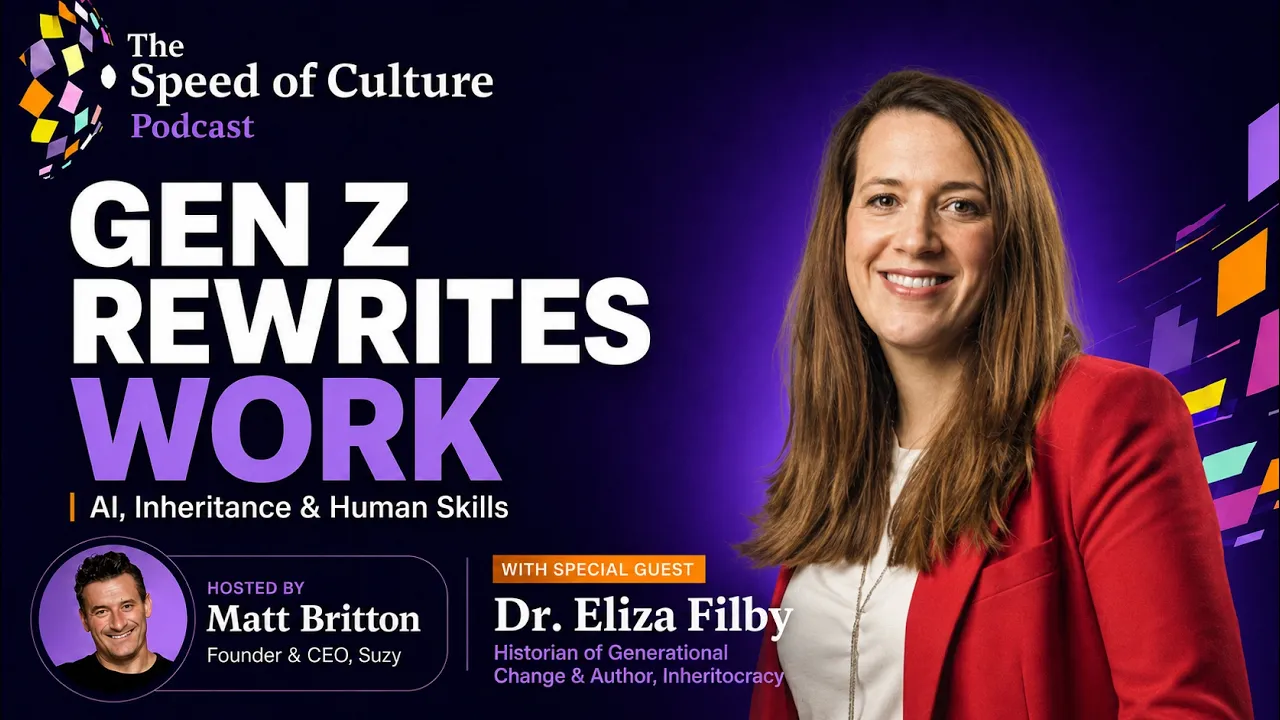
Matt Britton, founder and CEO of Suzy, the AI-powered consumer intelligence platform, interviewed Brimmer on the Speed of Culture podcast to explore how authenticity, imperfection, and cultural relevance are becoming the cornerstone of Ally's marketing strategy. Rather than presenting a polished, untouchable corporate image, Ally is betting that consumers, particularly Gen Z and millennial audiences, value transparency, relatability, and genuine human connection far more than they value perfection.
This represents a dramatic departure from traditional financial services marketing playbooks that have dominated the industry for decades. Brimmer's leadership at Ally demonstrates that even established financial institutions can shed outdated marketing conventions and embrace more authentic, human-centered approaches.
The financial services industry is experiencing a transformation driven by digital-native competitors, changing consumer expectations, and the rise of experiential marketing that prioritizes authenticity over aspiration. Ally Financial, despite being a legacy bank with roots in the traditional automotive finance sector, has positioned itself as a challenger brand willing to take risks and speak to consumers in their language.
Understanding "The Slop": Breaking Down Authentic Marketing in Financial Services
The concept of "embracing the slop" fundamentally contradicts decades of financial services marketing orthodoxy. Traditionally, banking and financial services have emphasized trust through formality, crisp suits, marble buildings, formal language, and an aura of institutional gravitas.
The underlying assumption was that complexity and distance conveyed reliability and security. Consumers were expected to trust financial institutions precisely because they seemed removed from everyday messiness.
Brimmer's philosophy flips this script. "The slop" refers to the imperfect, unpolished, sometimes contradictory aspects of real human experience that traditional corporate communication actively works to hide.
It encompasses the awkward conversations people actually have about money, the anxiety that accompanies financial decisions, the humor people use to cope with economic uncertainty, and the genuine vulnerability that comes with admitting you don't have all the answers.
In Ally's marketing execution, embracing the slop translates to several concrete practices. The brand communicates about financial topics in conversational, relatable language and acknowledges that personal finance is often messy and complicated.
Its creative work sometimes uses humor and self-deprecation rather than aspirational imagery of perfect financial futures. Ally's messaging recognizes that customers struggle, make mistakes, and need financial partners who understand their lives rather than judge them.
This approach directly challenges what behavioral economists call the "competence/trust paradox" in financial services marketing. Research has traditionally suggested that displaying perfect knowledge and complete confidence increases consumer trust.
Brimmer's insights suggest the inverse: displaying understanding of consumer challenges, acknowledging complexity, and offering practical guidance builds stronger emotional connections and brand loyalty.
The digital banking landscape has accelerated this shift. When Ally operates primarily through digital channels, it competes on convenience, interface design, customer service, and cultural alignment rather than physical presence or formal credentials.
Without branch networks or traditional trust signifiers, digital banks must build credibility through authenticity and demonstrated customer commitment. Ally has invested heavily in content marketing, educational resources, and cultural commentary that positions the brand as a knowledgeable partner genuinely interested in customer financial wellbeing.
Research from Suzy's consumer intelligence platform and similar studies demonstrate that younger consumers actively distrust overly polished corporate communication. They conduct extensive research before choosing financial institutions, read reviews carefully, and value peer recommendations over formal advertising.
They're also more likely to switch providers if they feel a brand is being inauthentic or exploitative. For Ally, leaning into authenticity is philosophically sound and economically rational in a competitive market where switching costs are remarkably low.
Digital Banking's Cultural Imperative: Why Traditional Marketing Fails Modern Consumers
The traditional financial services marketing approach has become increasingly disconnected from how consumers actually experience and discuss money in their daily lives. This disconnect represents a significant competitive vulnerability.
Consider the typical financial services advertisement from ten to fifteen years ago: aspirational imagery of successful people, promises of wealth accumulation, and implicit messaging that using the product would elevate one's status and life satisfaction.
Contemporary consumers operate from fundamentally different assumptions. Multiple surveys and market research indicate that Gen Z particularly views financial service selection through a lens of pragmatism and values alignment rather than status seeking.
Young consumers ask different questions: Which institution treats me with respect? Which one actually listens to my concerns? Which one aligns with my values around environmental sustainability, social justice, and corporate responsibility?
Furthermore, the information asymmetry that historically benefited financial institutions has essentially disappeared. Any consumer can access educational content about financial products, compare rates instantly, and read genuine customer reviews from thousands of users.
This transparency fundamentally rebalances the power dynamic between financial institutions and consumers.
Ally has adapted by pivoting away from aspirational marketing toward educational marketing and community engagement. The brand publishes extensive research and commentary about financial trends, consumer behavior, and economic conditions.
It engages authentically on social media rather than using social channels primarily for promotional messaging. This builds authority and trust while capturing significant search traffic and organic social engagement.
Consumers also note when corporate social responsibility initiatives feel disconnected from core business practices. Brimmer's marketing philosophy ensures that Ally's brand messaging aligns with demonstrable business practices and genuine organizational values.
The brand doesn't claim to be something it's not. It positions itself as an honest broker trying to serve customer interests within the constraints of a regulated financial system.
Andrea Brimmer's Approach: Bridging Legacy Banking and Cultural Relevance
Andrea Brimmer's leadership offers a blueprint for how traditional financial institutions can navigate cultural transformation. She joined Ally in 2006 and has witnessed the company's evolution from GMAC to Ally Financial.
Her tenure coincides with the organization's transition from automotive financing to a diversified financial services institution with significant digital banking operations.
Brimmer prioritizes deep consumer understanding over conventional marketing wisdom. Rather than defaulting to dated industry best practices, she and her team conduct extensive research into how audiences actually think and make decisions.
She also embraces organizational transparency as a strategic advantage. Instead of draining messages of humanity through excessive filtering, Brimmer has built systems that allow for genuine communication while maintaining appropriate oversight.
Her approach includes active participation in broader cultural conversations. Ally engages in discussions about economic inequality, financial stress, generational differences in money management, and the role of financial institutions in society.
This elevates the brand beyond transactional relationships toward thought leadership and cultural authority.
Brimmer's perspective as a female CMO in a male-dominated industry informs her insights about authenticity and empathy. The diversity of her thinking contributes directly to Ally's differentiated strategy.
Her tenure also illustrates the importance of patience. Cultural repositioning at established institutions requires sustained commitment rather than quick wins.
Key Strategies from Ally's Playbook
- Educational Content and Thought Leadership: Ally produces original research, guides, and commentary about financial topics. This drives organic search traffic, builds authority, and demonstrates commitment to customer education.
- Social Media Engagement as Relationship Building: The brand uses social platforms for genuine conversation, humor, and cultural participation rather than purely promotional messaging.
- Transparency about Product Limitations: Ally emphasizes that financial success depends on multiple factors beyond product selection, building trust through honesty.
- Diversity and Inclusion as Authentic Marketing: Diversity commitments are embedded in core strategy and reflected in both messaging and business practices.
- Video and Long-Form Content: Investments in podcasts, video, and journalism allow for nuanced exploration of financial and cultural topics.
- Authentic Brand Voice: The brand uses conversational language and a human tone that makes it feel approachable rather than corporate.
- Community Building: Ally creates value for audiences beyond direct product sales, generating long-term loyalty and advocacy.
- Crisis Responsiveness: The marketing team can move at cultural speed while maintaining brand consistency.
The Business Case for Authenticity
Authentic marketing generates superior return on investment compared to traditional approaches. Campaigns built around genuine brand values consistently outperform glossy campaigns in metrics that matter, including customer acquisition cost, lifetime value, retention rates, and word-of-mouth recommendation.
Authentic brands create more durable competitive advantages. While competitors can replicate creative elements, they cannot easily duplicate authentic culture and values.
Employee recruitment and retention also improve at organizations with authentic brands. Younger talent increasingly chooses employers based on values alignment.
Regulatory and reputational risks decline when marketing aligns with actual business practices. In regulated industries, this alignment has material financial implications.
Authentic brands generate disproportionate organic advocacy and earned media. Customers who feel genuinely understood naturally recommend the brand to others.
From a psychology perspective, humans intuitively detect inauthenticity. When communication feels manipulative, it triggers skepticism. When it feels genuine, it triggers trust and openness, particularly among younger audiences.
Lessons for CMOs and Marketing Leaders
- Audit organizational alignment: Ensure marketing reflects actual business practices before committing to authenticity.
- Secure leadership commitment: Authentic strategy requires executive buy-in and long-term dedication.
- Build organizational capability: Invest in research, content development, community management, and cultural analysis.
- Develop measurement frameworks: Track brand affinity, engagement, and lifetime value, not just short-term conversions.
- Establish clear boundaries: Balance transparency with necessary confidentiality.
- Embrace cultural change management: Align marketing, customer service, and investor communications.
- Remain patient: Authentic brand equity builds over years, not quarters.
FAQ: Questions About Authentic Marketing in Financial Services
Doesn't acknowledging challenges and limitations make Ally look weak compared to competitors?
No. Research demonstrates that acknowledging complexity builds stronger trust and perceived competence. Brands offering simplistic solutions often appear less credible than those recognizing real-world nuance.
How does authentic marketing work in regulated industries?
Authentic marketing aligns naturally with compliance expectations for transparent, non-deceptive communication. The key is collaboration between marketing and compliance teams.
Can established institutions successfully shift to authentic marketing?
Yes. Ally's example shows that traditional institutions can pursue authenticity successfully with strong leadership commitment and organizational change.
What metrics measure authentic marketing effectiveness?
Organizations should track brand affinity, net promoter scores, customer lifetime value, retention rates, organic engagement, earned media value, and employee engagement.
How can organizations avoid performative marketing?
Ensure external communication reflects actual organizational practices. Regularly measure customer perception and employee sentiment to identify gaps between messaging and reality.
Looking Ahead: The Evolution of Marketing in Digital Financial Services
The conversation on the Speed of Culture podcast reflects broader shifts in how institutions build trust in information-rich, low-friction markets.
Organizations that recognize authenticity as a fundamental realignment, not a temporary trend, will invest in deep customer understanding and maintain strategic patience.
For deeper exploration of AI and consumer intelligence in marketing strategy, Generation AI provides comprehensive analysis of how emerging technologies intersect with consumer psychology and marketing effectiveness.
For keynote speaking on these topics, visit AI keynote speaker resources or explore Speaker HQ. To learn more about leveraging consumer intelligence in strategy development, visit Suzy's platform.

%20(400%20x%20100%20px)%20(300%20x%2050%20px)%20(150%20x%2050%20px).avif)