September 3, 2024
Building a Brand Men Trust with Every Man Jack CEO Gerry Chesser

Gerry Chesser
CEO
This is some text inside of a div block.
This is some text inside of a div block.
LISTEN ANYWHERE YOU FIND YOUR PODCASTS
%20(400%20x%20100%20px)%20(300%20x%2050%20px)%20(150%20x%2050%20px).avif)

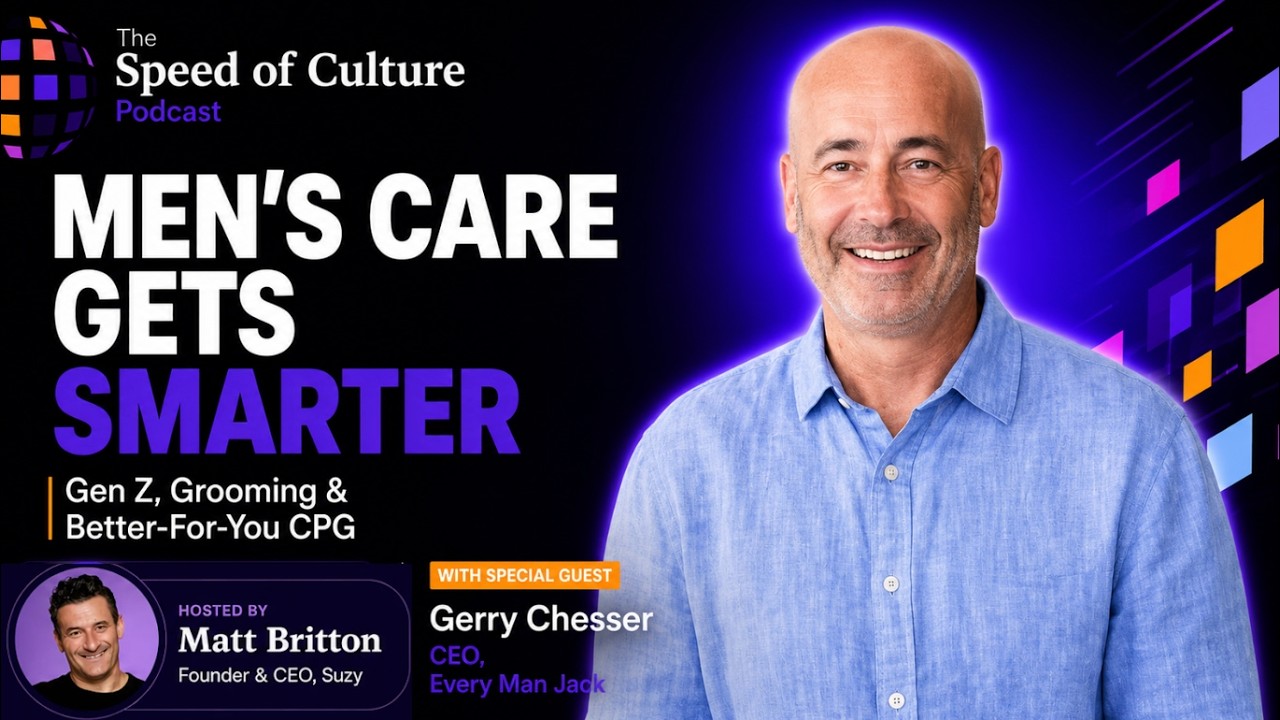
In the rapidly evolving men's personal care market, one of the most critical challenges brands face is establishing genuine trust with their target audience. This challenge took center stage in Episode 128 of the Speed of Culture Podcast, where host Matt Britton, founder and CEO of Suzy, the AI-powered consumer intelligence platform, sat down with Gerry Chesser, CEO of Every Man Jack, to explore the nuances of building credibility in the men's grooming category.
The conversation, recorded on September 3, 2024, provides invaluable insights into CPG brand building, category evolution, and the strategies that allow challenger brands to compete effectively against industry giants. Gerry Chesser brings more than three decades of experience in the consumer packaged goods sector, having led innovation initiatives at Unilever before joining Every Man Jack as CEO in June 2021.
His tenure at the company has been marked by aggressive growth, strategic market positioning, and a commitment to natural, sustainable products that resonate with increasingly conscious consumers.
The men's personal care industry represents one of the most dynamic segments within the broader beauty and personal care market. According to recent market research, the global men's personal care market was valued at USD 70.84 billion in 2024 and is projected to reach USD 108.92 billion by 2033, growing at a compound annual growth rate of 4.75 percent.
What's particularly striking is the demographic shift driving this growth: nearly 70 percent of Gen Z men in the United States currently use facial skincare products, a significant departure from previous generations' attitudes toward grooming routines. This cultural transformation has created unprecedented opportunities for brands that understand male consumer behavior and can communicate authentically.
Every Man Jack, founded over 15 years ago at the base of Mt. Tamalpais in Marin County, California, entered the market as one of the original clean men's care brands. The company's foundation on naturally derived ingredients and sustainable practices positioned it perfectly to capitalize on emerging consumer preferences for transparency, efficacy, and environmental responsibility.
Under Chesser's leadership, the brand has generated well north of $100 million in annual revenues, established a presence in over 700 Target stores, and built a viral following on social platforms like TikTok. The strategy underlying this success reveals critical lessons for CPG marketers seeking to build enduring trust with modern male consumers.
The foundation of Every Man Jack's brand strategy rests on a fundamental insight: men approach personal care purchases differently than their female counterparts. Rather than seeking aspirational messaging or complex product narratives, men prioritize function, simplicity, and authenticity.
This distinction shapes every element of the brand's positioning, from product formulation to marketing communications.
Gerry Chesser emphasizes that male consumers want straightforward information about what a product does and why it matters. They are skeptical of marketing hyperbole and prefer brands that communicate with humor, honesty, and a no-nonsense tone.
This consumer psychology has profound implications for CPG brands entering or competing within the men's personal care space. The traditional beauty industry marketing playbook (built on aspiration, transformation, and emotional elevation) often falls flat with male audiences, who interpret such messaging as inauthentic or performative.
Every Man Jack's approach addresses this consumer preference through multiple strategic levers. The brand's voice, developed through careful testing and iteration, combines informative content with self-deprecating humor that appeals specifically to how men process and respond to marketing messages.
Rather than positioning grooming as a transformational lifestyle choice, the brand frames personal care as a practical component of overall health and self-respect. This positioning simultaneously appeals to vanity (men do care about appearance) while respecting the male tendency to downplay emotional or aspirational motivations for product purchases.
The trust-building process for male consumers also depends heavily on ingredient transparency and performance validation. Every Man Jack publishes detailed information about its use of naturally derived ingredients, backing claims with tangible evidence of product efficacy.
This transparency resonates with the broader consumer movement toward clean beauty and sustainable practices, but it specifically appeals to male consumers who want to understand exactly what they are applying to their bodies and why. The brand's B-Corp certification serves as third-party validation of its commitment to environmental and social responsibility, providing the credibility assurance that male consumers increasingly demand before making purchase decisions.
Furthermore, Chesser's insights reveal that trust among male consumers builds through consistency and authenticity in brand representation. Every Man Jack avoids rotating celebrity endorsers or constantly reinventing its brand identity to chase trends.
Instead, the company maintains a consistent aesthetic and message while remaining responsive to emerging consumer interests and cultural moments. This balance between stability and responsiveness builds confidence that the brand understands male consumers not as a fleeting market trend, but as a legitimate demographic with evolving but consistent values.
In the modern consumer landscape, omnichannel presence represents a non-negotiable requirement for CPG brands seeking meaningful market share. Every Man Jack's growth trajectory cannot be fully understood without examining its deliberate, sophisticated approach to distributing products across multiple channels while maintaining brand consistency and accessibility.
The brand's presence in more than 700 Target locations represents a strategic cornerstone of its retail strategy. Target's positioning as a trusted, value-conscious retailer aligns perfectly with Every Man Jack's brand positioning and target consumer.
Male shoppers, particularly younger cohorts, view Target as a legitimate destination for personal care products, and the retail environment supports product discovery through its end-cap displays and strategic placement within the health and beauty section. Crucially, Target provides Every Man Jack with the scale and traffic necessary to build brand awareness and trial among male consumers who may not yet have encountered the brand through digital channels.
However, the retail channel represents only one component of Every Man Jack's omnichannel strategy. Direct-to-consumer (DTC) operations through the brand's e-commerce platform provide critical advantages, including direct customer relationships, first-party data collection, and the ability to control brand presentation and messaging.
The DTC channel allows Every Man Jack to showcase its full product portfolio, provide detailed ingredient information, and communicate the brand story in ways that retail shelf constraints would not permit. Additionally, DTC operations generate higher profit margins and valuable customer intelligence that inform future product development and marketing strategy.
The role of emerging digital platforms in Every Man Jack's growth strategy deserves particular emphasis. Social commerce, particularly through platforms like TikTok and Instagram, has become increasingly important for reaching younger male consumers and driving awareness of the brand's products and values.
Every Man Jack's success on TikTok, where the brand has achieved some of the fastest growth among men's grooming brands, reflects a deliberate content strategy based on audience testing and iterative optimization. The brand discovered that humorous, relatable content, particularly content that acknowledges the absurdity of certain grooming norms or pokes fun at the brand itself, resonates powerfully with Gen Z audiences.
This finding contradicts some conventional wisdom in CPG marketing, which often emphasizes product benefits and aspirational lifestyle imagery. By contrast, Every Man Jack's TikTok strategy embraces comedy, self-awareness, and authentic brand voice.
The brand shares content that acknowledges male anxieties about grooming, presents relatable scenarios of daily life, and uses humor to build emotional connection with audiences. This approach converts social engagement into brand loyalty and product trials, particularly among younger consumers who are just establishing their personal care routines and brand preferences.
The integration across channels also reflects sophisticated logistics and inventory management. Every Man Jack's expansion to 700+ Target locations required developing supply chain capabilities that many smaller brands lack.
Simultaneously, managing inventory across retail, DTC, and wholesale channels while maintaining brand presentation standards demands operational discipline. Gerry Chesser's background in scaling operations at Unilever proved invaluable in establishing these systems, allowing Every Man Jack to grow rapidly without sacrificing product quality, brand consistency, or customer experience.
One of the most significant trends reshaping the men's personal care industry is the rapid adoption of clean-label and natural product formulations. According to market data, clean-label and vegan formulations account for 30 percent of new men's personal care product launches in 2024, reflecting a fundamental shift in consumer preferences and brand differentiation strategies.
Every Man Jack's founding commitment to naturally derived ingredients has evolved from a niche positioning into a mainstream competitive advantage, as consumer expectations around ingredient transparency and environmental responsibility have shifted dramatically.
The company's philosophy centers on developing products that deliver exceptional performance using the cleanest possible ingredient profiles. This commitment requires ongoing research and development investment, as natural alternatives must match or exceed the performance of conventional ingredients while maintaining cost structures that keep products accessible to mainstream consumers.
Every Man Jack's ability to balance performance, natural ingredients, and affordability distinguishes it from luxury grooming brands and cheaper private-label alternatives alike.
The sustainability component extends beyond ingredient sourcing to encompass packaging innovation and corporate environmental responsibility. The brand's B-Corp certification signifies a legally binding commitment to considering impacts on all stakeholders (customers, employees, suppliers, and the environment) rather than focusing solely on shareholder returns.
This certification appeals particularly to younger consumers who increasingly evaluate brands not only on product quality but also on alignment with personal values around environmental stewardship and social responsibility.
Packaging represents a critical frontier in sustainability efforts within the personal care industry. Every Man Jack has invested in developing recyclable and environmentally responsible packaging solutions, recognizing that consumers increasingly scrutinize packaging materials and disposal implications.
The company's initiatives to reduce plastic consumption, develop compostable or recyclable options, and minimize packaging waste reflect a sophisticated understanding that sustainability commitments require tangible, verifiable actions rather than marketing rhetoric.
Importantly, Gerry Chesser's perspective reveals that sustainability positioning must be grounded in genuine commitment rather than perceived as marketing expedience. Male consumers, in particular, respond skeptically to sustainability claims that appear disconnected from actual business practices.
By pursuing B-Corp certification and making substantive changes to supply chains, ingredient sourcing, and packaging, Every Man Jack establishes credibility with consumers who want to support brands aligned with their values but demand proof of authenticity. This approach differentiates the brand from competitors who adopt sustainability messaging without corresponding operational changes.
The intersection of natural ingredients, sustainability, and male consumer preferences creates a powerful strategic positioning. Men increasingly recognize personal care as a component of overall health and wellness, and they want assurance that products they use will not harm their bodies or the environment.
Every Man Jack's transparent communication about ingredient origins, manufacturing practices, and environmental commitments addresses these concerns directly, building trust with consumers who feel reassured by tangible evidence of brand integrity.
The traditional CPG playbook emphasizes mass media advertising, retail relationships, and point-of-sale marketing. Every Man Jack's explosive growth on social platforms, particularly TikTok, reveals how contemporary brands can achieve category-leading awareness and trial among younger consumers through creativity, authenticity, and platform-native content strategies.
Gerry Chesser describes Every Man Jack's social media approach as deliberately experimental and data-driven. Rather than developing campaigns according to established brand guidelines, the company empowers its social media team to test different content formats, messaging approaches, and creative treatments.
This test-and-learn methodology relies on rapid feedback loops, performance data, and audience insights to identify what resonates with target consumers. The insight that humorous, self-aware content performed exceptionally well on TikTok emerged from this experimental process, allowing the brand to capitalize on an effective channel earlier than competitors employing more traditional development processes.
The success of social media growth for Every Man Jack also reflects a broader shift in how younger consumers discover and evaluate brands. Gen Z consumers, in particular, increasingly distrust traditional advertising and place greater weight on peer recommendations, influencer endorsements, and organic brand content.
When a brand's owned social media content entertains, informs, or demonstrates authentic personality, it generates engagement metrics that drive algorithmic visibility. Every Man Jack's ability to create content that performs well algorithmically (earning high engagement, shares, and saves) amplifies brand visibility among target audiences at a fraction of the cost of traditional paid advertising.
The brand's ambassador strategy complemented social media growth by incorporating personalities and content creators whose audiences aligned with Every Man Jack's target consumers. Rather than pursuing celebrities with massive but potentially misaligned followings, the company identified micro-influencers and niche content creators, such as professional surfers and skiers, whose lifestyles embodied the brand's values around outdoor activity, health consciousness, and authentic masculinity.
These partnerships felt organic to target audiences because the ambassadors genuinely used and valued Every Man Jack products, rather than appearing to endorse them solely for compensation.
Social media engagement data also provided invaluable consumer intelligence that informed product development, messaging strategy, and future marketing investments. By analyzing which products generated the most interest, which claims resonated most powerfully, and which content formats drove consideration, Every Man Jack developed a closed-loop system where consumer engagement directly shaped business strategy.
This data-driven approach eliminates reliance on executive intuition or industry conventions, replacing them with empirical evidence of what actually drives consumer behavior.
Importantly, the social media growth trajectory demonstrates that category disruption need not depend on massive advertising budgets or established retail relationships. A brand with authentic positioning, compelling creative execution, and genuine understanding of target audience psychology can achieve remarkable growth through owned channels and earned media.
For ambitious CPG brands, this insight carries profound strategic implications: the traditional gatekeepers of brand visibility (retail buyers, media companies, advertising agencies) retain importance, but no longer exercise the absolute control they once possessed over consumer awareness and consideration.
The men's personal care category stands at an inflection point, transitioning from an emerging niche to an established, fiercely competitive market segment. This evolution creates both opportunities and challenges for existing players and new entrants.
Gerry Chesser's perspective on the category's evolution, informed by decades of CPG leadership, illuminates key trends and strategic implications for brands operating within this space.
One significant evolution involves the normalization of grooming routines among male consumers. Where personal care once carried subtle social stigma for men, it now represents a routine component of adult life across demographic segments.
This normalization expands the total addressable market but simultaneously increases competitive intensity as established beauty companies, private label retailers, and new entrants all vie for share. The implication for Every Man Jack and other challenger brands: establishing clear category differentiation and maintaining authentic connection with target audiences becomes increasingly critical as the category matures.
The democratization of product information through digital platforms has also transformed consumer expectations around transparency and education. Men increasingly research products before purchase, compare ingredients, read reviews, and evaluate brand claims against available evidence.
This shift empowers informed consumers but creates risk for brands making questionable claims or relying on outdated marketing approaches. Every Man Jack's emphasis on ingredient transparency and verifiable product performance reflects adaptive strategy in response to these changing consumer expectations.
Category premiumization represents another important trend, with consumers increasingly willing to pay premium prices for products that deliver superior performance, embody sustainable practices, or align with personal values.
This trend creates room for brands to escape brutal price competition by establishing clear value propositions grounded in tangible benefits or values alignment. Every Man Jack's pricing strategy, which positions the brand above private label but below luxury alternatives, reflects strategic positioning within this premiumization trend.
The role of innovation in maintaining competitive advantage cannot be overstated. As the men's personal care category matures, brands must continually develop new products, explore new benefit claims, and respond to emerging consumer interests.
Every Man Jack's investment in product development, from basic skincare and grooming products to specialized formulations addressing specific consumer needs, ensures the brand remains relevant to evolving consumer preferences. The company's ability to identify emerging trends, such as male interest in anti-aging products and sun protection, and develop effective solutions allows it to expand addressable market and deepen consumer relationships.
Looking forward, market trends suggest continued growth in the men's personal care category, but with increasing emphasis on natural ingredients, sustainability, digital direct-to-consumer capabilities, and authentic brand positioning.
Brands that can navigate these transitions while maintaining operational discipline and consistent brand messaging will thrive. Those that attempt to capitalize on trends without genuine commitment to core brand values risk damaging consumer trust and long-term brand equity.
The men's personal care market has experienced explosive growth driven by shifting attitudes toward grooming, increasing Gen Z engagement with skincare products, and rising consumer interest in natural and sustainable formulations. The global market, valued at USD 70.84 billion in 2024, is projected to reach USD 108.92 billion by 2033.
Notably, nearly 70 percent of Gen Z men now use facial skincare products, representing a significant cultural shift from previous generations. This expansion has created opportunities for both established brands and challengers offering differentiated positioning around natural ingredients, sustainability, or authentic messaging.
Every Man Jack differentiates through a combination of natural ingredient formulations, B-Corp certification signifying sustainability commitment, authentic brand voice that resonates with male consumers, omnichannel distribution spanning retail and direct-to-consumer channels, and innovative social media strategy particularly on platforms like TikTok.
The brand avoids traditional beauty industry marketing approaches, instead emphasizing function, honesty, and humor. This strategic positioning allows Every Man Jack to compete effectively against both established legacy brands and luxury alternatives while maintaining accessibility through mainstream retail channels.
Every Man Jack's social media success stems from test-and-learn methodology that identifies what content formats and messaging approaches genuinely resonate with target audiences. The brand discovered that humorous, self-aware content, acknowledging the absurdity of grooming norms or presenting relatable daily scenarios, drives engagement with Gen Z audiences more effectively than traditional product benefit messaging.
This approach generates algorithmic visibility through high engagement rates while building authentic brand personality that distinguishes the company from competitors. The strategy also reflects genuine understanding that younger consumers increasingly distrust traditional advertising and prefer brands demonstrating authentic voice and personality.
Sustainability commitments increasingly influence purchasing decisions among male consumers, particularly younger demographics, who view brand values alignment as important consideration alongside product quality. Every Man Jack's B-Corp certification and transparent communication about ingredient sourcing, manufacturing practices, and packaging innovations provide verifiable evidence of sustainability commitment rather than relying on marketing rhetoric alone.
Male consumers respond skeptically to sustainability claims disconnected from actual business practices, so brands building trust in this area must demonstrate genuine operational commitment rather than adopting sustainability messaging for promotional purposes.
The insights shared by Gerry Chesser on the Speed of Culture Podcast reveal that sustainable brand building in the men's personal care category requires balancing authenticity, operational discipline, and strategic innovation. Brands that understand male consumer psychology, communicate with integrity, and adapt strategy based on emerging consumer trends and market data will continue leading category growth.
For deeper consumer intelligence and market research capabilities, brands can leverage platforms like Suzy, which provides real-time consumer insights and enables data-driven decision-making. To hear the complete conversation between Matt Britton and Gerry Chesser, visit The Speed of Culture Podcast.
For additional insights on consumer trends and AI-powered market research, explore Generation AI: The Book, Matt Britton's comprehensive guide to understanding artificial intelligence's impact on consumer behavior. Those interested in inviting Matt Britton to speak at industry events can learn more about his AI keynote speaker services or explore resources at Speaker HQ.