At ILEA Live in Canada, Matt Britton explores how millennial expectations shape travel, dining, and live experiences, from the first search to the story shared afterward.
Watch The Keynote
See the complete keynote from this speaking engagement.
The booking is only one chapter of the experience. At ILEA Live in Canada, Matt Britton explored how millennial expectations are changing travel, dining, and live events. Discovery, convenience, and the stories people share all shape what hospitality means, giving brands more to think about than the transaction alone.
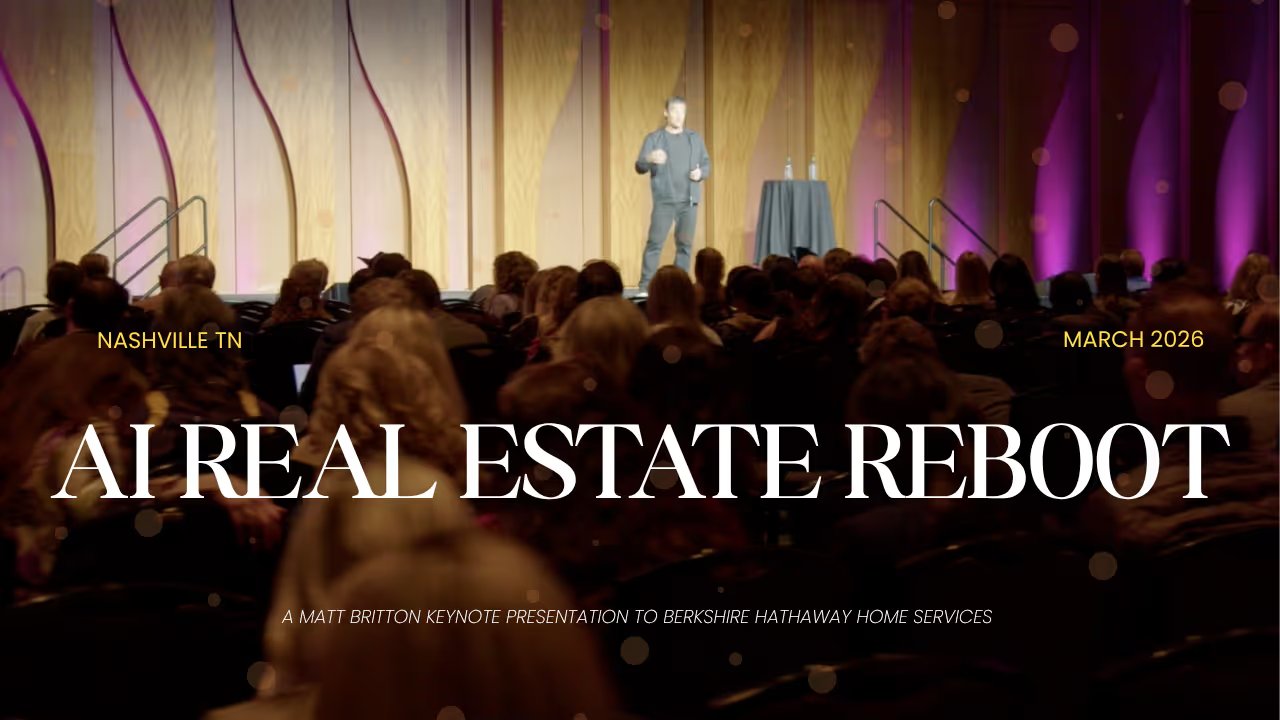
Live from Western Canada, Matt Britton delivered that message to a packed room of global event leaders at the ILEA Live conference. Speaking to many of the largest event planners in the world, he unpacked how millennials have transformed hospitality and what comes next as Generation AI rises behind them. His keynote, Millennials and Hospitality A to Z, mapped the cultural and technological forces reshaping travel, lodging, food service, and live experiences.
Matt Britton is an AI futurist, bestselling author of Generation AI, CEO of Suzy, and host of The Speed of Culture podcast. Over 500 keynotes into his career, he has built a reputation for decoding generational behavior before it hits the balance sheet. In Calgary, he focused on a simple premise.
Hospitality is no longer about rooms and reservations. It is about identity, access, and intelligence.
Millennials entered adulthood during the Great Recession, witnessed the mobile revolution, and matured alongside social media. Their worldview was forged by economic uncertainty and digital abundance. That combination produced a consumer who values flexibility over ownership, access over assets, and authenticity over polish.
For hospitality brands, the implications are structural. Pricing models, loyalty programs, property design, marketing channels, and even staffing strategies are under pressure to evolve.
What follows is a breakdown of the most urgent shifts Matt Britton outlined and what business leaders must understand to compete in the millennial-driven travel economy.
Millennials prioritize experiences over possessions. That preference has fueled a global experience economy valued at more than $8 trillion. Travel sits at the center of that spend.
Airbnb’s rise offers a case study. Founded in 2008, the platform scaled rapidly by offering local, design-forward stays that felt personal. Millennials embraced the model because it aligned with their desire for immersion and story-worthy moments.
Traditional hotel brands responded by redesigning lobbies into social hubs, adding co-working spaces, and curating neighborhood partnerships. Matt Britton emphasized that millennials book with Instagram in mind. Destination choice is often influenced by visual appeal and shareability.
A boutique hotel with a rooftop bar and strong WiFi can outperform a legacy property with superior square footage but no narrative. Hospitality leaders now compete for attention as much as occupancy.
Personalization also drives loyalty. According to Salesforce, 73 percent of consumers expect companies to understand their unique needs. Millennials reward brands that remember their preferences, from pillow type to plant-based menu options.
Data becomes the differentiator. Through platforms like Suzy, brands can access real-time consumer insights to test concepts before investing millions in property upgrades.
Event planners feel this shift acutely. Conferences must deliver transformation, not just information. Attendees expect curated networking, immersive design, and seamless digital integration.
Britton challenged the ILEA audience to treat every touchpoint as content. Registration, check-in, breakout sessions, after-parties. Each moment shapes brand equity.
Experience is currency. Hospitality brands that architect memorable, shareable environments capture both revenue and reach.
Mobile-first behavior defines millennial travel. More than 70 percent of millennials book travel on their smartphones, and over half use mobile devices for in-destination research. Friction equals abandonment.
Matt Britton described the smartphone as the remote control for modern life. It manages boarding passes, room keys, restaurant reservations, ride shares, and reviews. Hospitality brands must integrate seamlessly into that ecosystem.
Apps that crash or require repetitive data entry erode trust instantly. Contactless technology accelerated during the pandemic and remains a baseline expectation. Digital check-in, mobile key access, QR code menus, and AI-powered chat support are now standard.
Millennials equate convenience with competence. Brands that streamline logistics signal respect for the customer’s time.
Artificial intelligence adds a new layer. Predictive pricing models adjust rates dynamically. Recommendation engines suggest local experiences based on prior behavior. Chatbots resolve routine service requests in seconds.
Britton’s work as CEO of Suzy underscores a core point. AI enables brands to listen continuously rather than rely on quarterly surveys.
Data transparency matters as well. Millennials scrutinize privacy policies and expect ethical data usage. According to Deloitte, nearly 50 percent of millennials say they will disengage from brands that misuse personal information. Trust and technology must scale together.
For event professionals, digital transformation extends beyond the venue. Hybrid formats, live streaming, and community platforms prolong engagement long after the closing keynote. Britton, who frequently speaks on these themes through Speaker HQ, urged planners to think in terms of ecosystems rather than one-off gatherings.
The event becomes a node in an ongoing digital relationship. Technology no longer supports hospitality. It defines it.
Millennials align spending with values. Environmental and social impact influence booking decisions across hospitality and travel.
A 2024 Booking.com report found that 76 percent of global travelers want to travel more sustainably over the next year. Millennials lead that charge. They research carbon footprints, waste practices, and community engagement initiatives before committing.
Greenwashing triggers backlash. Matt Britton highlighted how sustainability has moved from marketing message to operational mandate. Hotels invest in renewable energy, eliminate single-use plastics, and source food locally.
Airlines explore sustainable aviation fuel. Event planners measure and report carbon impact to sponsors and attendees.
Brand purpose extends beyond the environment. Diversity, equity, and inclusion shape brand perception. Millennials expect representation in marketing imagery and leadership teams.
They evaluate whether hospitality brands support local communities or extract value without reinvestment. Transparency drives credibility. Public sustainability dashboards and third-party certifications build confidence.
Loyalty programs increasingly reward eco-friendly choices, such as declining housekeeping or selecting lower-emission transport options.
Britton connects these shifts to a broader generational mindset explored in Generation AI. Younger consumers grew up with unprecedented access to information. They can verify claims instantly.
Hospitality brands must assume every decision is visible.
Event leaders face similar scrutiny. Venue selection, catering partners, speaker lineups. Each decision communicates values.
The ILEA audience heard a clear directive. Design experiences that align with the moral framework of your attendees.
Purpose influences profit. The brands that internalize that equation attract long-term loyalty.
Remote and hybrid work reshaped travel patterns. Millennials pioneered location flexibility, and hospitality brands are adapting to serve the bleisure traveler.
Bleisure, the blending of business and leisure travel, continues to grow. A recent Expedia study reported that 60 percent of business travelers extend work trips for personal time. Millennials lead participation.
They add weekend stays, invite partners, and explore local culture between meetings.
Hotels now design rooms with ergonomic workstations, high-speed connectivity, and communal spaces for collaboration. Extended-stay properties report increased occupancy as digital nomads seek month-long accommodations.
Co-living and co-working hybrids are expanding in major cities.
Matt Britton described flexibility as a competitive advantage. Companies that allow remote work unlock employee satisfaction and productivity. Hospitality brands that cater to that flexibility capture incremental revenue.
Early check-in options, flexible cancellation policies, and subscription-based stay models appeal to millennial sensibilities.
Airlines and travel platforms respond with dynamic packaging. Travelers can bundle flights, accommodations, and experiences in a few taps.
Loyalty programs reward frequency across categories rather than rigid tiers tied solely to corporate travel volume.
Event planners also feel the bleisure effect. Conferences increasingly select destination cities that double as vacation hubs. Programming includes optional excursions, wellness sessions, and cultural activations.
Attendees justify travel budgets by combining professional growth with personal enrichment.
Work and life are integrated. Hospitality brands that recognize that integration design offerings that reflect how millennials actually live.
Artificial intelligence will amplify the millennial impact on hospitality. Generation AI, the cohort growing up with generative technology, will expect even deeper personalization and automation.
Matt Britton argues that AI will shift hospitality from reactive service to anticipatory service. Imagine a hotel that adjusts room temperature based on prior stays, suggests a nearby restaurant aligned with dietary preferences, and schedules transportation automatically based on flight updates.
These capabilities exist today in fragmented form. Integration is the next frontier.
Voice interfaces and AI concierges will become mainstream. Guests will speak requests naturally, and systems will execute in real time. Language translation tools will reduce friction for international travelers.
Revenue management algorithms will optimize pricing with precision that manual systems cannot match.
Data infrastructure underpins all of it. Through Suzy, Britton works with brands to gather live consumer feedback that informs product development and marketing strategy.
Hospitality executives who leverage continuous intelligence will outpace competitors relying on historical reports.
Human touch remains critical. AI handles logistics, freeing staff to focus on high-empathy interactions. Millennials value efficiency, yet they also crave connection.
The winning formula blends advanced technology with authentic service culture.
Britton’s message to the ILEA audience was direct. The future of hospitality belongs to leaders who embrace AI without losing humanity. Those who hesitate will struggle to meet the expectations of a generation raised on instant answers
Millennials are driving demand for experience-led, tech-enabled, and values-driven hospitality. They prioritize personalization, sustainability, and mobile convenience. Their preferences have pushed hotels and event organizers to redesign spaces, adopt digital tools, and communicate brand purpose with greater transparency.
Technology shapes how millennials research, book, and share travel. Most rely on smartphones for end-to-end trip management, from reservations to reviews. AI, mobile apps, and contactless systems increase efficiency and align with their expectation for seamless, on-demand service.
Bleisure travel combines business and leisure into one trip. A majority of millennial business travelers extend work trips for personal experiences. Hospitality brands that offer flexible booking, work-friendly amenities, and local experiences capture higher lifetime value from this segment.
Hospitality brands can prepare by integrating AI for personalization, predictive service, and real-time insights. Investments in data infrastructure, ethical data practices, and staff training will position companies to meet the expectations of digitally native travelers.
Millennials and hospitality trends continue to redefine travel at every level, from booking behavior to brand loyalty. The generation that came of age with smartphones now expects intelligence embedded in every interaction. Hotels, airlines, and event organizers face a choice.
Adapt with speed and conviction or risk irrelevance.
Matt Britton’s keynote at ILEA Live underscored his role as a leading voice on generational change and AI-driven transformation. Through Generation AI, Speaker HQ, Suzy, and The Speed of Culture podcast, he equips executives with frameworks to anticipate what comes next.
Organizations seeking to understand how millennials and emerging generations will shape hospitality can contact his team to explore speaking engagements and advisory support.
Matt delivers customized, high-energy keynotes on AI, consumer trends, and digital transformation for audiences worldwide.
Book Matt to Speak →Ready To Inspire Your Audience?
500+ events worldwide · Fully customized presentations
.avif)
%20(1).avif)