At Suzy's Speed of Culture Live!, Matt Britton connects AI, generational change, and the Barbell Economy with the choices facing consumer brands.
Watch The Keynote
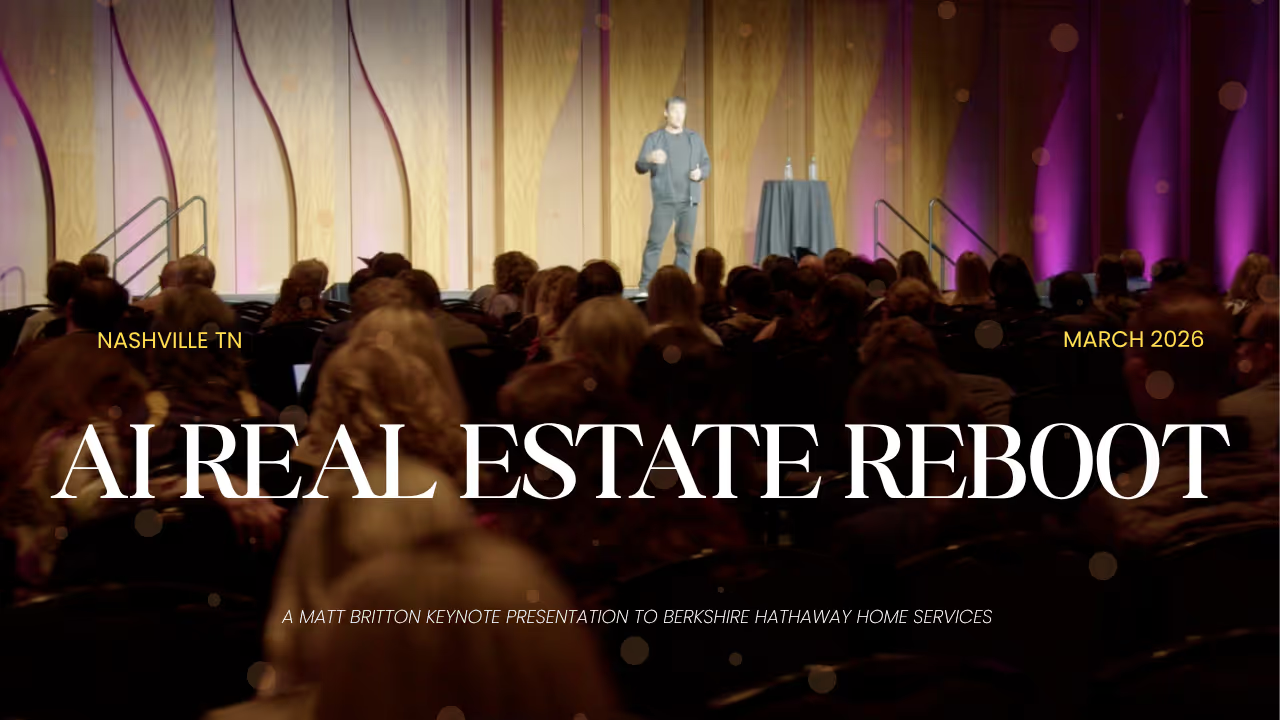
See the complete keynote from this speaking engagement.
Culture has a habit of moving faster than the planning cycle. At Suzy's Speed of Culture Live!, Matt Britton's The 2025 Consumer A to Z explored the forces changing how people live, shop, and make decisions. AI, generational change, and the Barbell Economy frame a discussion about where consumer expectations are heading and how brands can respond.
At Suzy’s Speed of Culture Live! event, Matt Britton delivered a sweeping keynote titled The 2025 Consumer A to Z, outlining the forces redefining business, culture, and commerce. As founder and CEO of Suzy, and author of Generation AI, Britton has spent two decades decoding generational shifts from Millennials to Gen Z to Generation Alpha.
Companies that fail to understand the speed of culture will lose relevance faster than ever before.
The implications stretch far beyond marketing. AI is reshaping knowledge work. The Barbell Economy is concentrating growth at the high and low ends of the market. Education pathways are fragmenting. Health technology is redefining longevity. Consumer expectations are anchored in immediacy.
For executives, founders, and brand leaders, the message is urgent. Adapt to where the consumer is heading. Build for where culture is accelerating. Lead.
Artificial intelligence will have a greater impact on consumer behavior than the internet and mobile combined. That is the assertion Britton made early in his keynote, and the evidence is mounting.
Unlike previous technological revolutions, AI does not require consumers to dramatically alter their behavior. The internet required desktops. Mobile required smartphones. AI integrates into existing workflows and platforms, solving problems in the background.
Recommendation engines refine what people watch. Generative AI drafts emails, designs logos, writes code, and produces music. Tools such as Suno and Midjourney compress creative cycles from weeks into minutes.
Goldman Sachs estimates that generative AI could increase global GDP by 7 percent over the next decade. That growth will be fueled by productivity gains and new categories of services. Knowledge workers are already using AI copilots to draft presentations, analyze data, and automate research.
Consumers are using AI chat interfaces for travel planning, financial advice, and even therapy-like conversations.
Generation Alpha, now ages 0 to 15, will enter the workforce with AI as a default utility. They will not remember a world without intelligent assistants embedded in devices, classrooms, and homes. That baseline shifts expectations: speed, personalization, and seamless interaction.
Britton also emphasized personal branding in an AI-saturated world. As content creation tools become frictionless, professionals can no longer remain invisible. Platforms such as LinkedIn reward consistent thought leadership.
Executives who articulate perspective build trust and opportunity. In an environment where AI can replicate functional tasks, human differentiation becomes strategic currency.
The opportunity is expansive. The risk is complacency. Companies that embed AI into product development, customer service, and insights functions will outpace those that treat it as a side experiment.
The Barbell Economy defines the current structure of consumer spending. Growth is concentrated at the extremes: value and luxury.
On one end, value-driven retailers such as Costco, Walmart, and Dollar Tree continue to report strong traffic. Inflation and wage stagnation have pressured middle-income households. Consumers are trading down, buying private label, and seeking bulk savings.
Costco’s membership renewal rates remain above 90 percent in North America. Value wins through efficiency and scale.
On the other end, luxury brands are thriving. LVMH has posted record revenues in recent years. High-end hospitality brands such as Aman command nightly rates that exceed several thousand dollars, with occupancy that defies macroeconomic uncertainty.
The affluent continue to accumulate wealth, supported by asset appreciation and equity markets.
The middle compresses. Mid-tier department stores struggle. Legacy brands without clear value or premium positioning lose relevance.
Culturally, platforms such as TikTok amplify both ends of the barbell. Viral “dupe” culture celebrates affordable alternatives. Creator-led content also elevates aspirational lifestyles and luxury experiences.
The creator economy, now estimated to include more than 50 million global participants, bypasses traditional media gatekeepers. Influence flows peer to peer.
Matt Britton framed this shift as structural rather than cyclical. Companies must decide where they play. Competing in the middle without differentiation erodes margin and brand equity.
For brand strategists, the Barbell Economy requires portfolio clarity. For investors, it signals where durable growth may concentrate. For marketers, it demands cultural fluency across divergent income cohorts.
Post-COVID consumer behavior reflects economic anxiety, technological acceleration, and shifting life priorities.
Education offers a clear example. Enrollment in trade and vocational programs has risen as skepticism grows around traditional four-year liberal arts degrees. Student debt in the United States exceeds 1.7 trillion dollars.
Young consumers are calculating return on investment with precision. Certifications in coding, healthcare, and skilled trades provide faster pathways to income stability.
Family dynamics are evolving as well. Economic pressures delay marriage and homeownership. Advances in reproductive technology expand options around fertility and timing.
Households are smaller. Multigenerational living is rising in certain segments due to affordability constraints.
Urbanization patterns have shifted since 2020. Secondary and tertiary cities have experienced population growth as remote and hybrid work models expanded geographic flexibility.
Markets such as Austin, Nashville, and Raleigh saw influxes of knowledge workers seeking lower costs and lifestyle benefits. Commercial real estate in major urban cores continues to recalibrate.
Another notable trend is the growth of sports gambling. Since the Supreme Court legalized sports betting nationwide in 2018, more than 35 states have approved it.
Young male consumers represent a significant share of participation. The integration of betting into sports broadcasts and mobile apps creates constant engagement loops. The societal implications range from new revenue streams to concerns around addiction and financial literacy.
These shifts intersect with technology. Remote work relies on digital infrastructure. Online education platforms scale skill acquisition. Mobile apps facilitate betting and investing.
Behavior changes rapidly when friction disappears.
Britton has long argued on The Speed of Culture podcast that generational analysis must account for structural context. Gen Z and Generation Alpha are forming habits in a world defined by uncertainty and digital immersion.
Their expectations of institutions, brands, and employers reflect that environment.
Consumers now expect immediacy as a baseline service standard. Same-day delivery, one-click checkout, and streaming access have conditioned demand for frictionless experiences.
Amazon set the precedent. DoorDash and Uber Eats extended it to food. Streaming platforms eliminated release windows. Financial technology apps offer instant trading and peer-to-peer payments.
The tolerance for delay shrinks across categories.
This appetite for speed extends to income generation. The gig economy continues to expand, with platforms enabling freelance work across design, programming, marketing, and logistics. Upwork and Fiverr connect talent globally.
Rideshare and delivery apps offer flexible earnings. For many workers, especially younger cohorts, flexibility outranks traditional stability.
AI introduces both augmentation and disruption. Knowledge workers leverage AI to increase output. At the same time, automation threatens repetitive cognitive tasks.
The World Economic Forum estimates that while millions of jobs may be displaced by automation, even more will be created in new categories. Adaptability becomes the defining career skill.
Health and longevity represent another frontier. Post-pandemic awareness of personal health has accelerated interest in wearables, supplements, and alternative therapies.
The quantified self movement, powered by devices such as the Apple Watch and Oura Ring, generates real-time biometric feedback. AI analyzes sleep, heart rate variability, and activity levels, offering personalized insights.
GLP-1 drugs such as Ozempic and Wegovy are altering conversations around obesity and metabolic health. Analysts project the global market for these medications could exceed 100 billion dollars within a decade.
The ripple effects extend to food and beverage, fitness, healthcare, and even airline seating economics.
Augmented reality and wearable technology also move closer to mainstream adoption. Ray-Ban Meta glasses integrate camera, audio, and AI capabilities into familiar form factors.
As hardware becomes lighter and more socially acceptable, digital layers blend into daily life.
Britton’s perspective integrates these threads into a single narrative. Technology compresses time. Consumers seek optimization of body, career, and experience.
Brands that remove friction and enhance agency gain advantage.
Market research is evolving from reactive reporting to real-time intelligence.
Traditional research cycles often require weeks or months. By the time insights are delivered, cultural moments may have passed. In an environment where TikTok trends can spike and fade within days, lag becomes liability.
Suzy addresses this gap through AI-powered tools such as Signals and Ask Suzy. Signals surfaces emerging trends and anomalies in consumer sentiment as they happen.
Ask Suzy enables users to query large datasets conversationally, extracting actionable insights without advanced technical training.
The objective is speed and accessibility. Brand managers, product developers, and executives can test hypotheses, validate messaging, and monitor shifts continuously.
Research becomes integrated into daily decision-making rather than confined to quarterly presentations.
Matt Britton built Suzy around the premise that understanding consumers at the speed of culture is a competitive advantage. Real-time data informs creative strategy, pricing decisions, and innovation pipelines.
Companies that operationalize insights outperform those that rely on intuition or outdated reports.
The broader implication extends beyond one platform. AI will democratize analytics. Natural language interfaces will reduce dependence on specialized data teams for routine queries.
Insight becomes conversational, embedded, and immediate.
For organizations navigating volatile markets, that capability is transformative.
AI is embedding intelligence into everyday products and services, reducing friction and increasing personalization. Consumers use AI for recommendations, content creation, shopping assistance, and health insights. This integration raises expectations for speed and relevance across industries.
The Barbell Economy describes a market where growth concentrates at the low-cost and luxury ends, while mid-tier brands struggle. Value retailers attract price-sensitive consumers, and premium brands capture affluent buyers. The middle faces margin pressure and declining differentiation.
Generation Alpha will enter adulthood with AI as a baseline utility. Their expectations around technology, personalization, and speed will shape product design and workplace norms. Brands that understand their digital-first mindset gain long-term advantage.
Companies can keep pace by investing in real-time data, embedding AI into workflows, and empowering agile teams. Platforms such as Suzy enable continuous consumer feedback, helping brands respond quickly to cultural and market shifts.
Consumer trends in 2025 reflect acceleration. AI integrates into daily life. Economic polarization reshapes spending. Health technology extends ambition around longevity. Culture moves at algorithmic speed.
Matt Britton’s keynote at Speed of Culture Live! offered a blueprint for navigating that complexity. Through his work at Suzy, his book Generation AI, and insights shared via The Speed of Culture podcast, he continues to equip leaders with frameworks for action.
Organizations seeking deeper engagement can explore Speaker HQ or contact his team for strategic guidance.
The mandate for executives is decisive. Understand the consumer. Operationalize intelligence. Lead at the speed of culture.
Matt delivers customized, high-energy keynotes on AI, consumer trends, and digital transformation for audiences worldwide.
Book Matt to Speak →Ready To Inspire Your Audience?
500+ events worldwide · Fully customized presentations
.avif)
%20(1).avif)