Press a button. A haircut arrives at your apartment. A handyman fixes the leak within the hour. A dog walker appears on demand. The on-demand service economy has reset consumer expectations, and it is accelerating as urban millennials and Gen Z cluster in cities and demand frictionless convenience.
Over 60 percent of millennials prefer to spend on experiences and services over physical goods, according to Eventbrite. Urban density continues to rise, with the UN projecting that nearly 70 percent of the global population will live in cities by 2050. Convenience is now currency. Speed is table stakes. Ownership feels optional.
Matt Britton has spent the past decade advising Fortune 500 brands on generational shifts, and he argues that the on-demand service economy represents the most underleveraged growth lever for consumer packaged goods companies. As an AI futurist and CEO of Suzy, a real-time consumer intelligence platform, Britton sees a structural change unfolding. Brands that once depended on retailers and marketplaces are now building direct pipelines into consumers’ homes.
The model is simple. Press a button. The service arrives at your door. Glam Squad brings beauty professionals. Handy dispatches home repair. Wag sends dog walkers. Zeel books in-home massages.
For CPG manufacturers facing margin compression on Amazon and declining brick-and-mortar traffic, owning or building service platforms offers something far more valuable than a single transaction. It offers first-party data, recurring revenue, and an intravenous connection to the consumer.
The question for CPG leaders is no longer whether this model will scale. It already has. The question is who will own the relationship.
Why the On-Demand Service Economy Is Reshaping CPG
The on-demand service economy gives brands direct access to consumers, data, and recurring revenue.
For decades, CPG brands built their empires through retail distribution. Shelf space equaled power. Retail buyers controlled visibility. Amazon later intensified price competition, conditioning consumers to compare and click for the lowest cost.
The result: a race to the bottom on margins.
On-demand services disrupt that dynamic by inserting brands directly into consumers’ lives. A beauty brand that owns a Glam Squad-style platform no longer waits for a shopper to browse an aisle. It schedules an appointment. It controls the experience.
It captures data on preferences, frequency, and spend.
Consider the subscription economy, which grew more than 435 percent over the last decade, according to Zuora. Services layer on top of subscription logic. They create habitual usage and predictable revenue.
A home cleaning brand could bundle cleaning products with recurring in-home service. A pet care CPG company could integrate food, supplements, and grooming through a Wag-style ecosystem.
Matt Britton often highlights that first-party data has become the most strategic asset in consumer marketing. Third-party cookies are disappearing. Retail media networks are growing more expensive.
Direct service relationships generate zero-party and first-party data by default. Brands learn what consumers use, how often they reorder, and which upsells resonate.
The result is insulation from retailer dependency. Margin control improves. Customer lifetime value expands. Brand equity deepens through real-world interaction, not just digital impressions.
First-Party Data and the Intravenous Sales Model
Owning the service layer creates an always-on, data-rich sales channel.
Think of the traditional CPG model as episodic. A consumer shops once a week. They select from a shelf. The brand may not see that consumer again for months.
Data flows through retailers, often anonymized or aggregated.
Now imagine an intravenous sales model. The brand connects directly to the household through a service platform. Appointments, preferences, feedback, and purchase history live in one ecosystem.
Every interaction sharpens targeting and personalization.
Amazon built dominance through logistics and data. Service platforms build intimacy through human interaction. A Zeel therapist understands client preferences. A Handy professional notes repeat repair issues. A Glam Squad stylist tracks product usage.
Each touchpoint feeds insight back into the brand.
According to McKinsey, companies that leverage customer behavioral data outperform peers by 85 percent in sales growth. Service businesses naturally collect behavioral data at a granular level. Time of day. Service frequency. Add-on purchases. Satisfaction ratings.
Matt Britton, author of Generation AI, argues that AI will amplify this advantage. Machine learning models can predict when a household needs replenishment, which services to bundle, and which promotions will convert.
Suzy enables brands to validate these insights in real time, closing the loop between hypothesis and execution.
The intravenous model transforms marketing from broadcast to precision engagement. Push notifications replace circulars. Personalized offers replace generic discounts.
The brand becomes embedded in daily life.
Millennial Urbanization and Gen Z Convenience Culture
Urbanization and generational behavior are fueling on-demand growth.
Millennials became the largest living adult generation in the United States in 2019. Gen Z is close behind. Both cohorts gravitate toward cities for work, culture, and connectivity.
Urban living compresses time and space. Apartments are smaller. Schedules are busier. Expectations for speed are higher.
Pew Research reports that over 60 percent of millennials live in urban or suburban environments. Ride-sharing, food delivery, and streaming normalized the idea that everything should be accessible instantly.
Services like DoorDash and Uber Eats have trained consumers to value convenience over cost.
That mindset extends beyond food and transportation. Beauty, wellness, pet care, home maintenance. Each category is ripe for on-demand integration.
The Bureau of Labor Statistics shows that consumer spending on personal care services has steadily increased over the past decade, even as spending on certain durable goods fluctuates.
Younger consumers view brands as utilities. If a brand saves time and reduces friction, loyalty follows. If it creates friction, they switch with a swipe.
On-demand services remove friction at scale.
Urban density also improves unit economics. Service professionals can complete multiple appointments in a compact geography. Customer acquisition costs decrease through referrals and localized marketing.
For CPG brands, city-based pilots offer a proving ground before national expansion.
The generational tailwind is strong. Millennials are entering peak earning years. Gen Z is shaping cultural momentum. Both expect brands to meet them where they live, often literally.
Escaping the Amazon Price War
Service integration protects margins and brand equity.
Amazon’s marketplace drives volume. It also compresses price. Algorithms prioritize competitive pricing and fast shipping. Private label competition intensifies.
Sponsored placements inflate marketing costs.
For many CPG brands, Amazon has become both essential and existential. Sales flow through the platform, yet differentiation erodes. Reviews and star ratings influence perception more than storytelling.
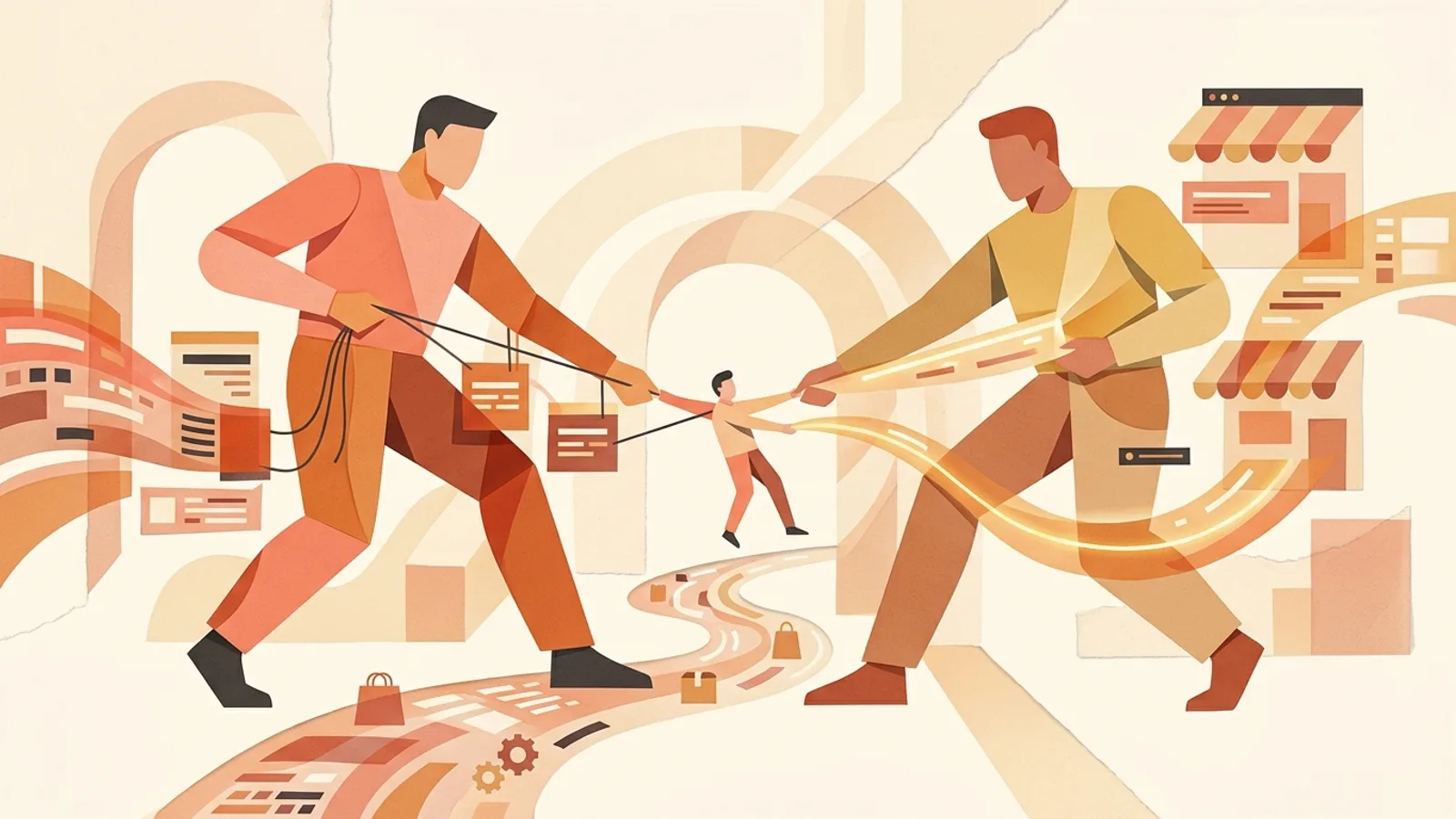
Building or acquiring a service platform changes the calculus. Instead of competing solely on price per unit, brands compete on experience.
A cleaning brand that offers in-home service packages can bundle premium products at higher margins. A skincare brand that provides in-home facials can introduce exclusive lines unavailable on marketplaces.
Apple provides a blueprint. Its retail stores deliver service, education, and support that reinforce product sales. The Genius Bar builds trust. Workshops build community.
The store becomes a channel and a brand theater.
Matt Britton often advises executives through Speaker HQ sessions that control over distribution equals control over destiny. On-demand services create proprietary distribution.
They also open cross-selling opportunities. A pet service platform can recommend food, toys, insurance, and training.
The financial upside is material. Bain & Company estimates that increasing customer retention rates by 5 percent can increase profits by 25 to 95 percent.
Services naturally drive repeat engagement. Each appointment is an opportunity to deepen the relationship.
Margin expansion, data ownership, recurring revenue. The Amazon price war looks less attractive by comparison.
How CPG Brands Can Build or Buy Service Platforms
CPG companies should evaluate build, buy, or partner strategies to enter the on-demand service economy.
Building internally offers full control. Brands can design the customer journey, integrate proprietary products, and own the technology stack.
This path requires capital, operational expertise, and patience. Service logistics differ from product distribution.
Acquisition accelerates entry. Buying a Glam Squad, Handy, Wag, or Zeel-style platform provides existing infrastructure and customer base.
Integration risk remains, yet time to market shortens. Cultural alignment becomes critical.
Partnerships offer a lighter lift. A CPG brand can embed products into existing service platforms, negotiate data-sharing agreements, and test demand before deeper investment.
Co-branded experiences can validate appetite.
Operational excellence matters. Service quality must match brand promise. Training, scheduling, insurance, and customer support require rigor.
Digital interfaces must be seamless. Ratings and reviews influence growth.
Matt Britton emphasizes that AI will separate winners from laggards. Predictive staffing models. Dynamic pricing. Personalized recommendations.
Platforms that harness AI effectively will optimize utilization and profitability. In Generation AI, he outlines how brands can integrate intelligent systems into core operations.
Consumer insight remains foundational. Suzy enables brands to test service concepts, pricing tiers, and messaging in days, not months.
Real-time feedback reduces risk and sharpens positioning.
The opportunity window is open. Urban density supports economics. Generational demand fuels adoption. Technology lowers barriers.
The brands that act decisively will secure long-term advantage.
Key Takeaways for Business Leaders
- Own the customer relationship. Build or acquire service platforms that generate first-party data and recurring engagement. Direct access improves margins and reduces reliance on third-party retailers.
- Leverage AI for personalization and efficiency. Deploy predictive analytics to anticipate demand, optimize staffing, and tailor offers. Intelligent systems turn service interactions into growth engines.
- Pilot in urban markets. Test service concepts in dense cities where demand and logistics align. Refine the model before scaling nationally or globally.
- Bundle products with experiences. Integrate premium SKUs into service offerings to increase average order value and differentiate from marketplace competitors.
- Invest in operational excellence. Service quality defines brand perception. Training, technology, and customer support require executive-level attention.
Frequently Asked Questions
What is the on-demand service economy?
The on-demand service economy refers to app-based platforms that deliver services directly to consumers at their chosen time and location. Examples include in-home beauty, home repair, pet care, and wellness services.
These platforms combine mobile technology, real-time scheduling, and digital payments to create frictionless consumer experiences.
Why should CPG brands invest in service platforms?
CPG brands gain first-party data, recurring revenue, and margin control through service platforms. Direct relationships reduce dependence on retailers and marketplaces.
Service integration also increases customer lifetime value by embedding products into ongoing experiences.
How does first-party data improve profitability?
First-party data enables personalized marketing, better demand forecasting, and higher retention rates. Companies that leverage behavioral data significantly outperform competitors in sales growth.
Service platforms naturally collect detailed usage and preference data that can be activated through AI systems.
Is building or buying a service platform better?
The optimal path depends on resources and urgency. Building offers full control and customization.
Acquiring accelerates market entry with existing infrastructure. Partnerships provide lower-risk testing opportunities before larger commitments.
The Future Belongs to Integrated Brands
The on-demand service economy is redefining how consumers interact with brands. Press a button. The brand arrives. The relationship deepens. Data flows. Revenue recurs.
Matt Britton has long argued that generational change precedes business transformation. Millennials and Gen Z expect immediacy, personalization, and control.
Brands that meet those expectations through service integration will capture loyalty and margin. Those that cling to legacy distribution models will feel increasing pressure.
For executives seeking guidance, Matt Britton shares insights through Speaker HQ keynotes, his bestselling book Generation AI, and conversations on The Speed of Culture podcast. Through Suzy, he equips brands with the real-time intelligence needed to act decisively.
To explore how your organization can build an on-demand service strategy, contact his team and start designing the next growth engine today.
Related Posts
AI Shopping Agents Trust: Why Banks Just Sounded the Alarm

Agentic Commerce Wars: What Amazon vs. Meta Muse Means for Brands

Financial Nihilism Goes Mainstream: Why Gen Z Is All-In on Prediction Markets