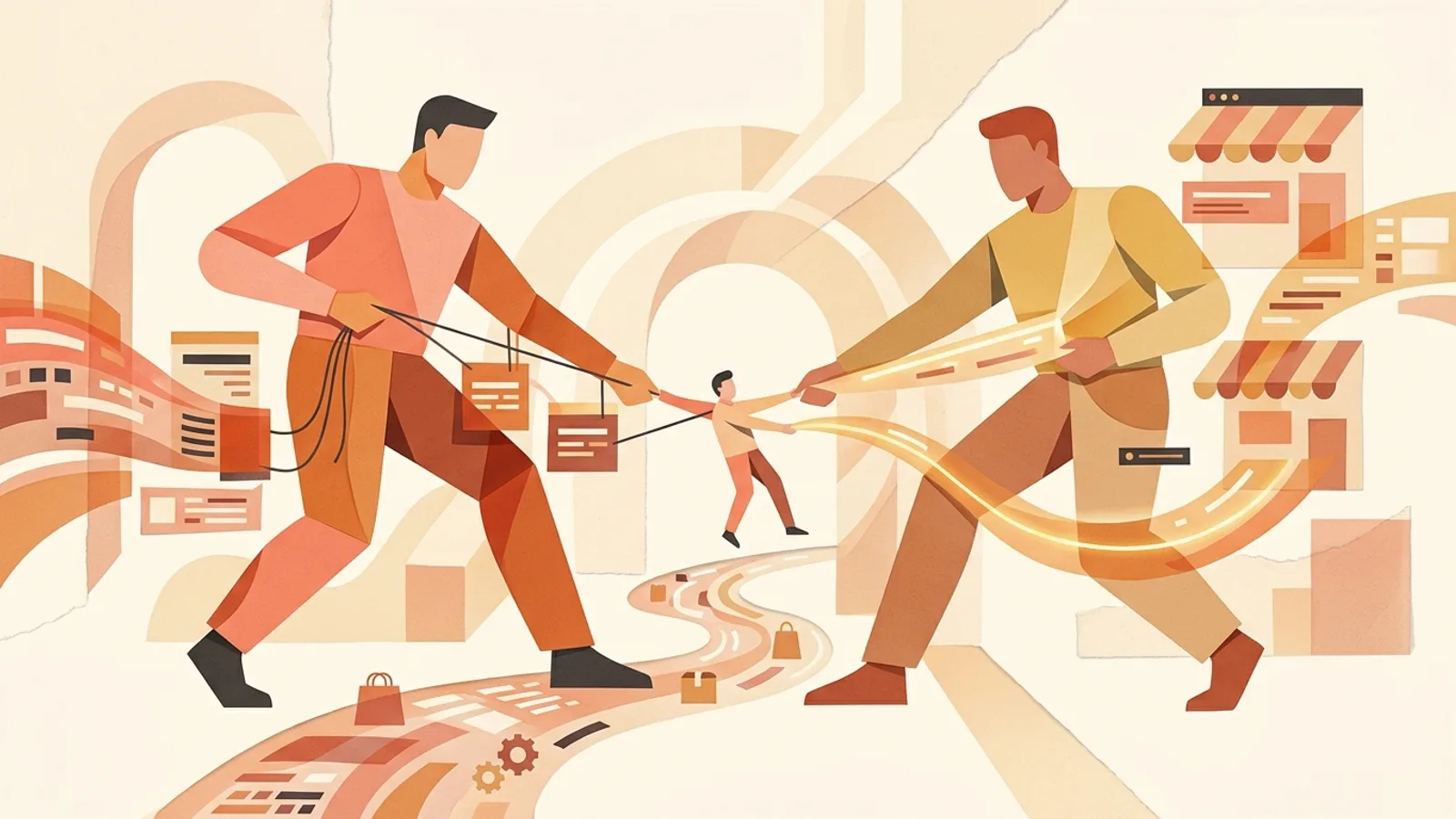
AI-Driven Creativity: Why Defining the Problem Wins
AI-driven creativity is rewriting the rules of professional value. In 2025, generative AI tools can produce photorealistic images, long-form video, code, music, and marketing copy in seconds. OpenAI, Runway, Midjourney, Pika, and dozens of emerging platforms have reduced production timelines from weeks to minutes. The cost curve has collapsed. The barrier to entry is nearly zero.
According to recent industry estimates, over 60 percent of creative professionals now use generative AI tools weekly. Venture capital funding into generative AI surpassed $20 billion in the past two years. Capability is doubling at a pace that outstrips most enterprise adoption cycles. Execution, once the moat, is becoming automated.
Matt Britton has spent the past several years warning business leaders that AI will not simply enhance creativity. It will redefine it. In his book Generation AI and across more than 500 keynotes delivered globally, Britton argues that the competitive advantage in an AI-driven world lies in defining the right problems, not executing tasks faster.
His perspective is grounded in both futurism and practice as CEO of Suzy, a consumer intelligence platform that helps brands decode cultural shifts in real time.
The creative industries once believed they were insulated. Strategy felt safe. Imagination felt uniquely human. That comfort is fading.
AI can now render the image, edit the film, compose the soundtrack, and draft the script. What it cannot do with precision is decide which story is worth telling. That distinction will define the next decade of value creation.
The Future of AI-Driven Creativity in Graphic Design
AI-driven creativity has fundamentally altered graphic design. Tools like Midjourney and DALL·E generate complex compositions with advanced lighting, texture, and typography from a single prompt. Adobe has embedded generative fill directly into Photoshop. Canva offers AI-powered layout suggestions. Execution has become instant.
A decade ago, producing a cinematic composite required mastery of layers, masking, gradients, and lighting techniques. Designers spent years refining their workflow. Today, a prompt such as “a golden retriever driving a red pickup truck at sunset near the Grand Canyon, cinematic lighting, 35mm lens” produces a near-photorealistic result in seconds.
The skill premium has shifted. Technical proficiency in software no longer guarantees differentiation. According to Adobe’s own surveys, over 75 percent of creative professionals report using AI features to accelerate production. That acceleration compresses timelines and commoditizes output.
The illusion of creative security persists in some circles. The belief that AI cannot replicate imagination feels comforting. Yet diffusion models now mimic artistic styles from Renaissance shading to modernist abstraction with remarkable fidelity. The tactile feel once reserved for human hands can be simulated at scale.
Matt Britton frequently highlights this inflection point in his keynotes. He challenges audiences to reconsider what makes a designer valuable. The answer is no longer tool mastery. It is insight. It is the ability to understand cultural context, brand tension, and emotional nuance.
Designers who anchor their identity in execution face margin pressure. Designers who elevate into strategic concepting, brand storytelling, and cross-platform narrative architecture gain leverage. AI handles production. Humans define direction.
AI-Generated Video and the Disruption of Motion Pictures
AI-generated video is advancing at an exponential rate. Platforms such as Runway Gen-2, Pika Labs, and OpenAI’s Sora create photorealistic scenes from text prompts. Frame consistency, lighting realism, and motion physics improve with every iteration. What required a studio now requires a laptop.
Hollywood-level visual effects once cost millions. Today, a teenager with a high-performance GPU and creative vision can produce a short film with cinematic quality. AI actors, dynamic camera movement, and stylized environments are emerging in beta releases. Production cost trends toward zero.
The implications for film, advertising, and streaming platforms are profound. Script drafts can be generated in seconds. Storyboards materialize instantly. Entire scenes can be prototyped without a physical set. McKinsey estimates that generative AI could add up to $4.4 trillion annually to the global economy, with media and entertainment among the most affected sectors.
Creative roles built on execution are vulnerable. Video editors, junior animators, and post-production teams face automation pressure. The value migrates upstream toward narrative architects and cultural strategists.
Matt Britton frames this shift as a power redistribution. In Generation AI, he describes how AI collapses traditional gatekeeping structures. Access expands. Talent surfaces from anywhere. The constraint moves from production capacity to idea quality.
AI can render a scene. It cannot intuit the cultural pulse of Gen Z in Jakarta or São Paulo without human framing. It can simulate emotion. It does not experience it. That gap remains meaningful.
For brands and studios, the question evolves. Which stories deserve amplification? Which cultural tensions should be explored? Which communities will respond? Those decisions demand human judgment informed by data, empathy, and foresight.
Problem Definition as the New Creative Currency
The defining skill of the AI era is problem definition. Execution scales through machines. Framing the right question remains scarce.
In an AI-driven creativity model, the prompt becomes the interface. Prompt engineering matters. Strategic clarity matters more. A vague prompt yields generic output. A precise prompt rooted in audience insight generates resonance.
Consider marketing. AI can produce 100 ad variations in minutes. It can optimize headlines, swap visuals, and tailor copy to micro-segments. Without a clear articulation of the underlying consumer tension, those variations amplify mediocrity. Volume increases. Impact stalls.
As CEO of Suzy, Matt Britton sees this dynamic daily. Brands that leverage real-time consumer intelligence outperform those relying on instinct alone. Data reveals unmet needs, shifting behaviors, and emerging cultural codes. The strategist translates those signals into defining questions. AI executes against that clarity.
This shift elevates interdisciplinary thinking. Creators must understand behavioral economics, sociology, platform algorithms, and generational psychology. A 22-year-old graduating with a digital design degree enters a workforce where software fluency is assumed. Strategic fluency differentiates.
AI potency has historically doubled in short cycles, with model performance improving dramatically year over year. Tasks once deemed safe now face automation. The premium shifts to those who can identify white space in saturated markets.
The future belongs to creators who think like CEOs and CEOs who think like creators. That hybrid mindset blends imagination with commercial acumen. It asks, Who is this for? Why now? What emotional outcome matters? AI becomes an amplifier of well-defined intent.
What AI Means for the Next Generation of Talent
Graduates entering creative fields face a compressed learning curve. Tools taught in freshman year may be outdated by senior year. The half-life of technical skills continues to shrink.
Yet opportunity expands. Democratized execution lowers barriers to entrepreneurship. A solo creator can launch a brand, produce content, design packaging, and build a campaign without an agency. Speed increases. Experimentation becomes affordable.
The differentiator is perspective. Young professionals who cultivate domain expertise, cultural literacy, and systems thinking position themselves for leadership. Those who cling to narrow technical specialization risk obsolescence.
Matt Britton often advises emerging talent to build a “problem radar.” Study generational behavior. Track platform shifts. Observe how AI changes consumer expectations. On The Speed of Culture podcast, he interviews founders and CMOs navigating these transitions in real time. The consistent theme is adaptability anchored in insight.
Employers seek thinkers who can orchestrate AI tools rather than compete with them. Understanding how to brief AI, validate outputs, and integrate results into broader strategy becomes foundational. Creativity evolves from craft to choreography.
Fear is understandable. Entire workflows are transforming within months. Anxiety does not generate advantage. Curiosity does. Professionals who experiment with AI tools gain intuition about their strengths and limitations. That intuition informs better problem framing.
The next generation will not ask whether to use AI. They will ask how to use it responsibly, ethically, and strategically. That question signals maturity.
Key Takeaways for Business Leaders
- Redefine value around insight. Audit roles that rely heavily on execution. Shift incentives toward strategic thinking, cultural intelligence, and problem framing. Reward teams for identifying high-impact opportunities before optimizing outputs.
- Invest in AI fluency across functions. Provide hands-on training with generative AI tools. Encourage experimentation in low-risk environments. Build internal playbooks that codify best practices for prompting, validation, and brand alignment.
- Leverage real-time consumer intelligence. Use platforms like Suzy to ground creative decisions in data. Pair AI-generated outputs with validated audience insights to increase resonance and reduce guesswork.
- Elevate hybrid talent. Promote individuals who blend creative instinct with commercial strategy. Develop cross-functional squads where technologists, marketers, and designers collaborate on defining core problems.
- Prioritize ethical governance. Establish clear guidelines for AI usage, intellectual property, and bias mitigation. Transparent policies build trust with employees and consumers alike.
Frequently Asked Questions
How is AI-driven creativity changing creative jobs?
AI-driven creativity automates execution-heavy tasks such as image generation, video editing, and copywriting. Roles centered purely on production face compression. Demand increases for professionals who can define strategy, interpret cultural signals, and guide AI tools toward meaningful outcomes.
Will AI replace graphic designers and video editors?
AI will replace many repetitive design and editing tasks. Designers and editors who expand into concept development, brand storytelling, and audience insight remain valuable. The profession evolves toward strategic orchestration rather than manual production.
What skills matter most in an AI-driven world?
Problem definition, cultural literacy, data interpretation, and prompt precision matter most. Technical tool mastery becomes baseline. Strategic thinking and emotional intelligence create differentiation.
How can companies prepare for AI-driven creativity?
Companies should train teams on AI tools, integrate real-time consumer intelligence, and redesign workflows around strategic clarity. Partnering with experts like Matt Britton through Speaker HQ engagements accelerates alignment and execution.
The Strategic Imperative of AI-Driven Creativity
AI-driven creativity will not slow down. Capability will expand. Costs will fall. Access will widen. Organizations that cling to legacy definitions of creative value will struggle to compete.
Matt Britton continues to guide executives through this transition, whether on stage, in Generation AI, or in conversations on The Speed of Culture podcast. His message is consistent. Define the right problems. Ground them in cultural insight. Deploy AI as an accelerator.
The winners will be those who combine imagination with intent. Those who understand that tools change, but relevance remains scarce.
To explore how your organization can adapt, visit Speaker HQ, learn more about Suzy, or contact his team directly. The future of AI-driven creativity belongs to leaders who ask better questions and act on the answers.
Related Posts
Agentic Commerce Wars: What Amazon vs. Meta Muse Means for Brands
Financial Nihilism Goes Mainstream: Why Gen Z Is All-In on Prediction Markets
AI Agents Holiday Shopping 2026: Are Fortune 500 Brands Ready?