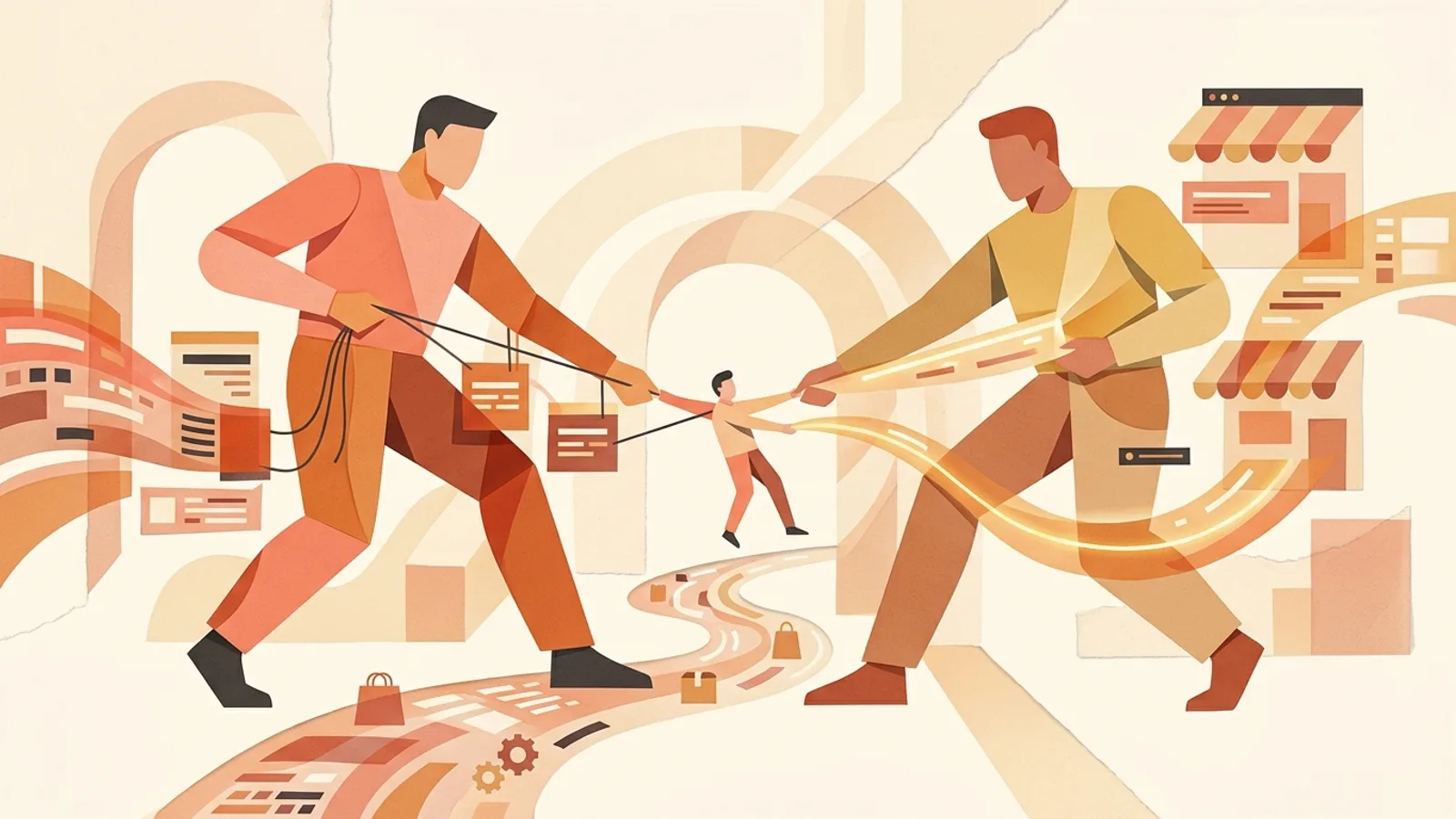
The Last Mile Effect: Why Hardware Wins Again
In 2025, more than 15 billion connected devices sit inside homes worldwide. Smart speakers. Streaming TVs. Gaming consoles. Appliances. Laptops. Each one represents something bigger than a gadget. It represents ownership of the last mile effect.
The last mile effect is the strategic advantage gained by controlling the physical device that delivers a digital service into the consumer’s daily life. The company that owns the hardware owns the interface. The interface shapes behavior. Behavior drives revenue.
For over a decade, software ate the world. SaaS multiples soared. Market caps ballooned. Hardware felt capital intensive, operationally messy, and low margin. Yet the tide is turning.
The companies with the strongest competitive moats increasingly control both software and the device that distributes it.
Matt Britton, AI futurist and CEO of Suzy, has argued that the next era of brand dominance will belong to companies that treat hardware as a loss leader to secure ecosystem control. Across 500 plus keynotes and in his bestselling book Generation AI, Britton has emphasized a simple thesis: whoever owns the last mile owns the consumer relationship.
Amazon understood it. Apple perfected it. Microsoft is doubling down on it. The resurgence of hardware is a calculated strategy for the future of branding, distribution, and AI-powered ecosystems.
The companies that grasp the last mile effect will not fight for shelf space. They will build environments where their products are the default.
What Is the Last Mile Effect in Hardware Strategy?
The last mile effect is about controlling the final point of interaction between a brand and a consumer. In digital ecosystems, that point is increasingly physical.
Smart speakers illustrate the principle clearly. By placing Alexa devices in tens of millions of homes, Amazon inserted itself into daily routines. Weather updates. Shopping lists. Music. Reorders. Voice became habitual.
According to industry estimates, Amazon has sold over 100 million Alexa-enabled devices globally. Each device functions as a distribution channel that never closes.
“Intravenous distribution.”
That hardware footprint creates what Britton calls “intravenous distribution.” The brand does not wait for the consumer to visit a retailer or open an app. It lives in the home. It anticipates needs. It suggests replenishment. It shortens the path from intent to transaction.
This model changes the economics of marketing. Traditional CPG brands battle for inches of shelf space at Walmart or Target, competing against private labels and promotional cycles. Hardware ownership eliminates that fight.
If a detergent brand manufactured smart washing machines programmed to auto-replenish its own product, it would bypass the aisle entirely.
The last mile effect also strengthens data advantages. Hardware devices collect contextual insights about usage patterns, frequency, and environment. That data sharpens personalization. It trains AI models. It improves product development.
Companies that control devices control feedback loops.
For CMOs, the implication is structural. Brand building expands beyond storytelling. It includes ecosystem architecture. The job shifts from driving awareness to embedding utility. Hardware becomes a strategic lever, not an operational burden.
Why Big Tech Should Give Away Hardware
Giving away hardware can be a rational growth strategy. The device becomes the gateway to higher-margin recurring revenue.
Amazon has already priced Echo devices aggressively, often near cost during promotional periods. The goal extends beyond hardware profit. Alexa increases Prime stickiness, boosts e-commerce frequency, and expands advertising reach. Every voice interaction reinforces Amazon’s ecosystem.
Apple and Netflix offer a compelling hypothetical. If Apple produced and subsidized connected televisions optimized for Apple TV Plus, Fitness Plus, and Arcade, it could deepen services revenue, which exceeded 85 billion dollars annually in recent filings.
Netflix, with more than 250 million global subscribers, could use branded TVs to reduce churn and prioritize its own content in the home interface.
Microsoft’s Xbox strategy reflects the same logic. Hardware margins fluctuate. Game Pass subscriptions drive predictable revenue. With over 30 million Game Pass subscribers, Microsoft benefits more from lifetime engagement than one-time console profit.
Subsidizing consoles to accelerate adoption would strengthen that flywheel.
Google’s Chromebook push in education reveals how powerful device penetration can be. By placing low-cost laptops in classrooms, Google cultivated a generation fluent in its ecosystem. Students who grow up on Google Workspace and Chrome often carry those habits into adulthood.
These examples point to a broader truth. Hardware as a loss leader can unlock software dominance. The company that absorbs upfront device cost may capture years of downstream subscription, commerce, and data value.
Matt Britton frequently highlights this shift in his keynote presentations. He argues that executives must evaluate lifetime ecosystem value rather than quarterly device margins. The companies that win will model hardware as infrastructure for AI-driven services.
Hardware as a Loss Leader: A New Brand Ecosystem Model
Hardware as a loss leader transforms brand strategy from persuasion to participation. The product no longer competes for attention. It integrates into behavior.
Consider a detergent brand acquiring or building a smart laundry machine company. The machine could automatically detect detergent levels and reorder a proprietary formula. In large urban apartment developments, builders could install these machines by default.
Residents would experience seamless replenishment without browsing alternatives.
This approach mirrors the razor and blade model, but with data and AI layered on top. Usage insights inform product innovation. Predictive algorithms anticipate supply needs. Loyalty shifts from emotional preference to embedded convenience.
The same logic applies across industries. A coffee brand could develop connected brewers calibrated exclusively for its pods. A fitness company could subsidize smart equipment that integrates subscription training content. A grocery chain could distribute connected kitchen hubs that streamline ordering through its own supply chain.
According to McKinsey research, ecosystems can increase customer lifetime value by 30 percent or more by expanding touchpoints and cross-selling opportunities. Hardware anchors those ecosystems physically.
For CMOs, this requires new capabilities. Partnerships with manufacturers. Capital allocation decisions traditionally handled by operations teams. Cross-functional planning that integrates product, data, and marketing.
Britton’s work with brands through Suzy demonstrates how consumer intelligence must inform these bets. Companies need to validate whether consumers will adopt branded hardware and how pricing influences perception.
The opportunity extends beyond technology giants. Mid-market brands can explore niche hardware that serves specific communities. The goal remains consistent: secure the last mile.
How AI Accelerates the Hardware Comeback
Artificial intelligence amplifies the value of hardware control. AI systems perform best when trained on proprietary, real-time data. Devices inside homes and offices generate exactly that.
Smart thermostats learn temperature preferences. Wearables track health metrics. Voice assistants capture language patterns. Each interaction refines predictive accuracy.
Companies that own the device collect first-party data at scale.
In the era of privacy regulation and the decline of third-party cookies, first-party data has become strategic currency. Hardware delivers it continuously. That advantage compounds over time.
Matt Britton explores this convergence in Generation AI. He argues that AI will embed itself into everyday objects, transforming them into adaptive interfaces.
A television will not simply stream content. It will recommend, transact, and personalize advertising in real time. A gaming console will evolve into a social and commerce hub. A laptop will anticipate workflow needs and automate tasks contextually.
AI also enhances monetization models. Dynamic pricing. Predictive maintenance. Automated replenishment. Contextual upselling. Each function depends on tight integration between software intelligence and physical touchpoints.
Industry data supports the shift. Global spending on IoT devices is projected to exceed 1 trillion dollars annually within the next few years. Enterprises increasingly view connected hardware as data infrastructure rather than standalone products.
The resurgence of hardware aligns with AI’s hunger for data and context. Software alone cannot observe the physical environment. Devices bridge that gap. They transform ambient life into actionable insight.
For business leaders, the implication is clear. AI strategy and hardware strategy now intersect. Separating them creates blind spots.
Rethinking the Role of the CMO in the Last Mile Era
The last mile effect reshapes executive responsibilities. The CMO’s mandate expands from messaging to ecosystem design.
Historically, marketing teams focused on awareness, positioning, and retail distribution. Shelf space negotiations defined leverage. Digital advertising optimized conversion funnels.
Today, brands that rely solely on these levers face margin compression and platform dependency.
Owning hardware changes the power dynamic. The brand becomes the platform. It sets default choices. It controls the interface. It reduces reliance on third-party retailers and ad networks.
This shift requires CMOs to collaborate deeply with product, technology, and finance leaders. Hardware initiatives involve capital expenditure, supply chain management, and long-term ROI modeling. Marketing input must shape feature sets that reinforce brand equity.
Britton often emphasizes during The Speed of Culture podcast that culture moves at the pace of technology. Consumer expectations now assume seamless integration. Brands that fail to embed themselves into daily routines risk invisibility.
The CMO of the future architects ecosystems where products thrive quietly beneath the surface. No shouting in crowded aisles. No race to the bottom on discounting.
Instead, strategic presence in the home, in the car, in the classroom.
Companies that hesitate may find themselves intermediated by those that control devices. The last mile does not remain neutral for long.
Key Takeaways for Business Leaders
- Audit your last mile exposure. Map every physical touchpoint between your brand and the consumer. Identify where third parties control the interface and assess the long-term risk of dependency.
- Model hardware as ecosystem infrastructure. Evaluate lifetime value across subscriptions, data, and cross-sell opportunities. Short-term device margins rarely capture full strategic upside.
- Integrate AI and hardware roadmaps. Align data strategy with physical device deployment. First-party data generated through hardware can compound competitive advantage.
- Expand the CMO mandate. Encourage marketing leaders to participate in product and capital allocation discussions. Ecosystem design now influences brand equity as much as advertising.
- Test with consumer intelligence. Use platforms like Suzy to validate demand, pricing tolerance, and feature expectations before investing in hardware development.
Frequently Asked Questions
What is the last mile effect in business?
The last mile effect refers to controlling the final physical or digital touchpoint that delivers a product or service to the consumer. Companies that own this touchpoint, often through hardware devices, shape user experience, collect first-party data, and influence purchasing behavior directly.
Why would a company give away hardware for free?
Companies subsidize hardware to drive higher-margin recurring revenue such as subscriptions, commerce, or advertising. The device acts as a gateway into a broader ecosystem, increasing customer lifetime value and reducing churn over time.
How does hardware strengthen AI strategy?
Hardware generates continuous first-party data from real-world usage. That data improves AI models, personalization, and predictive capabilities. Organizations that control devices gain proprietary insights that competitors cannot easily replicate.
Should non-tech brands invest in smart devices?
Non-tech brands can benefit from targeted hardware investments that embed their products into daily routines. Smart appliances, connected equipment, or specialized devices can create automatic replenishment models and deeper loyalty when aligned with clear consumer value.
The Hardware Comeback Has Already Begun
The last mile effect is redefining competitive advantage. Hardware has reemerged as a strategic asset, not a relic of a pre-cloud era. Companies that control devices control data, defaults, and daily habits.
Matt Britton continues to advise global brands on navigating this shift through keynotes booked via Speaker HQ, insights shared on The Speed of Culture podcast, and frameworks outlined in Generation AI. As CEO of Suzy, he works with executives seeking real-time consumer intelligence to inform bold ecosystem bets.
The question for leadership teams is direct. Will your brand live on someone else’s device, or will you own the last mile?
To explore how your organization can build a hardware-enabled ecosystem strategy, contact his team and start designing the future.
Related Posts
AI Shopping Agents Trust: Why Banks Just Sounded the Alarm

Agentic Commerce Wars: What Amazon vs. Meta Muse Means for Brands

Financial Nihilism Goes Mainstream: Why Gen Z Is All-In on Prediction Markets