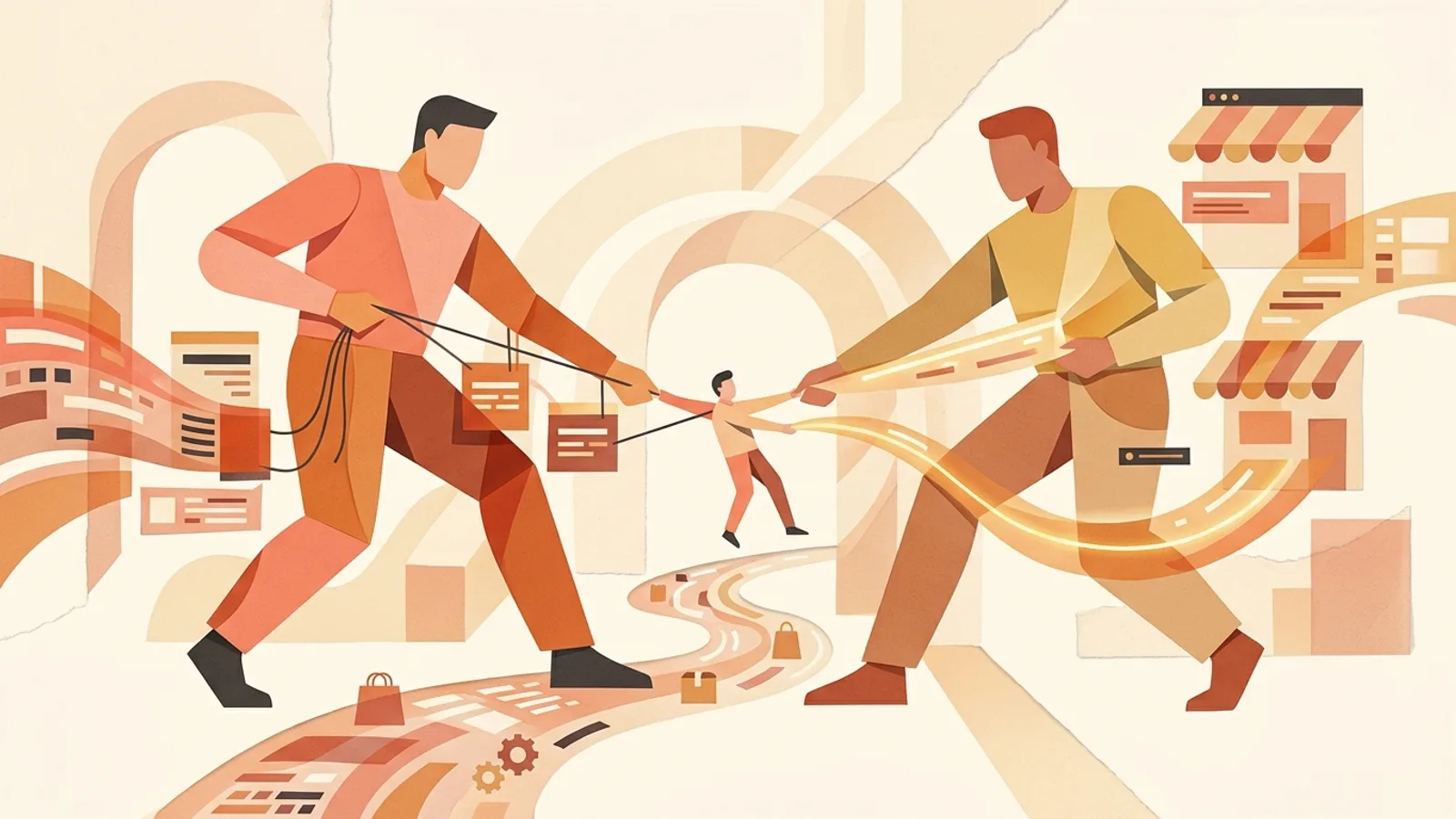
Over 80 percent of consumers now expect personalized experiences from brands, according to Salesforce. Nearly two thirds will switch companies if they feel misunderstood. Those numbers define the future of consumer engagement.
Attention is fragmented. Loyalty is fragile. Expectations are rising.
In a recent fireside conversation moderated by Journey Further CEO Duncan Smith, AI futurist and marketing strategist Matt Britton unpacked what this means for modern brands. Britton, a New York Times bestselling author and CEO of Suzy, has spent his career decoding generational behavior and technological disruption.
Artificial intelligence, Gen Z, and the creator economy are reshaping how companies win attention, trust, and revenue.
Consumer engagement once centered on broad messaging and mass reach. That era has closed. Brands now operate in a world of algorithmic feeds, micro communities, and on demand everything.
Success requires precision. It requires speed. It requires relevance at scale.
Britton has delivered more than 500 keynotes on these themes through Speaker HQ, and his book Generation AI explores how machine intelligence is redefining business strategy. In this discussion, he outlines a roadmap for leaders navigating AI driven marketing, shifting consumer expectations, and the rising economic power of Gen Z.
The message is urgent. Adaptation is no longer optional. It is operational.
Snackable Content Strategy in the Age of Short Attention
Short form content drives modern consumer engagement. The average human attention span on digital content continues to shrink, with platforms like TikTok and Instagram Reels conditioning users to process information in seconds. TikTok reports that users can form brand impressions in under three seconds. That is the new battleground.
Britton frames the shift with a memorable analogy. Brands once produced albums. Now they must produce hit singles. Each interaction needs to stand on its own, delivering immediate value without relying on long narratives to build context.
Precision replaces volume.
This shift affects every channel. B2B buyers scroll LinkedIn between meetings. Consumers shop on mobile while streaming content. Even email performance increasingly favors concise, visually dynamic formats.
HubSpot data shows that short form video delivers the highest ROI of any content format for marketers in 2025.
The implication for brand strategy is structural. Creative teams must think modularly. Campaigns need to break into micro moments optimized for specific platforms and audiences.
Media planning must prioritize frequency and contextual relevance over broad reach.
Snackable does not mean superficial. It demands clarity. The strongest brands distill complex value propositions into sharp, repeatable messages.
Consider how Duolingo leverages TikTok with humorous, culturally aware clips that reinforce brand personality in seconds. Or how fintech startups use short explainer videos to simplify financial products that once required lengthy brochures.
Britton argues that this format discipline benefits leadership communication as well. CEOs who can articulate strategy in crisp, accessible language build stronger internal and external alignment.
In an attention economy, brevity signals confidence.
AI Personalization in Marketing: From Demographics to Psychographics
AI personalization in marketing is shifting strategy from broad segmentation to individual relevance. Traditional targeting relied on age, gender, income, and geography. AI analyzes behavior, intent signals, and real time interactions to build dynamic profiles that evolve with each click.
Britton emphasizes that the real breakthrough lies in psychographics. Interests. Values. Motivations. Machine learning models can parse purchase histories, browsing patterns, and content engagement to predict what message will resonate with a specific individual at a specific moment.
McKinsey estimates that personalization can lift revenues by 5 to 15 percent and increase marketing efficiency by up to 30 percent. Amazon attributes roughly 35 percent of its revenue to recommendation algorithms. Netflix reports that over 80 percent of viewing hours are driven by personalized recommendations.
These systems operate continuously. They test. They learn. They adapt. Every consumer interaction becomes feedback that refines the next touchpoint.
Britton’s role as CEO of Suzy places him at the center of this shift. The platform enables brands to access real time consumer intelligence, shortening the distance between insight and execution. Instead of waiting weeks for research reports, teams can validate messaging and creative in hours.
Speed compounds advantage.
Organizational culture becomes the limiting factor. AI tools deliver value only when leaders embed them into workflows. Sales teams must trust predictive scoring. Creative teams must interpret data without diluting brand voice.
Finance leaders must understand how personalization drives lifetime value.
Britton frequently underscores this in The Speed of Culture podcast. Technology accelerates. Companies must match that velocity with decision making structures that support experimentation and iteration.
AI powered marketing thrives in environments where data flows freely and silos shrink.
Gen Z Consumer Behavior and the Creator Economy
Gen Z consumer behavior reflects a generation raised on smartphones, social platforms, and economic uncertainty. Born between the mid 1990s and early 2010s, Gen Z now represents more than $360 billion in disposable income in the United States alone.
Their influence extends far beyond their own spending power.
Britton has long studied generational shifts, and he argues that Gen Z views brands as participants in culture rather than distant institutions. Authenticity carries measurable weight. A 2024 Deloitte study found that nearly 50 percent of Gen Z consumers have stopped purchasing from brands whose values conflict with their own.
The creator economy sits at the center of this dynamic. Platforms like YouTube, TikTok, and Instagram have empowered individuals to build media empires from their bedrooms. Influencers drive purchasing decisions at scale.
According to Morning Consult, 57 percent of Gen Z have purchased a product based on an influencer recommendation.
Brands that understand this ecosystem treat creators as strategic partners. They co create content. They grant creative control. They align with voices that reflect shared values rather than chasing follower counts alone.
Britton predicts that creator partnerships will increasingly integrate with AI driven targeting. Imagine campaigns where creators generate multiple variations of content tailored to micro segments, distributed algorithmically to users most likely to engage.
Hyper relevance meets cultural fluency.
Gen Z also expects transparency. They research brands. They read reviews. They compare prices instantly. Purpose statements unsupported by action collapse quickly under scrutiny.
For executives, the lesson is practical. Build brand narratives that align with real operational commitments. Sustainability initiatives. Inclusive hiring. Community investment.
Then empower creators who authentically connect those commitments to their audiences.
AI Driven Market Insights for B2B Growth
AI driven market insights are transforming B2B marketing and sales strategy. Enterprise buying cycles generate vast amounts of conversational data across calls, emails, and demos. Tools like Gong analyze this data to identify patterns in objections, competitor mentions, and successful messaging.
Britton points to this capability as a strategic unlock. Instead of relying solely on quarterly reports, companies can access near real time intelligence about market sentiment. Sales leaders can refine pitches based on what top performers do differently.
Marketing teams can adjust SEO and paid media strategies to reflect actual buyer language.
For example, if AI analysis reveals that prospects frequently raise concerns about integration complexity, product teams can prioritize clearer onboarding materials. Content marketers can produce targeted resources addressing that specific friction point.
Alignment improves revenue velocity.
Gartner projects that by 2027, 80 percent of B2B sales interactions will occur in digital channels. AI becomes essential in managing that scale. Predictive analytics can score leads, recommend next best actions, and forecast pipeline health with increasing accuracy.
Adoption requires executive sponsorship. Britton stresses that leaders must model AI usage themselves. Dashboards reviewed in board meetings. Data referenced in strategic planning sessions. Incentives aligned with experimentation.
CFOs also play a pivotal role. Marketing budgets face scrutiny, particularly in uncertain economic cycles. Linking AI informed initiatives to measurable outcomes such as conversion rates, customer acquisition cost, and lifetime value strengthens the case for investment.
Organizations that treat AI as a side project struggle. Those that embed it into core decision processes compound advantage over time.
Aligning Marketing Strategy With Business Outcomes
Marketing strategy now demands direct linkage to financial performance. Brand awareness alone no longer secures budget. Executive teams expect clear connections between campaigns and revenue growth.
Britton advises leaders to frame marketing as a growth engine rather than a cost center. That requires disciplined measurement. Multi touch attribution models. Cohort analysis. Incrementality testing.
These tools quantify how specific initiatives drive acquisition, retention, and upsell.
Consider subscription businesses. Small improvements in retention rates can generate outsized profit gains due to recurring revenue dynamics. AI powered personalization that increases retention by even 2 percent can meaningfully impact valuation multiples.
Flexibility also matters. Consumer behavior shifts quickly across platforms. Media costs fluctuate. Regulatory environments evolve.
Agile budgeting processes allow reallocation toward high performing channels without bureaucratic delay.
Britton’s advisory work, often initiated through Speaker HQ engagements, centers on aligning marketing teams with broader corporate strategy. Shared KPIs. Cross functional dashboards. Regular performance reviews anchored in data.
The future of consumer engagement blends creativity with accountability. Storytelling retains power. Emotional resonance drives loyalty.
Yet every initiative must connect to measurable impact.
Key Takeaways for Business Leaders
- Invest in AI infrastructure. Audit current data capabilities and identify gaps in analytics, automation, and personalization. Build cross functional teams that integrate AI insights into daily workflows, not quarterly reports.
- Design for micro moments. Break campaigns into modular assets optimized for specific platforms and audiences. Test variations rapidly and refine based on real time engagement data.
- Partner strategically with creators. Select creators whose values align with brand commitments. Structure collaborations that allow authentic storytelling while tracking performance metrics tied to conversion and brand lift.
- Align marketing with finance. Establish shared KPIs between CMOs and CFOs. Use AI driven attribution and predictive models to demonstrate how marketing investments influence revenue and lifetime value.
- Cultivate a culture of experimentation. Encourage teams to test new formats, channels, and AI tools. Reward learning velocity and data literacy across departments.
Frequently Asked Questions
How is AI changing consumer engagement?
AI is enabling real time personalization at scale. Machine learning systems analyze behavioral data to tailor content, offers, and messaging to individual preferences. This increases relevance, improves conversion rates, and strengthens customer loyalty through continuous optimization.
Why is Gen Z so important for marketing strategy?
Gen Z represents significant and growing purchasing power, with strong influence over cultural trends. Their expectations around authenticity, transparency, and digital fluency shape broader consumer standards. Brands that resonate with Gen Z often build durable relevance across other demographics.
What is snackable content in marketing?
Snackable content refers to short, high impact digital assets designed for quick consumption. Examples include short form videos, concise social posts, and brief interactive experiences. These formats align with mobile first behavior and shrinking attention spans.
How can B2B companies use AI for growth?
B2B companies use AI to analyze sales conversations, score leads, forecast pipeline performance, and refine messaging. Tools such as conversational intelligence platforms uncover patterns that improve win rates and inform product and marketing strategy.
The Future of Consumer Engagement Is Intelligent and Human
AI and Gen Z are redefining the future of consumer engagement. Technology accelerates personalization and insight. Culture demands authenticity and speed.
Brands that integrate both forces will lead their categories.
Matt Britton continues to advise global organizations through keynote presentations, advisory work, and his platform Suzy. His book Generation AI offers a deeper exploration of how artificial intelligence is reshaping business models, while The Speed of Culture podcast features conversations with executives navigating similar transformations.
Leaders seeking to translate these insights into action can explore Speaker HQ for speaking engagements or contact his team directly. The companies that thrive in this era will treat AI as infrastructure, culture as strategy, and consumer engagement as a measurable growth driver.
Related Posts
AI Shopping Agents Trust: Why Banks Just Sounded the Alarm

Agentic Commerce Wars: What Amazon vs. Meta Muse Means for Brands

Financial Nihilism Goes Mainstream: Why Gen Z Is All-In on Prediction Markets