September 1, 2026
Building Brand Trust in the AI Era: Lessons From CarMax CMO Sarah Lane
Sarah Lane
Chief Marketing Officer
This is some text inside of a div block.
This is some text inside of a div block.
LISTEN ANYWHERE YOU FIND YOUR PODCASTS
%20(400%20x%20100%20px)%20(300%20x%2050%20px)%20(150%20x%2050%20px).avif)

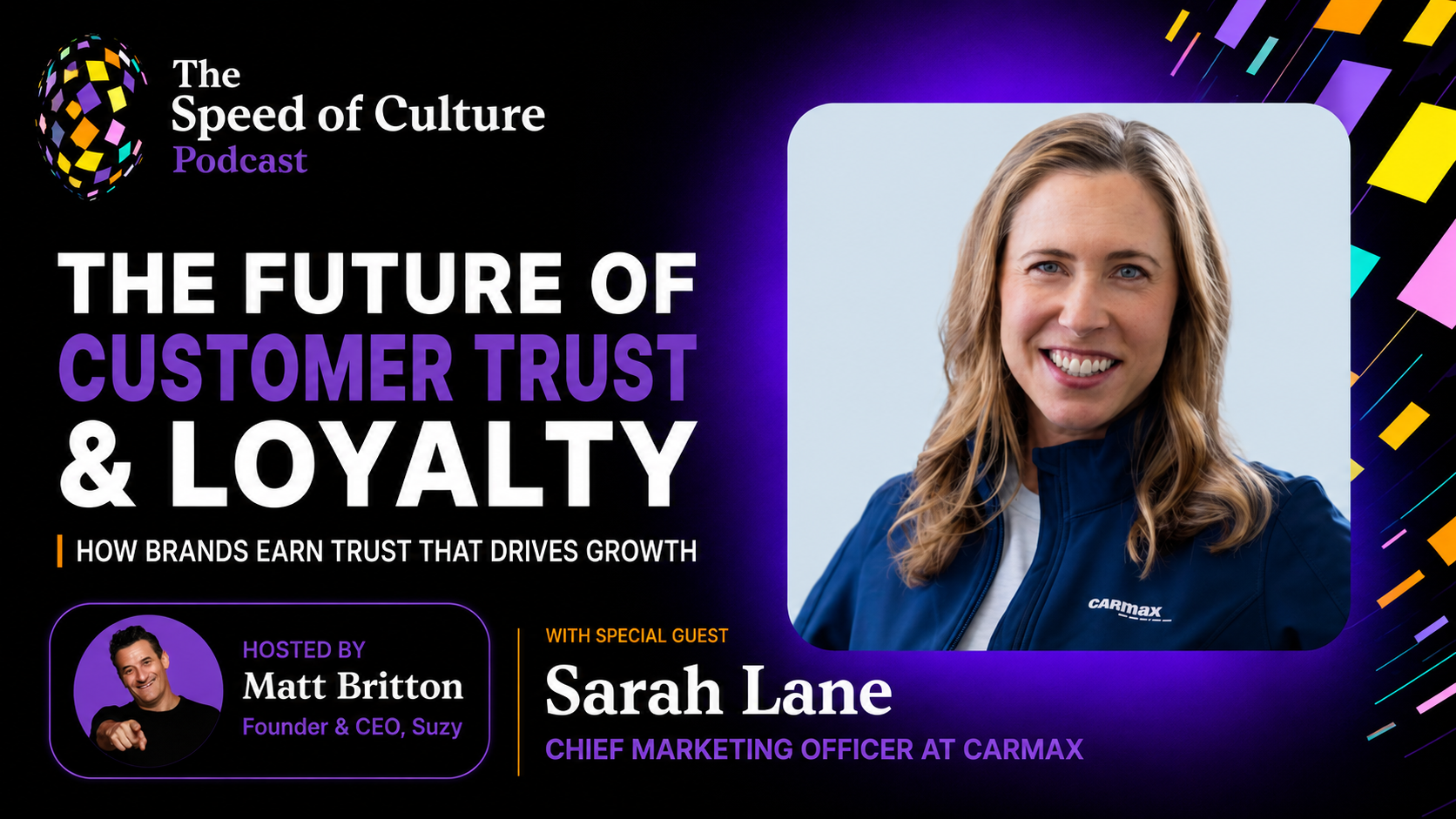
Forty-four percent of car shoppers now use AI search tools before they buy, and 97 percent of those who do say it will influence their purchase decision, according to a 2025 Cars.com survey. Inside CarMax, the number is similar: CMO Sarah Lane reports that roughly 40 percent of the company's customers are using ChatGPT and comparable tools while shopping. In one of the most historically distrusted categories in American retail, the consumer now walks in with a research assistant that never gets tired, never gets intimidated, and never forgets to ask about the financing terms.
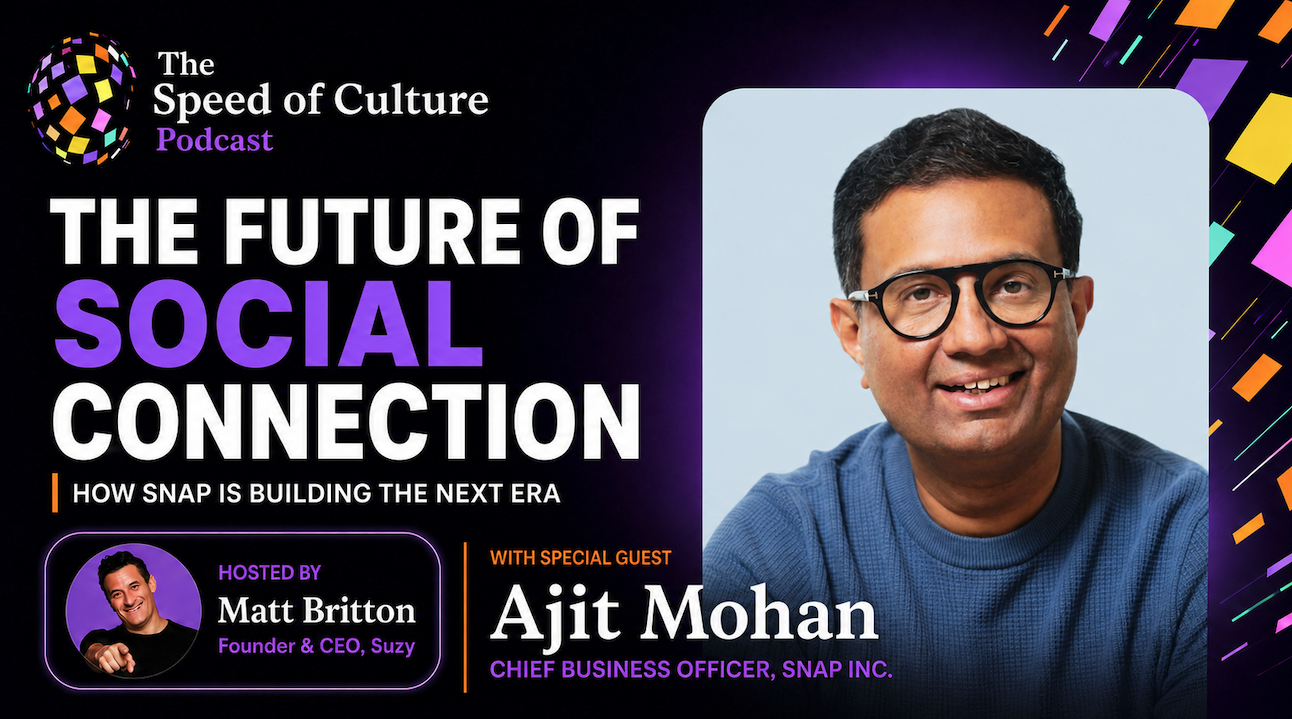
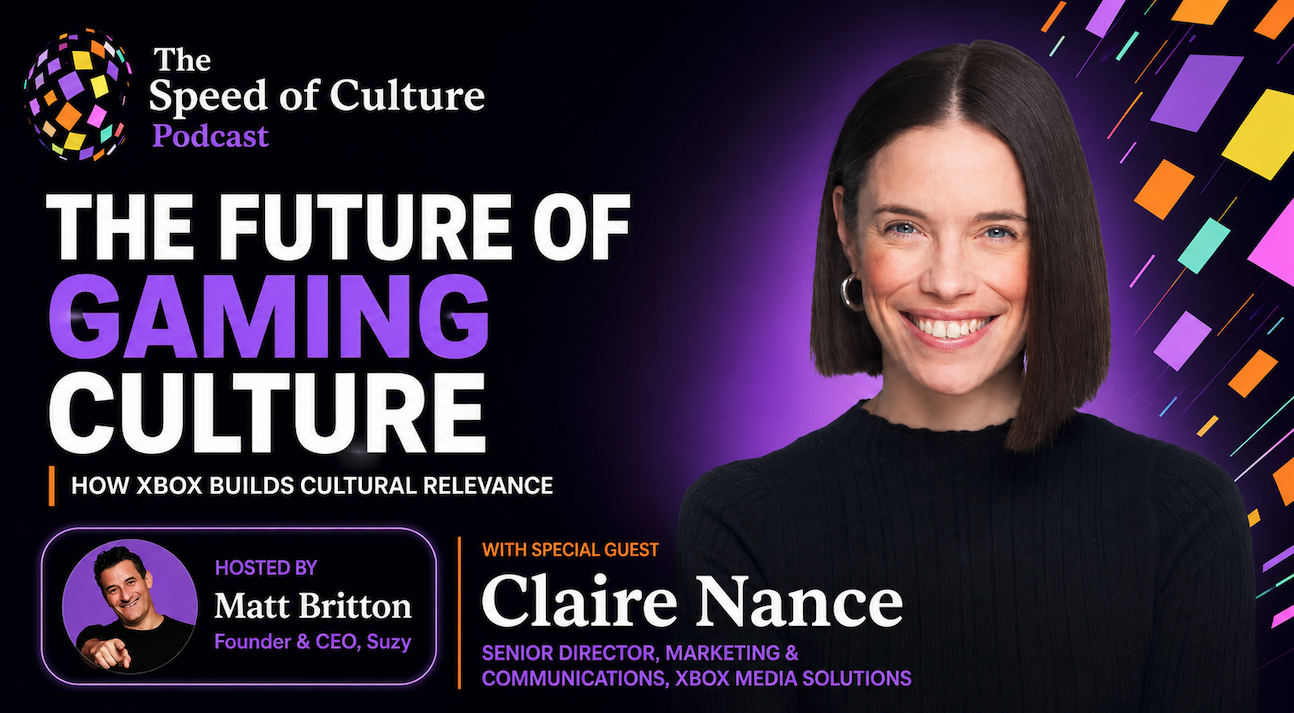
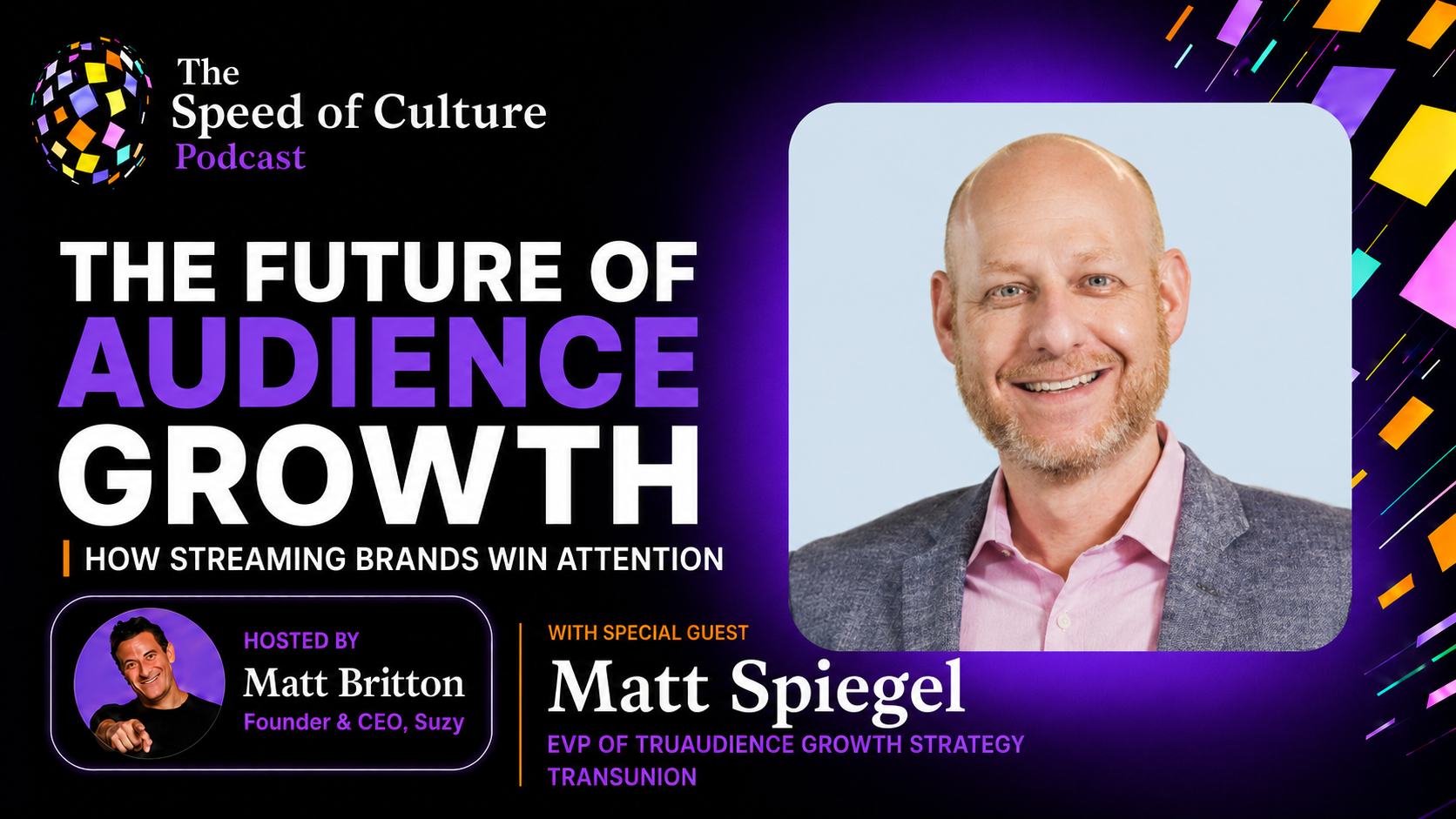
That shift is the subject of Matt Britton's recent conversation with Lane on The Speed of Culture podcast. Lane has spent 23 years at CarMax, moving from consumer insights and analytics to the CMO seat, and she has watched the brand's central promise (no-haggle pricing, transparent trade-in values, fairness as a business model) go from disruptive to table stakes to something far more valuable: a defensible position in a world where large language models compress the entire shopping journey into a single conversation.
For business leaders, the stakes are direct. Britton, who advises Fortune 500 companies on AI transformation and consumer behavior through his keynotes, calls this the end of information arbitrage. For decades, entire business models were built on the gap between what a company knew and what the customer could find out. That gap is closing faster than most executives expect, and the companies that profited from it are about to meet consumers who can price-check a transmission repair by ZIP code in under ten seconds.
What follows is how CarMax positioned itself for that reality, why its early bet on women's sports became one of the most effective trust-building programs in the category, and what Lane's career reveals about leadership as AI reshapes marketing. The full episode is on The Speed of Culture podcast.
The used-car business has carried what Lane calls "industry baggage" for generations. Consumers expect to be taken advantage of, and Lane is candid that the expectation is still largely justified. Traditional dealers make margin on complexity: financing structures buyers do not fully understand, trade-in valuations that are hard to benchmark, add-ons buried in the paperwork. The business model depends on the customer knowing less than the salesperson.
CarMax launched 30 years ago as the counter-position to that model. What Lane calls the brand's core identity, "the original disruptor bringing fairness to this industry," has anchored it through digital retail, programmatic media, and now generative AI. The brand did not need to reinvent its values to survive each transition. It needed to keep behaving consistently while everything around it moved.
That consistency is now paying an unexpected dividend. When a shopper asks an AI assistant to evaluate a deal, the model pulls pricing, financing terms, and trade-in value into a single comparison. "When you do all that math, a CarMax deal is gonna be the best one you can find," Lane told Britton. The AI tools are auditing the brand's position rather than threatening it, and the audit is coming back clean.
Britton frames this as a preview of what he calls the default economy, where AI agents increasingly make or narrow choices on the consumer's behalf. In that environment, the brands that get recommended are the ones whose claims survive machine-level scrutiny. A brand built on a marketing story will not hold up. A brand built on operational truth will. This is the practical meaning of AEO, or answer engine optimization: not gaming the models, but ensuring that the reality behind the brand is one the models can verify and cite.
There is a measurement consequence, and Lane does not gloss over it. As shoppers do more upper-funnel research inside ChatGPT or Gemini, early-journey site visits will decline and attribution models built for a search-and-click world will undercount the AI-assisted path. Marketers who wait for the dashboards to catch up will be reading a map of a country that no longer exists.
One of the more counterintuitive findings from Lane's two decades at CarMax is that full digital purchase capability did not eliminate the store. Customers can complete every step of a transaction online: financing, trade-in appraisal, delivery. Many still choose to visit. Digital merchandising can show the difference between vehicle A and vehicle B in high resolution, but Lane is clear that "nothing beats sitting in them, driving them, touching them."
The insight is not that physical retail wins. Consumers want the ease of digital and the confidence of physical, and they want to decide for themselves when each applies. CarMax's strategy is to remove the forced sequence entirely and let the customer set the order.
For leaders outside automotive, this reframes the omnichannel debate. The question is no longer which channel wins but whether the customer can move between channels without friction or penalty. Britton, whose company Suzy provides real-time consumer insights to Fortune 500 brands, has repeatedly observed that consumers do not think in channels. They think in tasks. The car remains a high-anxiety purchase; reducing that anxiety is the product, and the store is one of the tools.
The most instructive part of the conversation is CarMax's sports strategy, and specifically how a decision made around 2020 turned into a brand asset the company did not fully anticipate.
At the time, CarMax was mid-digital transformation and wanted to shed any perception of the brand as "that old place where you used to go." Basketball made sense, and the NBA carried youth and cultural relevance. But as the team engaged with the league, the WNBA emerged as a distinct opportunity: a growing league, passionate fans, and an audience that mapped closely to the customers CarMax served best, people who "sometimes feel more disenfranchised, whether that's women in car shopping, other minority groups that have been used to being taken advantage of." CarMax signed with both leagues, and in 2023 became a WNBA Changemaker, a tier that includes a formal obligation to help grow the league.
The inflection point came from a single spot. In a national campaign featuring Steph Curry and Sue Bird, a CarMax sales consultant marvels at selling a car to a multiple-time champion, gets the count wrong, and reveals that the champion in question is Bird. It was written as a light joke. It became earned media, social conversation, sports-talk coverage, and a signal about brand values that Lane says she had struggled to communicate through conventional advertising.
Her explanation deserves attention from every CMO. "When your brand is all about honesty and integrity and fairness, you can't make ads that say that. You just have to behave that way every day." Supporting women athletes before the market rewarded it told the story a tagline never could.
Britton has argued in his AI keynote presentations that as AI flattens the informational advantages brands once held, the remaining differentiators are behavioral. CarMax did not predict the Caitlin Clark effect or the league's explosive 2024 season. It made a values-consistent bet, measured it rigorously, and was positioned when the moment arrived.
Lane's team operates on a rule that sounds simple and is rarely followed: if you are in the space, you have to know the space. The players, the storylines, the culture. Fans of women's sports supported the league for years without much corporate attention. They know sponsorship money is necessary for growth, and they notice which brands show up as fans versus which show up as logos.
The Paige Bueckers activation illustrates the approach. Bueckers, the number one draft pick, went from Minnesota to Connecticut to Dallas, so CarMax's creative put her in a cowboy hat. Casual viewers missed it. The fandom understood immediately, and that recognition drove amplification the brand could not have purchased.
The A'ja Wilson example goes further. CarMax filmed spring content with Wilson referencing her two MVP awards and simultaneously filmed a three-MVP version, anticipating the award she was likely to win. When she did, the brand swapped the creative and earned coverage for a piece of foresight that told fans "we're here with you, we get it."
Then there are the StudBudz, Courtney Williams and Natisha Hiedeman, whose unbranded All-Star content went viral on TikTok. CarMax noticed because its team was watching as fans, and months later brought the duo to an NWSL event for crossover content. Knowing the culture well enough to act on it is the entire advantage.
This is where the creator economy and sports converge. Women athletes, Lane notes, "came up in a generation where they have to be influential." Without guaranteed contracts, they built personal brands out of necessity and arrive from the NIL era fluent in content. CarMax has shifted its Changemaker athlete programming from media training to influencer training accordingly.
For Britton, this maps to a demographic shift he cites often: for the first time, the average age of a first-time mother in the United States falls within Gen Z. She grew up with the iPhone and consumes media on a small screen, primarily from other people rather than institutions. The Gen Z consumer does not follow leagues. She follows people.
Lane raised a data point that should stop every automotive marketer mid-sentence: Gen Alpha is now getting driver's licenses. The cohort Britton profiles in his bestselling book Generation AI as the first generation raised with artificial intelligence as a constant companion is entering the car market as buyers, not passengers.
There is an irony Lane acknowledged with some humor. Seventeen years ago, pregnant with her son and working on a "store of the future" exercise, she predicted she would never teach him to drive because autonomous vehicles would make it unnecessary. He is now 16 with a license. Britton's response applies to every technology forecast: infrastructure, municipalities, and regulation move slower than the technology itself. The mixed environment of human and machine drivers will persist far longer than the predictions suggested.
The implication for marketers: Gen Alpha will shop for cars the way they do everything else, with an AI intermediary. The 40 percent AI-assisted figure at CarMax today will be closer to a baseline for this cohort, and every claim, price, and review will be processed by a model before it reaches the buyer. CarMax's fairness position, built for a pre-internet market in the 1990s, turns out to be the ideal foundation for an AI-native one. That is what happens when a brand chooses a value consumers will always want more of.
Lane began in consumer insights and analytics, and credits that start with two advantages: an instinct to stay close to the customer, and a working understanding of how the business makes money. Both matter more as AI-driven optimization crosses pricing, inventory, operations, and finance at once.
Her path to the executive level was a series of managers who pushed her into roles before she felt ready and supported her while she grew into them, rather than a single light-switch moment. Britton has heard this pattern from dozens of guests: no one is ready for the new thing, and betting on yourself is the only way through.
The through-line, in Lane's words, is curiosity. After 23 years, she is still asking how pricing, inventory, and operations interact, and she frames the current AI wave as the most interesting shift of her career, ahead of mobile and social. Britton pushed the point further: future-proofing a career means reprioritizing the skills AI does not replace, including critical thinking, creativity, and the judgment to know what question to ask, rather than simply learning AI tools. When everyone has knowledge, knowing things stops being a competitive advantage.
Lane's closing mantra ties it together: take the work seriously, but do not take yourself seriously. Rigor in execution, humility about what comes next, and enough lightness to stay open when the ground shifts.
The CarMax story offers a practical blueprint for brand trust in a market where consumers and their AI agents can verify every claim.
AI tools like ChatGPT and Gemini are compressing the car-shopping journey by aggregating pricing, financing terms, trade-in values, and reviews into a single conversation. Cars.com reports 44 percent of shoppers now use AI search tools, and CarMax sees roughly 40 percent of its customers using them. The result is faster decisions, less reliance on dealer-provided information, and a growing advantage for brands whose pricing survives independent verification.
CarMax began its WNBA partnership around 2020 alongside its NBA deal, drawn by a passionate fan base and an audience that closely resembled its core customers, including women and other groups historically underserved in car buying. The partnership demonstrated the brand's fairness values through action rather than advertising. CarMax became a WNBA Changemaker in 2023, committing to help grow the league beyond a standard sponsorship.
The biggest risk is exposure. Business models that profited from customers knowing less than the seller, whether in car financing, home repair, or insurance, are meeting consumers equipped with AI assistants that can benchmark any price by ZIP code in seconds. Matt Britton describes this as the end of information arbitrage. Brands with transparent pricing gain trust; brands with hidden margins lose it to the recommendation engine.
Generation Alpha, the first cohort raised with AI as a constant companion, is now reaching driving age and entering major purchase categories. Leaders should assume these consumers will route decisions through AI intermediaries by default, expect transparency as a baseline rather than a feature, and follow creators and athletes rather than institutions. Building an operational record that AI models can verify and cite is the foundation.
Sarah Lane's two decades at CarMax offer a rare longitudinal view of a single brand promise tested against every major shift in consumer behavior. Fairness survived the move to digital, the rise of programmatic media, and the arrival of generative AI, and it survived because it was never a campaign. It was how the company operated.
Matt Britton's work at the intersection of AI, consumer behavior, and business transformation points toward the same conclusion. Algorithmic gatekeeping is rising. Decision compression is accelerating. The consumer's AI agent will increasingly decide which brands make the shortlist, and it will make that decision on evidence, not assertion. Companies that spent years building trust are about to find that trust is the most machine-readable asset they own.
To bring these insights on AI, brand trust, and generational consumer behavior to your next leadership event, explore Matt Britton's keynote platform or connect with his team directly. The window for building a verifiable brand record is open now, and it will not stay open for long.