CPG Brands and Amazon: The New Survival Playbook
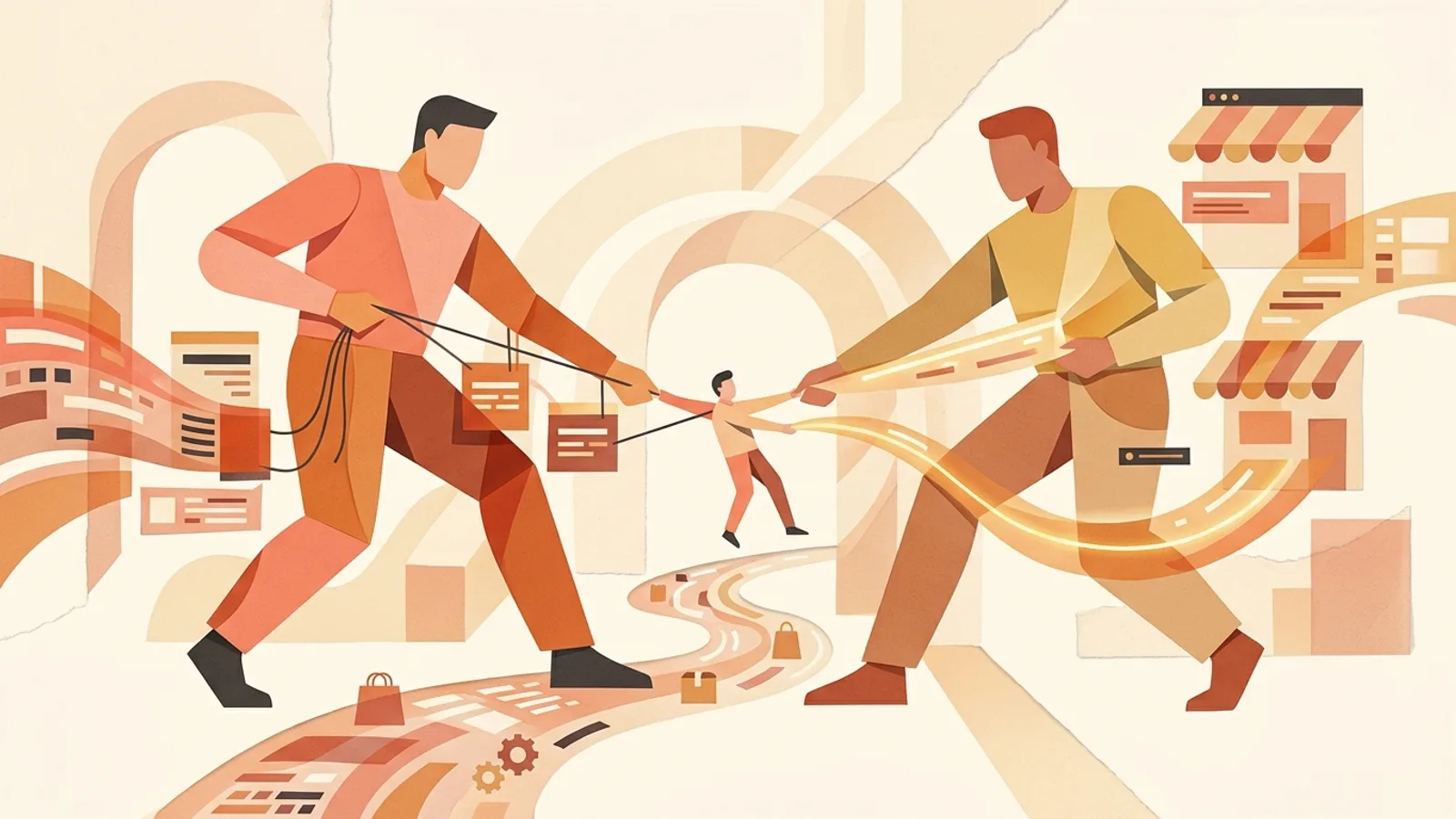
E-commerce now accounts for more than 20 percent of global retail sales, and Amazon captures nearly 40 percent of U.S. online spend. In categories like household essentials, that share climbs even higher. For CPG brands and Amazon, the power dynamic has fundamentally changed. The gatekeeper is no longer the big box retailer down the street. It is an algorithm.
For decades, large consumer packaged goods brands operated with a simple formula. Secure distribution at Walmart, Target, or Kroger. Invest heavily in mass media. Drive household penetration through scale. That model built empires in detergent, toothpaste, paper towels, and packaged foods. It rewarded brand awareness and shelf dominance.
Matt Britton, AI futurist and CEO of Suzy, argues that this model is now structurally fragile. As he often shares on The Speed of Culture podcast, platforms that control data, distribution, and discovery ultimately control margin.
Amazon’s expansion into groceries through Whole Foods, its aggressive push into private label, and its ownership of first-party consumer data signal a new era. In low-involvement categories where consumers do not obsess over brand preference, convenience and price often win. That equation favors the platform.
For legacy CPG leaders, the question is no longer whether Amazon will gain share. It is how to build relevance, data ownership, and differentiated value in a world where distribution alone offers no moat.
Consumers Will Continue to Shift CPG Purchases to Amazon
Amazon is becoming the default storefront for low-involvement CPG purchases. Over 70 percent of U.S. consumers start product searches on Amazon rather than Google. In categories such as cleaning supplies, paper goods, and pantry staples, Prime’s two-day shipping and subscription options reduce friction to near zero.
The behavioral shift is profound. Consumers once made weekly trips to a grocery or mass retailer, scanning shelves and responding to end-cap displays. Today, replenishment often happens through a saved cart or Subscribe and Save. The decision-making process is compressed into a few seconds on a mobile screen.
Amazon’s 200 million plus Prime members represent a locked-in ecosystem. Prime creates habitual purchasing patterns driven by speed and perceived value. Once a household sets up recurring delivery for detergent or diapers, inertia takes over. Switching becomes unlikely unless price or availability forces it.
Voice commerce further accelerates this shift. A simple command to Alexa can reorder household staples without visual comparison. That dynamic favors the most optimized listing, the lowest price, or Amazon’s own brand. It does not favor legacy brand equity built through decades of television advertising.
Matt Britton has noted in keynote speeches through Speaker HQ that platforms win by embedding themselves into daily behavior. Amazon has achieved precisely that in low-involvement categories. The path of least resistance now runs through its marketplace.
CPG executives must assume continued migration online. Internal forecasts that treat e-commerce as incremental risk underestimating the structural shift. The real threat lies in allowing Amazon to become both distributor and competitor.
Big Box Distribution No Longer Guarantees Volume
Once-powerful CPG brands can no longer rely on big box distribution to drive sustainable growth. Shelf space used to equal leverage. A dominant end-cap display could move millions of units in a single quarter. Today, physical shelf presence competes with digital search rankings and algorithmic recommendations.
Walmart remains the largest retailer in the United States, generating over $600 billion in annual revenue. Yet even Walmart is aggressively building its own private label portfolio. Great Value spans groceries, household goods, and personal care. Equate competes directly in health and wellness.
For a consumer choosing mustard, paper towels, or over-the-counter medication, the brand decision frequently hinges on price. In low-involvement categories, emotional attachment is thin. If the retailer can offer a cheaper alternative with acceptable quality, many shoppers will trade down.
The implications are severe. CPG brands once negotiated from a position of strength because they drove traffic. Now retailers leverage data to determine which SKUs deserve space. Underperforming products disappear quickly. Digital shelf analytics inform assortment decisions in real time.
Amazon amplifies this pressure. Through AmazonBasics and other private label initiatives, it identifies high-volume, low-differentiation categories and introduces competitively priced alternatives. The platform controls search placement, reviews, and fulfillment speed. It sees demand patterns before brands do.
Matt Britton often emphasizes in Generation AI that data asymmetry creates power asymmetry. Retailers and platforms now hold granular purchase data across millions of households. Brands operating primarily through wholesale channels lose visibility into who buys, how often, and why.
The result is margin compression and commoditization. Big box distribution still matters. It no longer guarantees insulation from disruption.
Private Label Pressure from Amazon and Walmart
Private label growth is reshaping competitive dynamics in CPG. In the United States, private label products account for roughly 20 percent of grocery sales. In Europe, that figure exceeds 30 percent in several markets. Economic uncertainty and inflation accelerate trial of lower-cost alternatives.
AmazonBasics extends beyond cables and electronics. It now includes batteries, paper products, office supplies, and select household essentials. The brand benefits from prime placement in search results and aggressive pricing. Customer reviews accumulate quickly due to platform visibility.
Walmart’s Great Value and Target’s Up and Up follow similar strategies. Retailers study sales velocity, identify categories with limited brand loyalty, and introduce store brands that mirror top-selling SKUs. Because they control shelf space and digital merchandising, they can prioritize their own offerings.
For legacy CPG brands, this creates a pincer effect. National brands face margin pressure from retailers demanding lower wholesale costs while simultaneously competing against those retailers’ private labels. Marketing budgets increase to maintain awareness, yet differentiation narrows.
Consumer perception evolves as well. Younger shoppers, particularly Gen Z, display less attachment to legacy household brands. According to multiple surveys, Gen Z consumers are more willing than previous generations to try private label if reviews and price align. Brand heritage alone carries limited weight.
Matt Britton’s work with emerging consumer segments through Suzy reveals a consistent insight: trust now derives from peer validation and platform reputation as much as from traditional brand advertising. In that context, private label backed by thousands of four-star reviews becomes a formidable competitor.
CPG leaders must treat private label not as a cyclical threat but as a structural shift. Competing solely on awareness and distribution cedes ground to platforms that own both.
Building Direct-to-Consumer and On-Demand Ecosystems
Owning first-party data and direct relationships is essential for CPG survival. Brands that rely entirely on intermediaries lose insight into customer behavior. Direct-to-consumer channels, subscriptions, and on-demand services offer a path to reclaim data and margin.
Some forward-thinking brands have experimented with acquiring or launching service-based businesses. Consider on-demand platforms like Wag, Glam Squad, or Handy. While not traditional CPG plays, they demonstrate how service layers create recurring engagement and rich data streams.
Imagine a cleaning products company acquiring a home services platform. Every booking becomes an opportunity to recommend proprietary supplies. Usage data informs product innovation. Loyalty builds through service reliability, not just packaging design.
Dollar Shave Club pioneered this approach in grooming. By combining subscription convenience with direct storytelling, it disrupted established razor brands. The model delivered predictable recurring revenue and granular consumer data. Unilever’s acquisition underscored the strategic value of direct relationships.
Matt Britton frequently advises brands to think beyond SKU expansion. In his keynotes and through Speaker HQ, he challenges executives to envision ecosystems. A detergent brand could create a laundry subscription bundled with stain removal content and smart reminders. A pet food company could integrate tele-vet consultations.
The objective is control. Control over data. Control over messaging. Control over margin. Direct channels do not replace retail overnight, but they diversify revenue and reduce platform dependency.
AI amplifies the opportunity. With tools that analyze purchase patterns and personalize offers, brands can deliver targeted experiences at scale. Suzy enables companies to test concepts with consumers in real time, reducing risk before major investment. Data-driven iteration becomes the norm rather than annual planning cycles.
Owning the customer relationship transforms CPG from a transactional business into a continuous one.
Multi-Category Subscriptions and Smart Home Hardware
Bundled subscriptions and connected hardware can create defensible ecosystems. Subscription commerce continues to grow, with millions of U.S. households enrolled in recurring delivery programs. Yet single-product subscriptions face churn. Bundled value increases stickiness.
A multi-category household subscription might include cleaning supplies, paper goods, and personal care essentials under one membership. Layer in exclusive content such as home care tips, sustainability guidance, or family wellness programming. The brand evolves into a utility rather than a product.
Hardware deepens the moat. Consider in-home devices such as washing machines, vacuum cleaners, or dishwashers integrated with proprietary consumables. A smart washing machine that automatically reorders detergent when supplies run low locks in recurring revenue. Printer companies mastered this model with ink subscriptions. CPG can apply similar logic to household essentials.
Loss leader hardware strategies are well established in other industries. Gaming consoles sell at slim margins to drive software sales. Smart speakers expanded rapidly to anchor voice ecosystems. For CPG brands, embedding into the home creates continuous touchpoints and data flow.
Amazon has already demonstrated this approach through Alexa-enabled devices and Dash buttons. It experiments rapidly, gathering insights across millions of households. Traditional CPG companies must decide whether to partner, compete, or innovate independently.
Matt Britton’s thesis in Generation AI centers on the convergence of physical and digital experiences. Smart home integrations represent that convergence for CPG. Sensors, predictive analytics, and automated replenishment shift brands from reactive sellers to proactive service providers.
Innovation of this scale requires new capabilities. Hardware development, software integration, and AI-driven analytics stretch beyond legacy CPG skill sets. Strategic acquisitions or partnerships may accelerate progress. Standing still invites commoditization.
The brands that thrive will view the home as a platform, not just a consumption site.
Key Takeaways for Business Leaders
- Prioritize first-party data ownership. Build or acquire direct-to-consumer channels that capture behavioral insights. Use platforms like Suzy to validate product-market fit and refine messaging before scaling.
- Diversify beyond traditional retail distribution. Maintain strong retail partnerships while investing in subscriptions, services, and digital ecosystems. Reduce overreliance on any single intermediary.
- Compete with private label through differentiation and ecosystem value. Develop bundled offerings, content, and community that extend beyond price comparison. Create reasons to stay beyond cost.
- Leverage AI and smart technology integration. Explore connected hardware and predictive replenishment models. Use AI to personalize experiences and increase lifetime value.
- Reimagine the organization for speed and experimentation. Shorten innovation cycles. Empower cross-functional teams to test, learn, and iterate in real time.
Frequently Asked Questions
How is Amazon affecting CPG brands?
Amazon affects CPG brands by controlling digital discovery, pricing transparency, and customer data. With over 200 million Prime members and a dominant share of online product searches, Amazon shapes purchasing behavior in low-involvement categories and introduces competing private label products.
Why are private label brands gaining market share?
Private label brands gain share due to competitive pricing, improved quality, and prominent placement both in-store and online. Retailers use sales data to identify high-volume categories with low brand loyalty, then launch store brands that offer similar performance at lower cost.
What can CPG companies do to compete with Amazon?
CPG companies can compete by building direct-to-consumer channels, launching subscription models, investing in smart home integrations, and leveraging AI-driven personalization. Owning first-party data and creating ecosystem value reduces dependency on third-party platforms.
Are traditional retail partnerships still important for CPG?
Traditional retail partnerships remain important for scale and visibility. However, they no longer provide guaranteed growth or margin protection. Brands must balance retail distribution with direct engagement strategies to maintain leverage and insight.
The Future of CPG Brands and Amazon
The rise of Amazon in low-involvement categories signals a permanent restructuring of CPG economics. Distribution no longer guarantees dominance. Data does. Ecosystems do. Direct relationships do.
Matt Britton has spent his career analyzing how technology reshapes consumer behavior. Through The Speed of Culture podcast, his book Generation AI, and his work with leading brands at Suzy, he consistently underscores one principle: adapt at the pace of the consumer or risk irrelevance.
CPG leaders face a pivotal choice. Defend legacy models and accept margin erosion. Or invest boldly in data ownership, subscriptions, smart integrations, and service ecosystems that redefine value.
Executives seeking to future-proof their organizations can explore insights through Speaker HQ, tune into The Speed of Culture podcast, read Generation AI, or contact his team directly. The brands that act decisively now will shape the next era of consumer goods rather than reacting to it.
Related Posts
AI Shopping Agents Trust: Why Banks Just Sounded the Alarm

Agentic Commerce Wars: What Amazon vs. Meta Muse Means for Brands

Financial Nihilism Goes Mainstream: Why Gen Z Is All-In on Prediction Markets