In an era where traditional music revenue streams continue to evolve, the industry faces a critical question: How can artists, labels, and brands create authentic connections that transcend the traditional streaming model? This question sits at the heart of Warner Music Experience (WMX), a next-generation venture reshaping how music, culture, and commerce intersect.
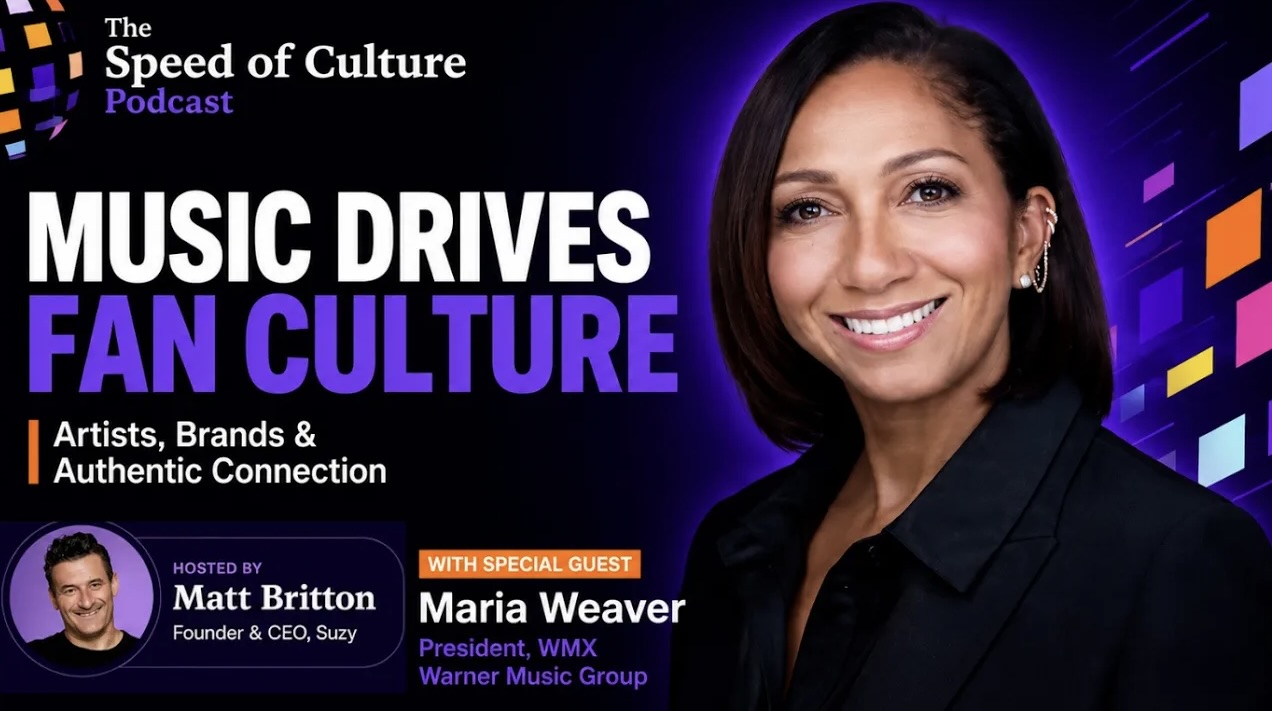
In a recent episode of the Speed of Culture Podcast, Matt Britton, founder and CEO of Suzy, the AI-powered consumer intelligence platform, sat down with Maria Weaver, President of Warner Music Experience at Warner Music Group, to explore the transformative strategies defining music's future. With over 30 years of marketing and media leadership experience, including her tenure as Senior Vice President and Chief Marketing Officer at Comcast Advertising. Weaver brings a data-driven, consumer-first philosophy to one of music's most ambitious ventures.
The conversation revealed how WMX is fundamentally reimagining artist monetization, brand collaboration, and fan engagement. Through strategic brand partnerships, experiential marketing initiatives, and sophisticated first-party data infrastructure, WMX demonstrates that the future of music is about creating meaningful experiences that drive lasting value for artists, brands, and fans alike, well beyond streaming numbers.
This exploration of the episode highlights the critical insights discussed, the broader implications for the music industry, and the strategic framework that brands and executives should understand as they navigate this cultural transformation.
The Evolution of Artist Monetization: Beyond Streaming Revenue
For decades, the music industry operated within a relatively simple economic model: artists created music, labels distributed it, and revenue came from sales, radio play, and eventually, streaming royalties. Yet this traditional framework increasingly leaves artists vulnerable to market fluctuations and severely limits their earning potential.
Maria Weaver articulated this challenge with stark clarity: most artists seek to do far more than attach their names to existing brands. The most successful artists (think Jay-Z, Diddy, and 50 Cent) recognized early that lasting wealth extends far beyond musical talent. These visionary entrepreneurs built comprehensive brands that leverage their cultural influence across multiple revenue verticals: equity stakes in companies, merchandise ecosystems, entertainment ventures, and premium experiences.
"What we're seeing is a fundamental shift in how artists think about their careers."
The artist of today is a creator, an entrepreneur, a brand steward, and a cultural influencer. This evolution demands new infrastructure, new expertise, and new partnerships to unlock value that traditionally remained dormant.
This is where WMX enters the equation. Rather than waiting for artists to independently navigate brand partnerships and monetization complexities, WMX proactively integrates artist talent with strategic commercial opportunities. The division oversees more than 200 artist websites and e-commerce platforms, granting direct access to invaluable first-party consumer data.
This data infrastructure becomes the foundation for everything else: better fan targeting, personalized experiences, and optimized revenue streams.
The numbers tell a compelling story. Under WMX's management, the company oversees 320 worldwide tours with leading artists, sold nearly three million pieces of merchandise, and established three music-related FAST (Free Ad-Supported Television) channels on The Roku Channel. These metrics represent real revenue generation for artists while simultaneously creating touchpoints for brand partnerships.
The Power of Authentic Brand-Artist Collaborations in Modern Marketing
If there's one truth in modern marketing, it's that authenticity matters more than ever. Consumers, particularly younger demographics, possess a finely-tuned radar for disingenuous partnerships. They recognize when a collaboration is forced, when values misalign, or when a brand is simply seeking to capitalize on cultural moment.
This is precisely why WMX's approach to brand partnerships differs fundamentally from transactional sponsorship models. Rather than viewing artists as billboards for brand logos, WMX architects partnerships where both artists and brands co-create value. One exemplary case emerged from WMX's collaboration with global condiment giant Kraft Heinz to develop Ed Sheeran's "Tingly Ted's" hot sauce brand, a venture that transformed celebrity into entrepreneurship.
The "Tingly Ted's" case study demonstrates several critical principles driving modern music-brand collaborations:
- Authentic Alignment: Sheeran's brand identity and consumer base aligned naturally with a food venture. His personality, humor, and cultural relevance made the partnership feel genuine rather than opportunistic.
- Co-Creation: Rather than a simple endorsement deal, Kraft Heinz brought manufacturing expertise, distribution networks, and market knowledge. Meanwhile, Sheeran provided cultural credibility, fan access, and creative direction. The result benefited both parties exponentially.
- Multi-Channel Monetization: The hot sauce brand extended beyond the product itself. It created merchandise opportunities, experiential marketing moments, social media content, and fan engagement touchpoints that amplified the artist's overall brand ecosystem.
WMX has applied similar strategies across diverse partnerships: Dua Lipa with TikTok, Liam Gallagher with Clarks Originals, and emerging artists with lifestyle and technology brands. These are strategic business ventures that create sustained revenue and cultural relevance rather than one-off sponsorships.
From a consumer perspective, these collaborations succeed because they offer genuine value. Fans don't simply consume a product; they invest in their favorite artist's entrepreneurial success. This psychological connection, where purchasing becomes participation in an artist's broader vision, fundamentally alters consumer behavior and brand loyalty metrics.
For marketing executives, the lesson is clear: the most successful brand-artist partnerships transcend traditional sponsorship frameworks. They require genuine alignment, creative co-ownership, and authentic value creation that serves artists, brands, and fans simultaneously.
First-Party Data: The Hidden Advantage in Creator Economics
In an era where third-party cookies face extinction and privacy regulations tighten globally, first-party data has become the most valuable asset in digital marketing. Yet this reality remains underappreciated in the music industry, where data infrastructure historically lagged behind technology and retail sectors.
WMX recognized this opportunity early. By managing 200+ artist websites and e-commerce platforms, the division captures direct consumer interactions across purchase history, browsing behavior, engagement patterns, and demographic insights. This first-party data becomes infinitely more valuable than third-party audience assumptions because it's directly sourced from fans actively engaging with the artist's ecosystem.
"What we're building is a comprehensive fan intelligence system. We understand not just who's listening, but who's buying, what they're buying, when they're most engaged, and what experiences resonate most powerfully."
This intelligence advantage serves multiple constituencies:
- For Artists: First-party data enables hyper-personalized fan experiences. Artists understand which markets demonstrate strongest demand, which fan segments show highest lifetime value, and which merchandise categories perform optimally in specific geographies. Armed with this intelligence, artists make smarter decisions about tour routing, product development, and strategic partnerships.
- For Brands: Accessing this first-party data gives brands unprecedented precision in reaching authentic music fans. Rather than buying expensive media placements hoping to reach music enthusiasts, brands partner directly with artists, gaining access to verified fans with demonstrated engagement.
- For Fans: When executed ethically, first-party data collection enhances rather than diminishes fan experience. Personalized merchandise recommendations, exclusive content access, and timely communication about tours and new releases all improve fan satisfaction while reducing marketing friction.
The infrastructure implications are substantial. Integrating data across 200+ artist platforms, normalizing disparate data schemas, ensuring compliance across global regulations, and extracting actionable insights requires sophisticated technical infrastructure.
However, the opportunity extends beyond WMX's current scope. Emerging platforms leveraging AI-powered consumer intelligence, similar to Suzy's approach, are democratizing advanced analytics. Independent artists increasingly access data tools that previously required enterprise-scale resources, enabling them to compete more effectively in the creator economy.
Experiential Marketing: Creating Unforgettable Fan Moments Beyond the Stream
Streaming dominance fundamentally altered how audiences consume music, convenience increased, accessibility expanded globally, but the experience became increasingly passive. A listener could enjoy an artist's complete discography while commuting without ever feeling a genuine connection to the artist or their broader ecosystem.
Experiential marketing represents the antidote. By creating memorable, immersive moments where fans interact directly with artists and brands, WMX generates engagement that streaming metrics alone cannot capture. These experiences serve multiple strategic purposes: they deepen emotional connections, create shareable moments that amplify social reach, provide premium pricing opportunities, and generate rich data about fan preferences and behaviors.
WMX's approach to experiential marketing reflects this multifaceted value creation:
- Superfan Monetization Programs: Beyond standard merchandise and concert attendance, WMX creates tiered superfan experiences including exclusive memberships, limited-edition drops with artificial scarcity, ticket-plus-merchandise bundles, and premium experiential packages.
- Pop-Up and Physical Activations: Limited-time pop-up shops, exclusive listening parties, behind-the-scenes access, and co-branded events create FOMO (fear of missing out) that drives online conversation and amplifies reach far beyond physical attendees.
- FAST Channel Integration: WMX's music-related channels on The Roku Channel deliver music content, artist documentaries, live performances, and branded content to connected TV audiences, generating advertising revenue while maintaining fan accessibility.
- Festival and Tour Integration: Managing 320 worldwide tours provides unparalleled opportunities to integrate brand partnerships into live experiences through branded merchandise, co-sponsored festival stages, and exclusive artist-fan moments.
The data generated from these experiential moments proves particularly valuable. When a fan attends an exclusive listening party, purchases limited-edition merchandise, or engages with a branded activation, they're providing rich behavioral signals about preferences, price sensitivity, and brand affinity.
For marketing executives, the experiential marketing lesson is profound: in a saturated, attention-constrained digital environment, memorable experiences become currency. The brands and artists investing in creating genuine, Instagram-worthy moments are building emotional anchors that convert casual consumers into committed advocates, well beyond chasing virality.
The Future of Music Industry Innovation: Culture, Commerce, and Consumer Intelligence
As the conversation between Matt Britton and Maria Weaver demonstrated on the Speed of Culture Podcast, the future of the music industry depends on sophisticated integration of three traditionally separate domains: creative culture, commercial strategy, and consumer intelligence.
For too long, these operated in silos. Creatives viewed commerce with suspicion, brands approached music as a marketing channel rather than artistic partnership, and consumer data remained fragmented across incompatible systems. WMX's emergence represents an industry-wide recognition that this siloed approach leaves value on the table for everyone involved.
The strategic framework driving WMX's success can be extrapolated across the broader entertainment and creator economy landscape:
- Recognize that modern artists are entrepreneurs requiring comprehensive business infrastructure, not simply talent requiring management of a single revenue stream.
- Understand that authentic brand partnerships require genuine alignment and co-creation, not transactional sponsorship arrangements.
- Invest in first-party data infrastructure as core strategic advantage, recognizing that direct consumer insights enable better decision-making at every level.
- Prioritize experiential moments that create emotional resonance and social amplification in digital-saturated environments.
- Leverage AI-powered consumer intelligence platforms to synthesize insights from disparate data sources, enabling faster strategic pivots and more accurate market predictions.
These principles extend far beyond music. Fashion, sports, gaming, food and beverage, and technology all operate at the intersection of culture, consumer loyalty, and commercial opportunity. The companies and leaders who systematically integrate these elements will define the next era of business success.
For deeper insight into how AI is reshaping consumer behavior and culture, explore Generation AI by Matt Britton. Organizations seeking forward-looking perspectives on these shifts can also learn more about AI keynote topics or explore additional insights at Speaker HQ.
Key Takeaways
- Artist Monetization Evolution: Modern artists leverage multiple revenue streams (touring, merchandise, experiential packages, and strategic brand partnerships) extending far beyond streaming royalties.
- Authentic Brand Partnerships Drive Results: The most successful collaborations feature genuine alignment, co-creation, and mutual value, as demonstrated by ventures like Ed Sheeran's "Tingly Ted's."
- First-Party Data as Competitive Advantage: Direct access to fan data across 200+ artist websites and e-commerce platforms enables precision targeting and smarter strategic decisions.
- Experiential Marketing Creates Emotional Anchors: Superfan tiers, pop-up activations, and exclusive events drive engagement, create shareable moments, and generate premium revenue.
- Consumer Intelligence Enables Strategic Integration: AI-powered platforms like Suzy allow creators and brands to synthesize insights, predict trends, and identify partnership opportunities with unprecedented accuracy.
Frequently Asked Questions
How does Warner Music Experience generate revenue from brand partnerships?
WMX creates multi-faceted revenue streams from brand collaborations. The primary model involves co-creating branded products or experiences, like the Ed Sheeran hot sauce venture, where WMX takes a share of revenue alongside the artist. Additionally, WMX integrates brands into fan experiences, merchandise offerings, and premium experiential packages, creating incremental revenue while providing brands access to verified, engaged audiences.
Why is first-party data crucial for the music industry?
First-party data, information collected directly from fans across artist websites, e-commerce platforms, and experiences, provides unmatched accuracy and compliance advantages compared to third-party data. Managing 200+ artist platforms provides comprehensive insights into fan preferences, purchase behavior, engagement patterns, and demographic composition, enabling personalized experiences and smarter business decisions.
How can independent artists compete with major label initiatives like WMX?
While independent artists lack WMX's scale advantages, emerging AI-powered consumer intelligence platforms like Suzy democratize advanced analytics previously available only to enterprises. Independent artists can collect and analyze first-party data, develop authentic brand partnerships aligned with their values, and create experiential moments that generate social amplification.
Looking Ahead: The Future of Music, Culture, and Commerce
The conversation between Matt Britton and Maria Weaver on the Speed of Culture Podcast arrives at a pivotal moment in music industry evolution. As streaming consolidation continues and competition intensifies, the winners will be those who master the integration of creative culture, commercial strategy, and consumer intelligence.
For executives, marketers, and cultural leaders seeking to understand these transformations, additional insights can be found through Generation AI, by exploring Speaker HQ, or by inquiring about tailored engagements via the contact page.
The era of siloed creative, commercial, and analytical functions is ending. The era of integrated, intelligence-driven culture and commerce is beginning. Organizations that recognize and act on this shift will define the next decade of business success.

%20(400%20x%20100%20px)%20(300%20x%2050%20px)%20(150%20x%2050%20px).avif)