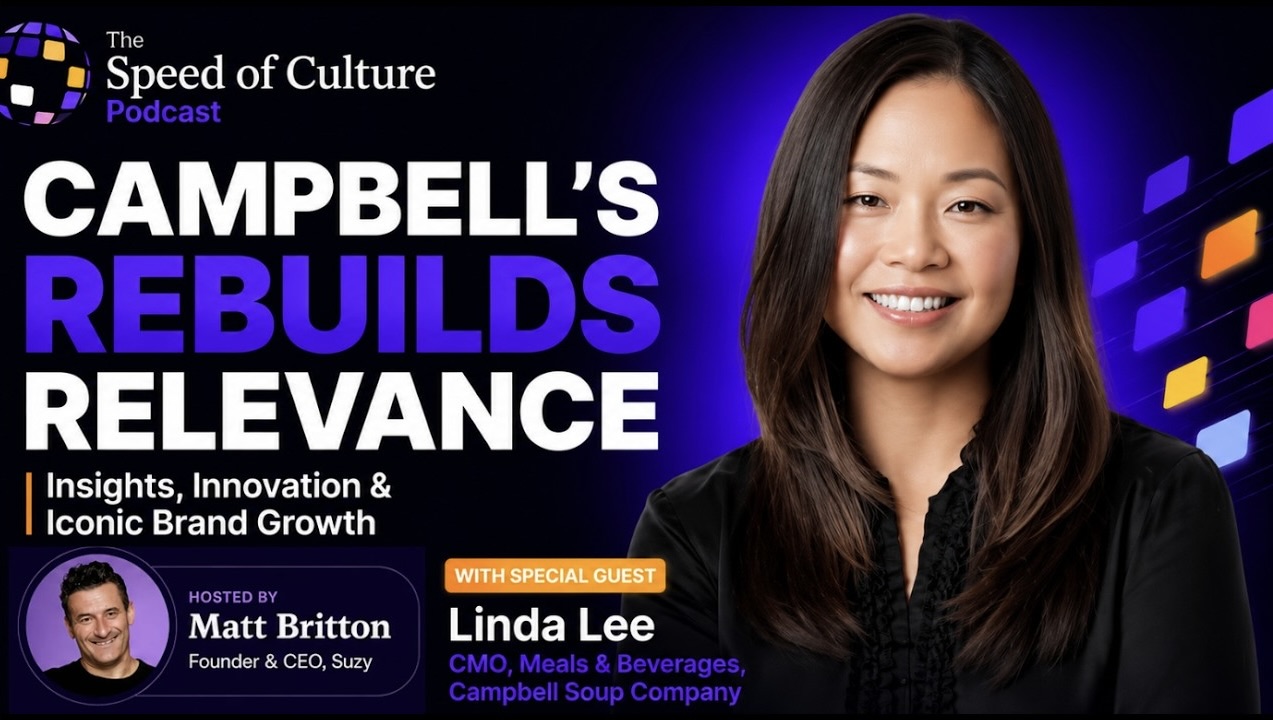
Modernizing an Iconic Brand: Campbell Soup's Strategic Transformation with CMO Linda Lee
Campbell Soup Company stands as one of America's most iconic consumer packaged goods (CPG) brands, commanding instant recognition through its distinctive red-and-white can design and the legendary "Mmm Mmm Good" slogan that has resonated across generations. Yet in a rapidly evolving consumer landscape, one shaped by shifting demographics, digital transformation, and AI-driven marketing capabilities, legacy brands face a critical challenge: staying relevant without sacrificing authenticity.
Enter Linda Lee, Chief Marketing Officer of Meals & Beverages at Campbell Soup Company, who has emerged as a driving force behind the company's strategic modernization. With over two decades of experience in senior marketing roles across Fortune 500 companies including General Mills and Mondelēz International, Lee brings a distinctive blend of chemical engineering discipline and marketing innovation to one of the nation's most recognizable brands.
In a recent episode of The Speed of Culture Podcast, hosted by Matt Britton, founder and CEO of Suzy, the AI-powered consumer intelligence platform, Linda Lee shared her unconventional path from engineering to marketing, her insights on modernizing legacy brands, and how Campbell Soup is leveraging AI, retail media networks, and generational consumer research to capture younger demographics, particularly millennials and Gen Z consumers who represent the future growth engine for CPG brands.
The conversation reflects a broader industry shift: CPG companies can no longer rely on brand heritage alone. They must understand real-time consumer sentiment, test messaging with AI-powered platforms, and deploy sophisticated retail media strategies to compete in the age of programmatic advertising and personalized marketing.
This episode provides invaluable lessons for brand leaders navigating the intersection of nostalgia and innovation. Lee's perspective illuminates why Campbell Soup invested in new product innovation, including AI-developed flavors like the Chunky Ghost Pepper Chicken Noodle soup, embraced direct-to-consumer channels, and leveraged consumer intelligence platforms like Suzy to understand what younger consumers actually want from a brand they remember from childhood.
For marketing executives, brand strategists, and CPG leaders seeking to understand how to modernize legacy brands in the AI era, this conversation offers a masterclass in balancing brand equity with category innovation.
From Engineering to Executive: Linda Lee's Unconventional Path to CMO
One of the most compelling aspects of Linda Lee's career trajectory is how her technical background has shaped her approach to marketing in an increasingly data-driven industry. Beginning her career as a chemical engineer, Lee brought analytical rigor and problem-solving methodologies that distinguish her leadership from traditional marketing executives.
This engineering foundation proved invaluable across her roles at blue-chip CPG organizations, where she learned to combine technical precision with consumer psychology. Lee's experience at General Mills and Mondelēz International, companies that themselves operate at the intersection of product innovation and consumer marketing, prepared her for the complexity of Campbell Soup's portfolio, which extends far beyond soup to include iconic brands like Prego pasta sauce, V8 beverages, and Pacific Foods.
What Lee emphasizes in her career narrative is the importance of recruiting and retaining talent with intentional cultural fit. Blue-chip companies, she notes, distinguish themselves not simply by hiring high-performing individuals but by identifying candidates aligned with organizational values and long-term vision. This talent-first philosophy reflects a deeper truth about modernization: companies don't transform through strategy alone; they transform through people.
Lee's unconventional path, from engineer to marketer, also underscores a critical insight for legacy brands: modernization requires leaders who can translate between technical teams and consumer-facing strategy. As Campbell Soup has increasingly adopted AI-powered research tools and retail media automation, having marketing leaders with technical credibility becomes essential.
The Pandemic Pivot: How COVID-19 Accelerated Campbell's Modernization
The COVID-19 pandemic fundamentally disrupted consumer packaged goods categories, and Campbell Soup found itself at a fascinating intersection of crisis and opportunity. As lockdowns drove consumers to in-home dining, soup consumption surged, but not equally across all demographics.
What surprised Campbell's leadership was the composition of new customers: nearly 13 million new households purchased Campbell soup products during and after the pandemic peak. Remarkably, approximately one-third of these new customers were millennials, a generation historically more likely to view canned soup as unsophisticated or outdated. This demographic shift represented a watershed moment for the brand.
Rather than simply exploit this surge in demand, Lee's team recognized a more profound opportunity: to understand why younger consumers were returning to soup, what messaging resonated with them, and how to convert pandemic-driven purchases into long-term brand loyalty.
The company's response reflected the modern marketing imperative: agile, content-driven strategy. Campbell Soup accelerated its engagement with consumers through digital channels, developed content that acknowledged contemporary consumer interests (including health consciousness, convenience, and cultural authenticity) and positioned soup not as a relic of past generations but as relevant to current lifestyle needs.
The pandemic also forced Campbell to reconsider its go-to-market strategy. Traditional retail relationships remained important, but direct-to-consumer channels, e-commerce optimization, and digital marketing became essential. Lee's leadership during this period involved coordinating across product development, marketing communications, retail partnerships, and digital operations, demonstrating the integrated approach necessary for brand modernization.
AI and Consumer Intelligence: Redefining Marketing in the CPG Sector
Perhaps no aspect of Linda Lee's modernization strategy better exemplifies the shift in CPG marketing than the adoption of AI-powered consumer research platforms. During the Speed of Culture conversation, Lee and Matt Britton explored how artificial intelligence is fundamentally changing how brands understand and reach consumers.
Suzy, the AI-powered consumer intelligence platform that Matt Britton founded, represents exactly the type of innovation reshaping CPG marketing. Rather than relying solely on quarterly market research reports or annual brand tracking studies, brands like Campbell Soup can now access real-time consumer sentiment, test messaging with diverse audiences in days rather than months, and identify emerging trends before they become mainstream.
Campbell Soup has leveraged this approach across multiple initiatives:
- Product Innovation and Testing: The development of new soup varieties, including the Ghost Pepper Chicken Noodle and other flavor innovations, increasingly involves AI-assisted consumer research. Rather than relying on internal product development assumptions, Campbell can validate concepts with actual millennial and Gen Z consumers, understanding not just whether they'll purchase but why they'll purchase.
- Messaging and Creative Optimization: AI tools enable Campbell to test different brand narratives with younger consumers. Should Campbell emphasize nostalgia and heritage? The convenience factor? Health and nutrition attributes? AI-powered testing reveals which messaging resonates most strongly with specific demographic segments.
- Retail Media and Programmatic Advertising: The CPG landscape increasingly shifts toward retail media networks (RMNs), advertising platforms operated by major retailers like Walmart, Target, and Kroger. These networks enable brands to reach consumers at moments of highest purchase intent: while shopping online or in-store. AI and machine learning automate the complexity of managing campaigns across multiple retailers, optimizing bids, creative, and audience targeting in real-time.
The shift toward AI-powered marketing isn't simply a technological upgrade; it represents a fundamental change in how brands think about consumer relationships. Lee noted that generative AI and advanced analytics enable faster iteration, better measurement, and the ability to close the loop between brand awareness activities and actual purchase behavior, a capability that previously required enormous effort to achieve.
Modernizing Through Authenticity: The Nostalgia Paradox
One of the most sophisticated insights from Linda Lee's approach to brand modernization is how she navigates the inherent tension between heritage and innovation. Campbell Soup's challenge is essentially a modernization paradox: the brand's value proposition is rooted in 150+ years of history, yet its target growth demographic (millennials and Gen Z) largely value brands perceived as contemporary, authentic, and aligned with current values.
Lee's solution reflects nuanced brand strategy: lean into nostalgia as a legitimate emotional connection, but express it through contemporary channels and product experiences.
Consider Campbell's approach to product innovation: rather than abandoning traditional soup offerings, Campbell has expanded the portfolio with adventurous flavors, from Ghost Pepper to other bold tastes, that appeal to younger consumers seeking excitement and cultural exploration. These products maintain the core identity of Campbell Soup (familiar, comforting, convenient) while signaling innovation.
Similarly, Campbell's packaging innovations, including collaborative limited editions, QR codes linking to digital content, and modern design elements, modernize the visual brand presentation without eliminating the iconic red-and-white aesthetic that represents brand heritage.
The data supports this approach: Campbell's market position in soup has strengthened significantly among younger consumers. The company now captures approximately 22 million millennial household soup occasions weekly, representing significant penetration in a demographic previously seen as outside the brand's core market.
This success underscores a critical lesson for brand leaders: modernization doesn't require abandoning brand heritage. Rather, it requires translating heritage into contemporary expressions that younger consumers can recognize and engage with authentically.
Retail Media, E-Commerce, and the Future of CPG Distribution
The CPG distribution landscape has undergone seismic shifts over the past five years, and Linda Lee's strategy for Campbell Soup reflects these industry-wide transformations. Where Campbell Soup once distributed primarily through traditional retail partnerships with grocery chains, the contemporary strategy encompasses direct-to-consumer, retail media networks, and sophisticated e-commerce channels.
Retail media networks represent one of the most significant opportunities in modern CPG marketing. Research indicates that approximately 74% of advertisers using retail media networks are in the CPG sector, and for good reason. These networks enable brands to reach consumers at critical moments: while browsing shelves online, while shopping in stores, and through targeted email campaigns managed directly by retailers.
Campbell Soup's participation in retail media networks operated by Walmart, Target, Kroger, and other major retailers represents a strategic necessity. These channels require sophisticated media planning, creative optimization, and measurement capabilities, precisely the areas where AI and machine learning add transformative value.
The complexity Campbell faces is substantial: thousands of individual transactions across multiple retail partners, each with different audience capabilities, measurement standards, and technological platforms. Lee acknowledged that succeeding in this environment requires more than traditional marketing skills; it demands operational expertise in programmatic advertising, data analytics, and platform integration.
Looking forward, retail media will become even more essential to CPG success. As consumer shopping behavior increasingly shifts online, even for products ultimately purchased in-store, brands that master retail media networks will disproportionately capture market share from those relying on traditional advertising approaches.
Key Takeaways: Strategic Lessons for CPG Leaders
The Speed of Culture conversation between Matt Britton and Linda Lee offers several critical insights for marketing executives and brand leaders navigating modernization:
- Talent Recruitment Shapes Brand Transformation: Blue-chip companies succeed through deliberate hiring for cultural fit and long-term potential, not simply immediate execution capability. Modernization requires teams aligned with organizational vision.
- AI and Consumer Intelligence are Competitive Imperatives: Brands that leverage AI-powered research platforms like Suzy gain substantial advantages in speed-to-insight, creative testing, and market responsiveness. Traditional quarterly research cycles increasingly disadvantage brands in fast-moving categories.
- Retail Media Networks Require Integrated Strategy: Success in retail media demands coordination across product development, pricing, promotion, and marketing communications. Siloed approaches will underperform in an environment where measurement and attribution span multiple touchpoints.
- Nostalgia is a Legitimate Emotional Asset: Legacy brands don't need to discard heritage to appeal to younger consumers. Strategic expression of brand heritage through contemporary channels and authentic product innovations can create genuine emotional connections across generations.
- Real-Time Consumer Insight Drives Agility: The pandemic demonstrated that brands capable of understanding emerging consumer preferences and rapidly adapting product, marketing, and distribution strategies can capture substantial market share and build customer loyalty.
FAQ: Common Questions About Campbell Soup's Modernization Strategy
What specific products has Campbell Soup launched to appeal to younger consumers?
Campbell Soup has expanded beyond traditional soup offerings with flavor innovations developed using AI-assisted consumer research. Notable examples include the Chunky Ghost Pepper Chicken Noodle soup, 13 times spicier than the original Spicy Chicken Noodle variant, which appeals to younger consumers seeking bold, adventurous flavors while maintaining Campbell's core identity around comfort and convenience.
How is Campbell Soup using AI to understand millennial and Gen Z consumers?
Campbell Soup leverages AI-powered consumer intelligence platforms like Suzy to conduct rapid, iterative research testing product concepts, messaging, and creative with target demographic groups. This approach enables faster decision-making than traditional market research while generating richer insights into what younger consumers actually want from the brand.
How significant is the retail media opportunity for Campbell Soup?
Retail media networks represent an enormous opportunity for CPG brands. Campbell Soup participates in networks operated by Walmart (Walmart Connect), Target, Kroger, and other major retailers, enabling direct-to-consumer advertising at moments of highest purchase intent. The global generative AI in CPG market alone is projected to grow from $1.2 billion in 2023 to $18.9 billion by 2033, with retail media automation a significant driver.
Why has Campbell Soup been successful at winning millennial and Gen Z customers?
Campbell's success stems from balancing authentic brand heritage with contemporary expressions: new flavors that signal innovation, modern packaging design, digital-first marketing, and product quality that meets younger consumer expectations around health, sustainability, and cultural authenticity.
Looking Ahead: The Future of CPG Marketing and Brand Modernization
The conversation between Linda Lee and Matt Britton occurred at an inflection point in CPG marketing, a moment when AI, consumer intelligence platforms, retail media networks, and real-time data analytics are redefining competitive advantage.
For marketing leaders, several trends are worth monitoring:
- Generative AI Integration: Beyond research and analytics, generative AI will increasingly assist with content creation, customer service, supply chain optimization, and personalized marketing at scale. Brands that develop internal AI expertise will outpace those relying solely on external consultants.
- First-Party Data Advantage: As third-party cookies disappear, brands that build direct consumer relationships and zero-party data strategies will gain substantial competitive advantages in targeting and personalization.
- Retail Media Consolidation: Expect continued consolidation in retail media networks, potentially requiring brands to manage fewer, more powerful platforms, but with greater complexity in integration, measurement, and optimization.
- Sustainability and Values-Driven Marketing: Younger consumers increasingly vote with their wallets for brands aligned with personal values around sustainability, diversity, and social responsibility. Modernization strategies must address values alongside product innovation.
For deeper insights into consumer trends, brand strategy, and the intersection of AI and marketing, explore:
- Suzy: The AI-powered consumer intelligence platform trusted by the world's largest brands for real-time insights
- The Speed of Culture Podcast: Matt Britton's platform featuring conversations with leading brand executives on emerging consumer trends
- Generation AI: Matt Britton's book exploring how AI and generational change are reshaping consumer behavior and marketing strategy
- AI Keynote Speaker Services: Expert perspectives on AI's impact on marketing, brand strategy, and consumer behavior
- Speaker HQ: Resources and insights on innovation, marketing, and business transformation
Conclusion
Linda Lee's leadership at Campbell Soup Company exemplifies how legacy brands successfully navigate the tension between authenticity and innovation. By combining technical expertise, data-driven decision-making, talented teams, and authentic brand positioning, Campbell has captured significant market share among younger consumers while maintaining the brand equity accumulated over more than 150 years.
The broader lesson extends beyond soup: in an era of AI-powered consumer intelligence, retail media networks, and real-time market dynamics, brands that maintain flexibility, invest in talent and technology, and stay connected to actual consumer sentiment will thrive. Those relying on historical approaches will increasingly lag behind.
For marketing leaders seeking to understand modernization in the CPG sector, the Speed of Culture conversation with Linda Lee offers both strategic wisdom and tactical insights into how established brands remain relevant to new generations of consumers.
About Matt Britton and Suzy
Matt Britton is founder and CEO of Suzy, an enterprise consumer research platform trusted by the world's largest brands (including Google, P&G, and Walmart) to uncover timely insights driving innovation, product testing, R&D, and marketing strategy. Matt is recognized as one of America's leading experts on AI and the millennial generation, having consulted for over half of the Fortune 500 over two decades. He has authored two bestselling books on generational consumer behavior and AI's impact on business strategy.
Sources and Further Reading
%20(400%20x%20100%20px)%20(300%20x%2050%20px)%20(150%20x%2050%20px).avif)